The second-largest island in the Caribbean Sea is a world divided into two. Occupied by two countries, the contrast between them is unlike anywhere on the planet. While one half enjoys all the prosperity of a modern tropical island nation, with beaches and resorts that attract millions of tourists every year, the other half, however, is the complete opposite of that.
It was my first time visiting the island, and the most obvious place to begin was none other than the Dominican Republic. With plenty of international flights coming in and out of the country, it was a no-brainer process to get there, especially to its busiest airport – Las Américas. A quick Uber then transported me to the heart of the capital, and that was just the beginning of the adventure.
Where It All Started
I spent the first day exploring Santo Domingo. The capital of the D. R. had everything to keep me in throughout my whole time on the island – the historic center, food and shopping complexes, bars and clubs that play merengue ’til dawn… As much as it was appealing, I had to shift my focus back to the main reason for the trip, which started the next morning in a busy bus terminal.
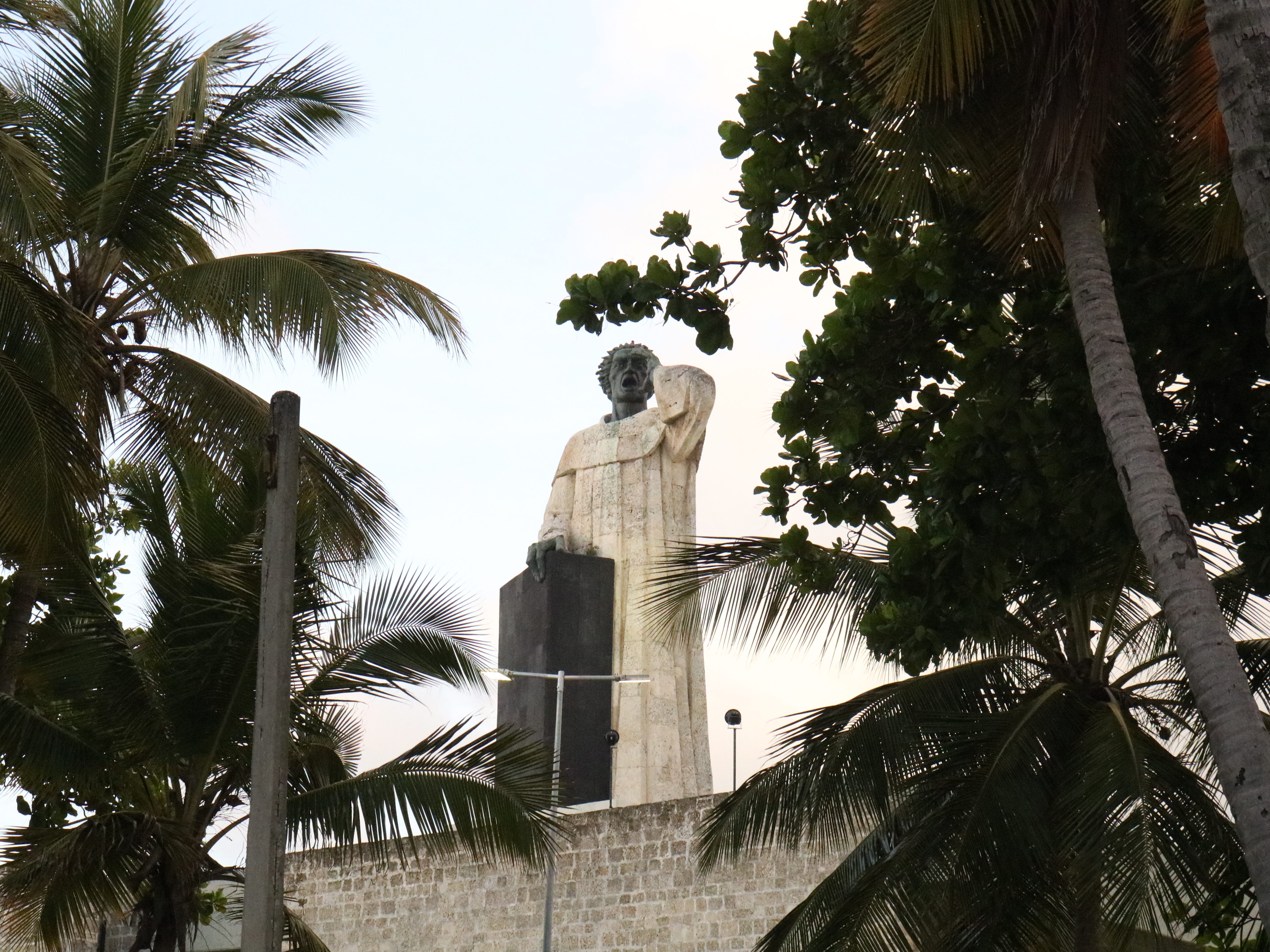
After getting through the traffic, I walked into the building and lined up like everyone else at the ticket counter. It was Caribe Tours, which at that time was perhaps the only bus company that offered daily services across the border. When it was my turn, the clerk took my passport and said I would need to go into the office beside the counter for additional verification. I was the only one at that time to enter. The staff there asked me the reason for crossing the border before handing my passport back and issuing the ticket.
It was US$37 for the ticket. But there was an exit fee of US$25 and a border fee of US$10 added to the fare. The total for the one-way trip came out to US$72.
Definitely expensive, if you ask me. But it was far cheaper than flying, which would cost at least two to three times more per way.
Soon, a big yellow bus pulled into the terminal. A handful of people and I hopped on board, and within minutes, it departed the loading zone and bounded for the highway north, after braving the morning congestion of the city, of course.
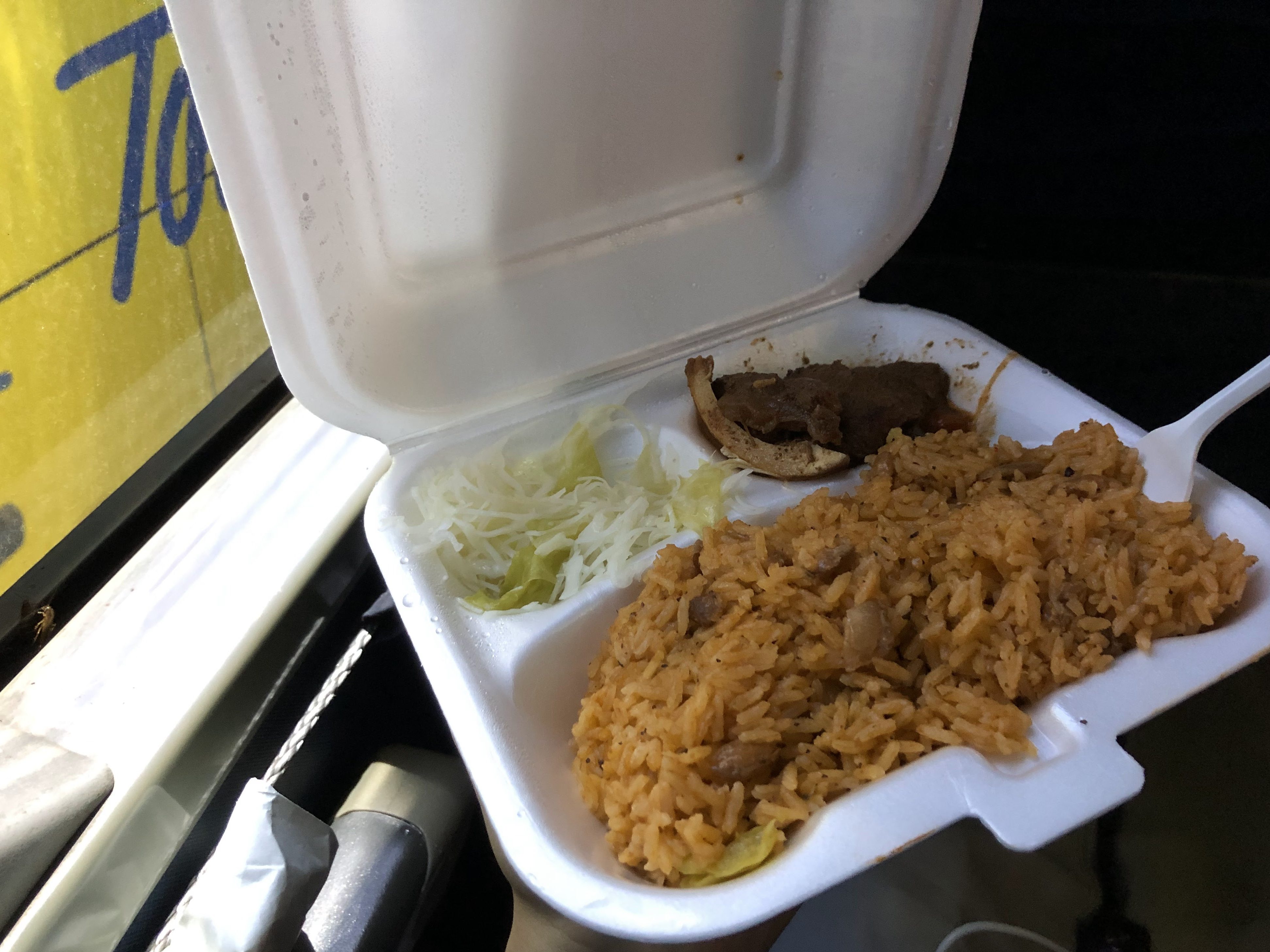
The bus made a brief stop in Santiago de los Caballeros after two hours on the road to not only pick up more passengers, but also to receive a stack of polystyrene containers. The aroma that came with them indicated it was lunchtime! Handed to me was a warm container of rice and beans with two side dishes of meat and vegetables. The meal was surprisingly delicious.
The Nerve-Wrecking Experience at the Border
Another two hours later, the bus drove into unfamiliar territory, one that looked nothing like what I had seen before on this trip. Watching it all from the comfort of my seat on the air-conditioned bus, I became nervous about what was to come in a few minutes.
Situated next to the border was the town of Dajabón. This place was unlike anywhere I had been; it was chaotic, crowded, and heavily littered with trash. Understandably, the town operates a market where people on the other side could cross over and sell their goods on certain days of the week, before they would need to return to where they came from on the same day.
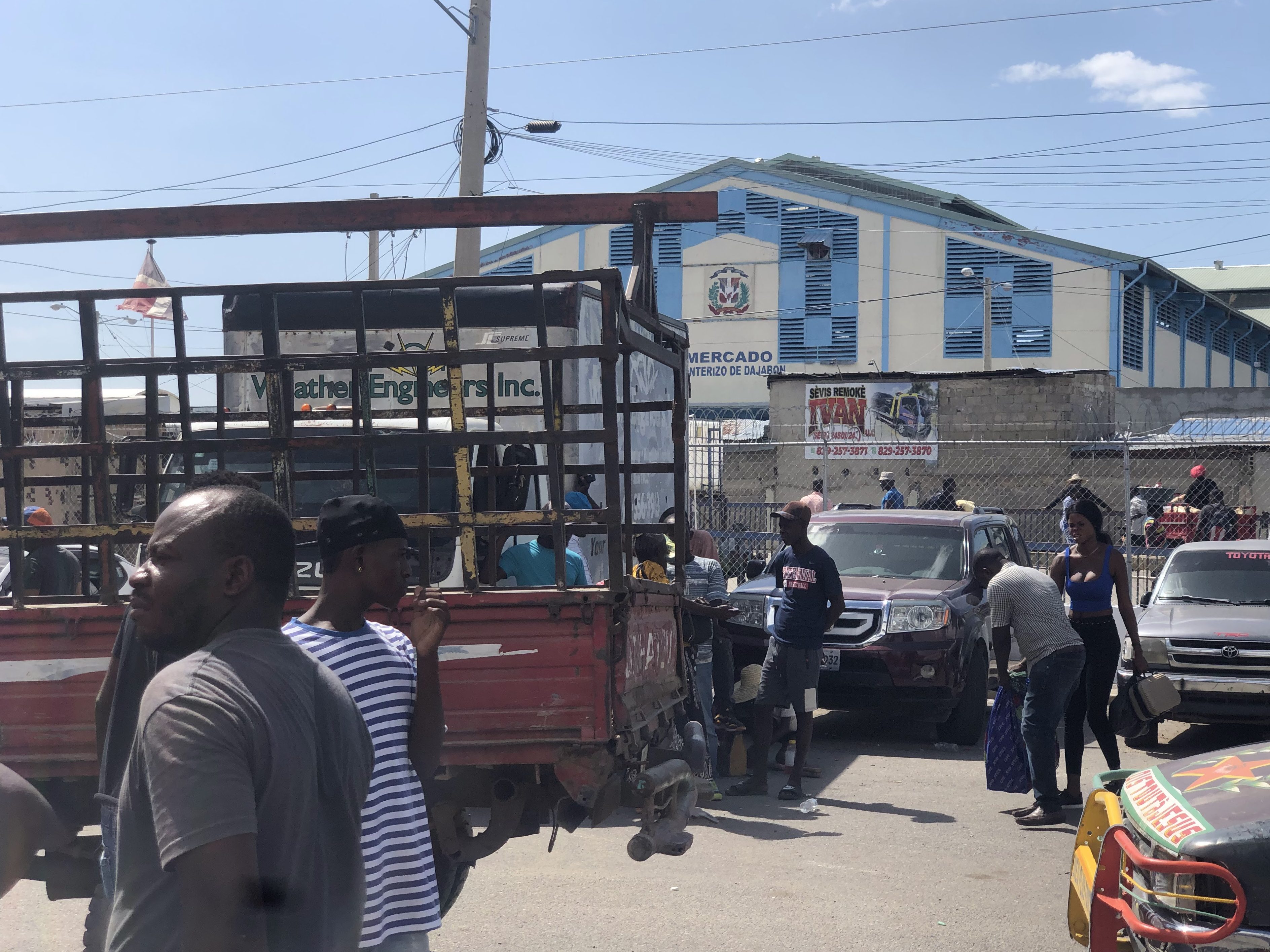
The bus stopped on the side of the road close to the market. Everyone had to get off and walk to the immigration office, where there was a long line to get in. Following what everyone was doing, I stood in the queue and waited under the scorching heat. Almost immediately, touts ranging from children to elders came to the line and begged every person to buy what they were selling: pencils, passport cases, water… among other items. At the same time, a few young men barged into the scene and asked for money. It was an uneasy situation to be in.
The line moved at the pace of a snail; there was nowhere to hide from the brutal sun. About half an hour later, I finally stepped into the building and continued to wait until it was my turn to get stamped out of the Dominican Republic. The officer was surprised to see me, as I was the odd one among the rest, holding a passport that no one in the building had ever seen. She then took it away from my hands, asked if I was one of the passengers of Caribe Tours, and said the passport would be returned to me on board.
I exited the building and realized I was one of the first passengers of the bus to complete the immigration procedure. So I waited on board for the rest, and thankfully, the promise was made when one of the staff of the bus company handed everyone their passports back. Once that was done, the driver ignited the engine and drove on the bridge over the Massacre River.
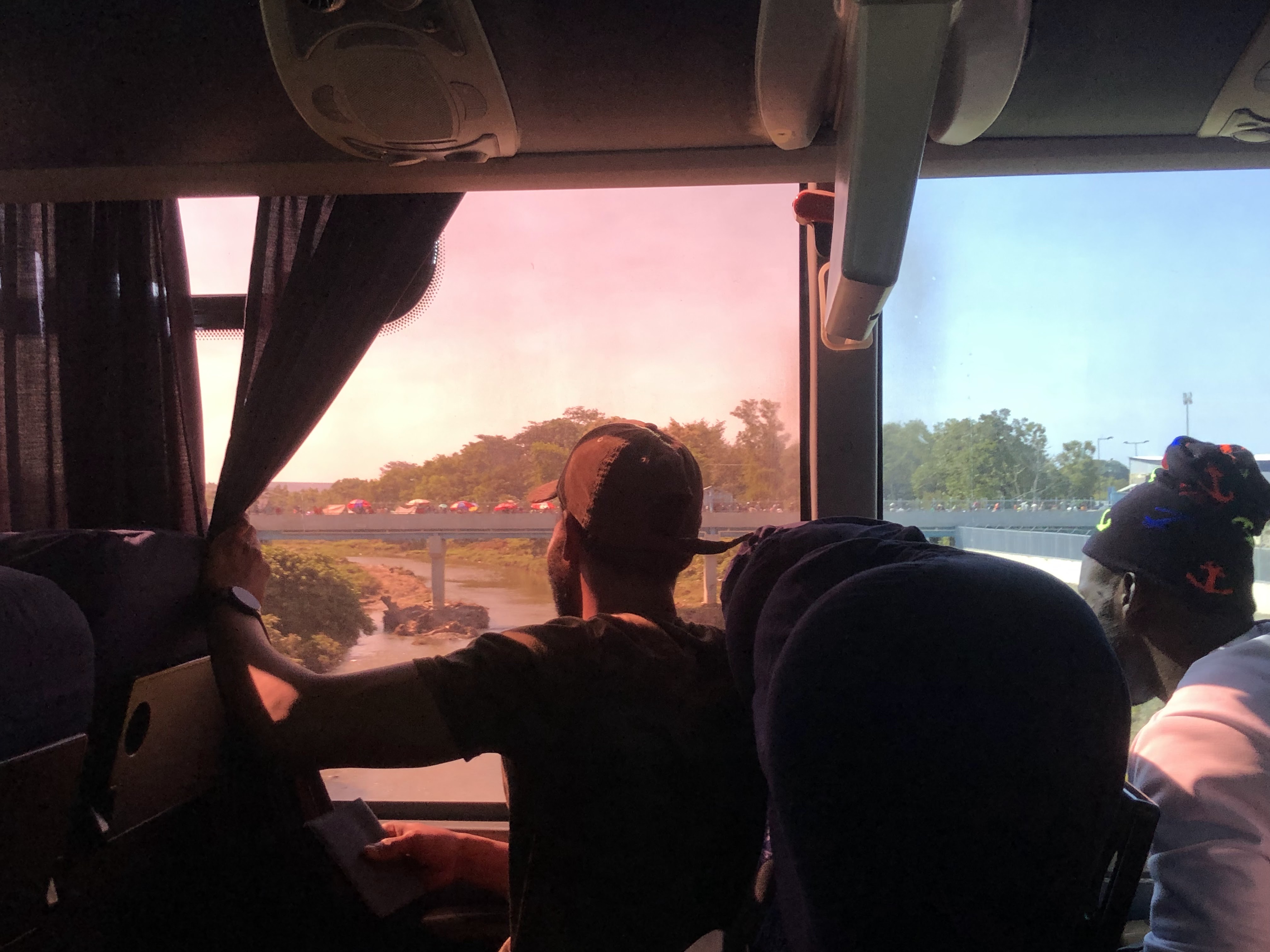
Right in front of the bus, a different flag waved in the air, in front of a building with its roof written in French. It was clear that we were no longer in the Dominican Republic. We made it to the other side.
An Eye-Opening Journey
Stepping out of the bus again, everyone on board entered the said building, this time without queuing outside. Unlike the immigration before the border, it was quiet and empty. Yet, there was the same procedure of temporarily taking our passports away, before they were returned to us on board. Clipping in mine was a paper slip of my travel details, and on the slip was a big red stamp that said “Haiti”.
Haiti was the country on the other side of the border, if you did not know it already. A nation that has been plagued by decades of political unrest and economic crises, and more recently, the 2010 earthquake that devastated its already poor infrastructure. This resulted in the rapid increase of gang violence that not only displaced millions, but also created an almost lawless society with no actual government. And as of writing, it is still the most underdeveloped country in the Western Hemisphere.
Travel advisories all over paint the country in an alarming shade of red, with the three words “DO NOT TRAVEL” bolded and titled at the same time. The risk of getting kidnapped and killed was and still is at an all-time high, and due to the state of the country, many embassies have stopped operating, which means it would be nearly impossible to receive any help. However, much of the violence is centered around the capital, Port-au-Prince. This does not mean everywhere else in Haiti is safe. But for stubborn travelers like me, the information is convincing enough that as long as you are not visiting the city, you should be okay.
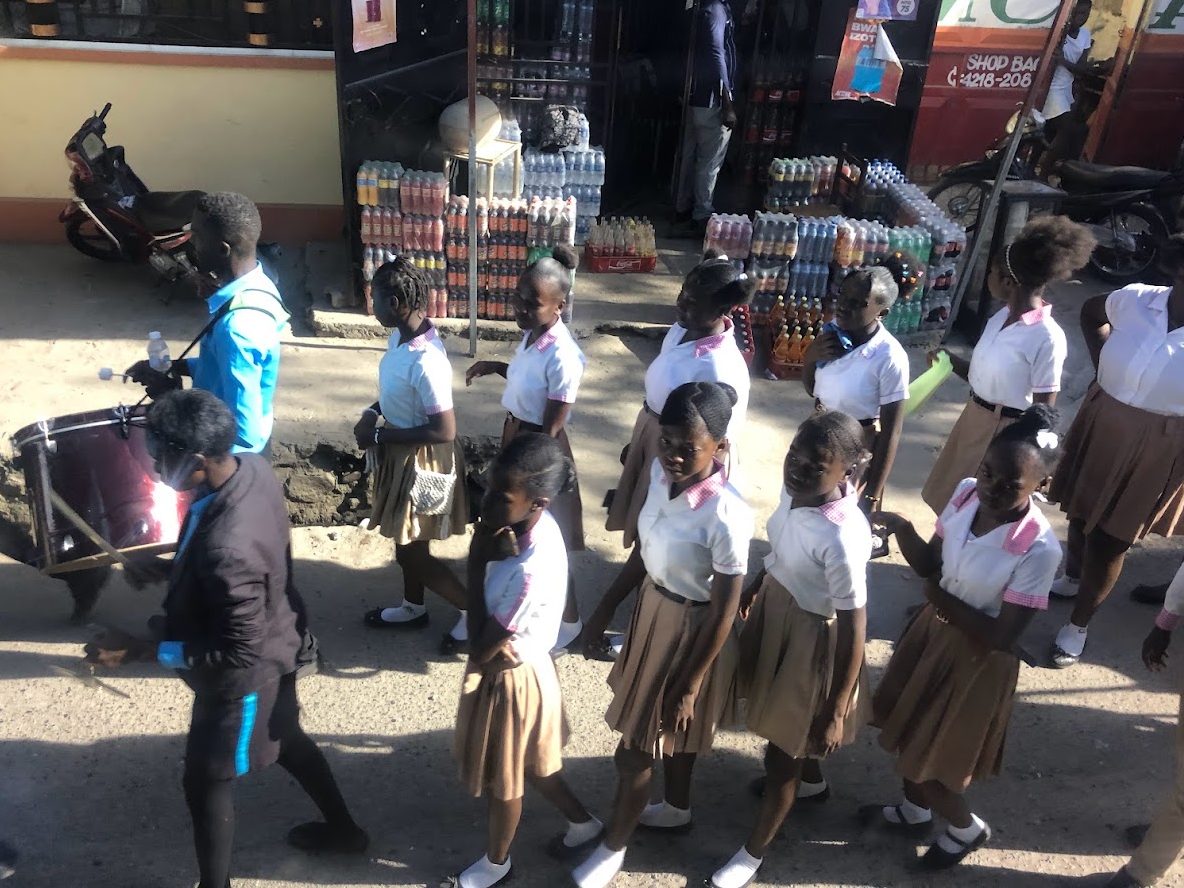
Continuing the journey, the bus had to go through the border town of Ouanaminthe, where there was a funeral procession going on. While this created a bit of congestion in the streets, for passengers on the bus, it was a window into the local life, especially when it came to honoring the dead. The dusty road of motorcycles and tire piles eventually faded into a bright tropical scenery of rolling green hills. I could not believe what I was seeing.
The bus ride not only involved nice countryside views, but also reggaeton that blasted throughout the entire four-hour journey. Halfway through, some passengers were caught in a heated discussion, which led to a huge argument at the front of the bus. Sitting so close to the scene, I tried my best to not even bat an eye at the whole situation, even though it was so hard not to.
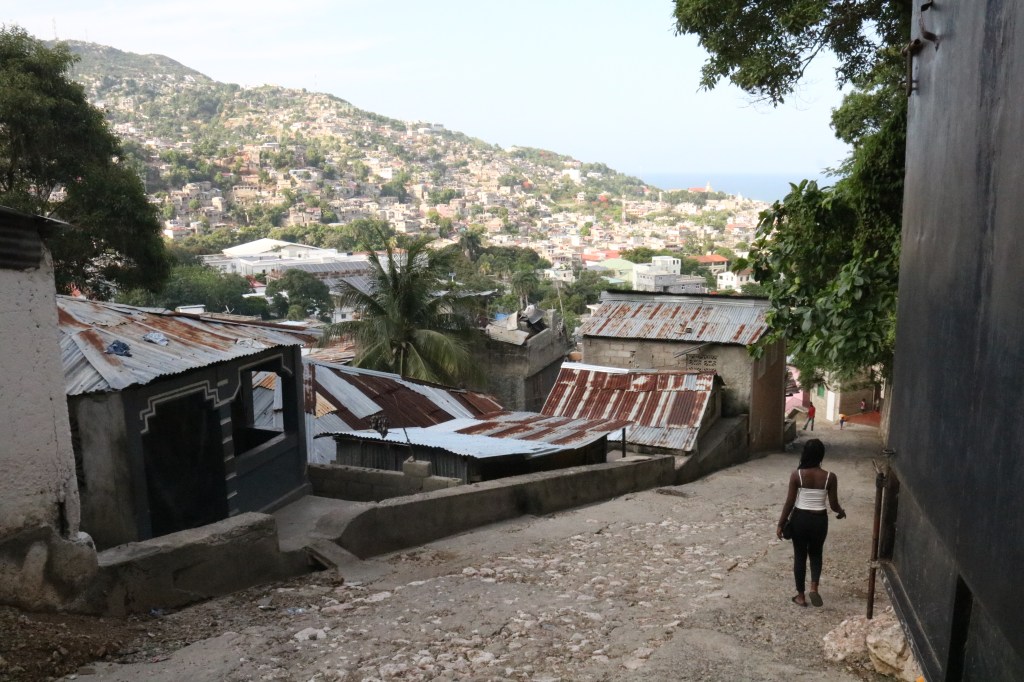
Eventually, the bus entered the outskirts of Cap-Haïtien, the city I was heading to. The hills were no longer green; they were grey and blanketed in slums, blurred in rising smoke from burning garbage pits. When the bus arrived at the terminal, hordes of people surrounded the vehicle, who were there to pick up family members or offer taxi services. With the sky becoming darker, I quickly asked to be driven to my hotel, which I was quoted US$15 for the ride.
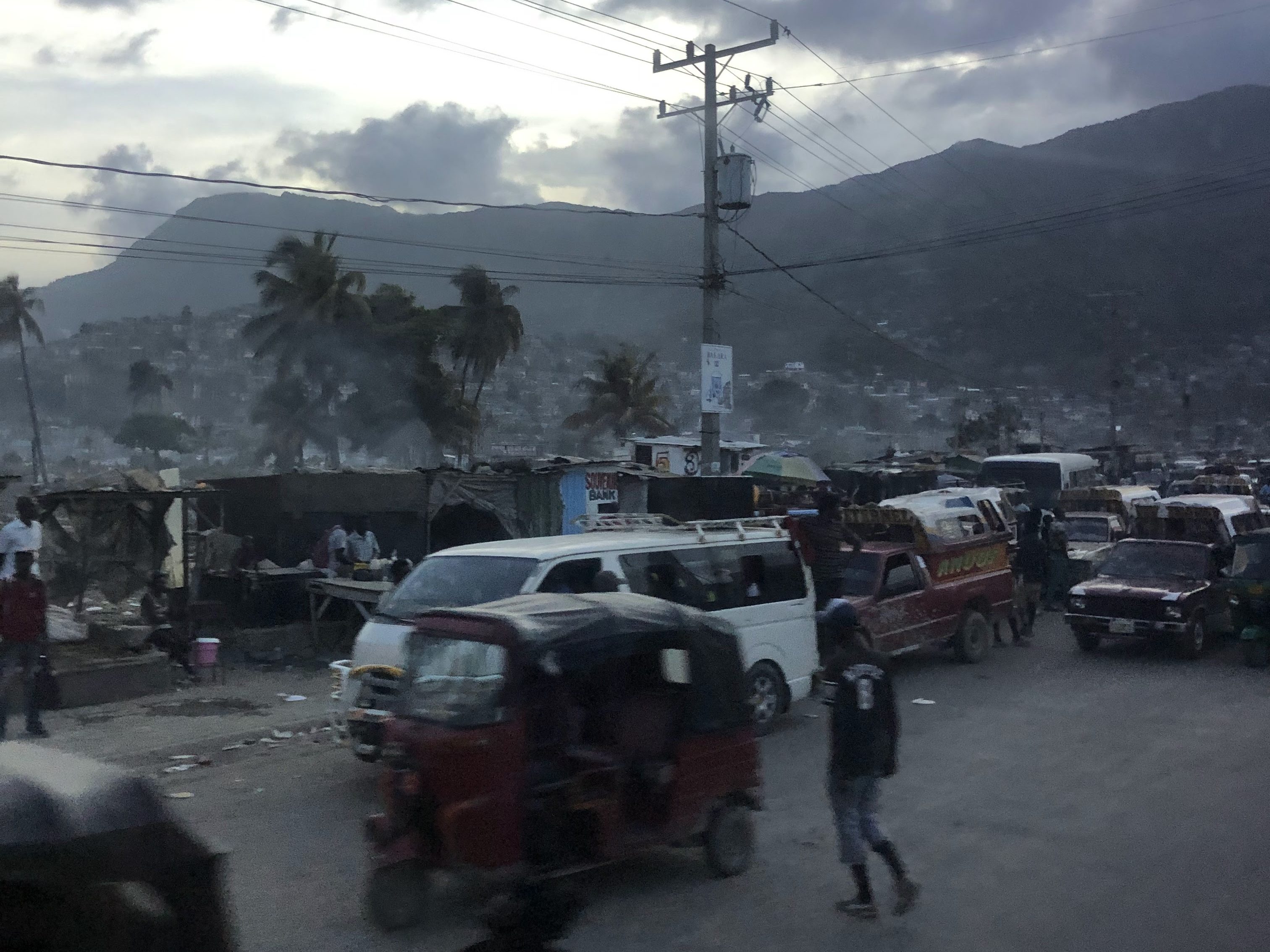
No hesitation made, I immediately hopped on the taxi. Just when I was about to close the door, two half-naked boys ran to me and asked for money. I kindly declined, but without taking no for an answer, they blocked the door from closing with their bodies and made fun of me by repeating my response.
It was a rather unpleasant experience to have as my first impression of the city, but it was something to be expected in the first place, especially with what the country was going through. The taxi snaked up the hilly road, passing by metal shacks and tilted electric poles, before arriving at the entrance of Habitation des Lauriers, the hotel I would be staying at for the next two nights. After paying my fare, I walked to the reception to check in. I was promised I could pay with a credit card, but no matter how many times I tried with different cards, the machine wouldn’t accept any of them. I had no choice but to use my remaining dollar bills. The staff then took me to my room on the second floor, where I crashed into bed with the air conditioning cranked up and a much-needed shower after a long day of traveling.
Heaven Among Hell
Waking up at the crack of dawn, I walked out to the terrace of the hotel. The sky was already bright by the time I got there, and with the eerie quiet atmosphere of the premises, the city presented itself spectacularly in the morning light. The tranquility, however, was cut short by honking trucks and motorcycles below. It then hit me back into reality that I was actually in Haiti’s second-largest city, one that I would be spending the next couple of days in.
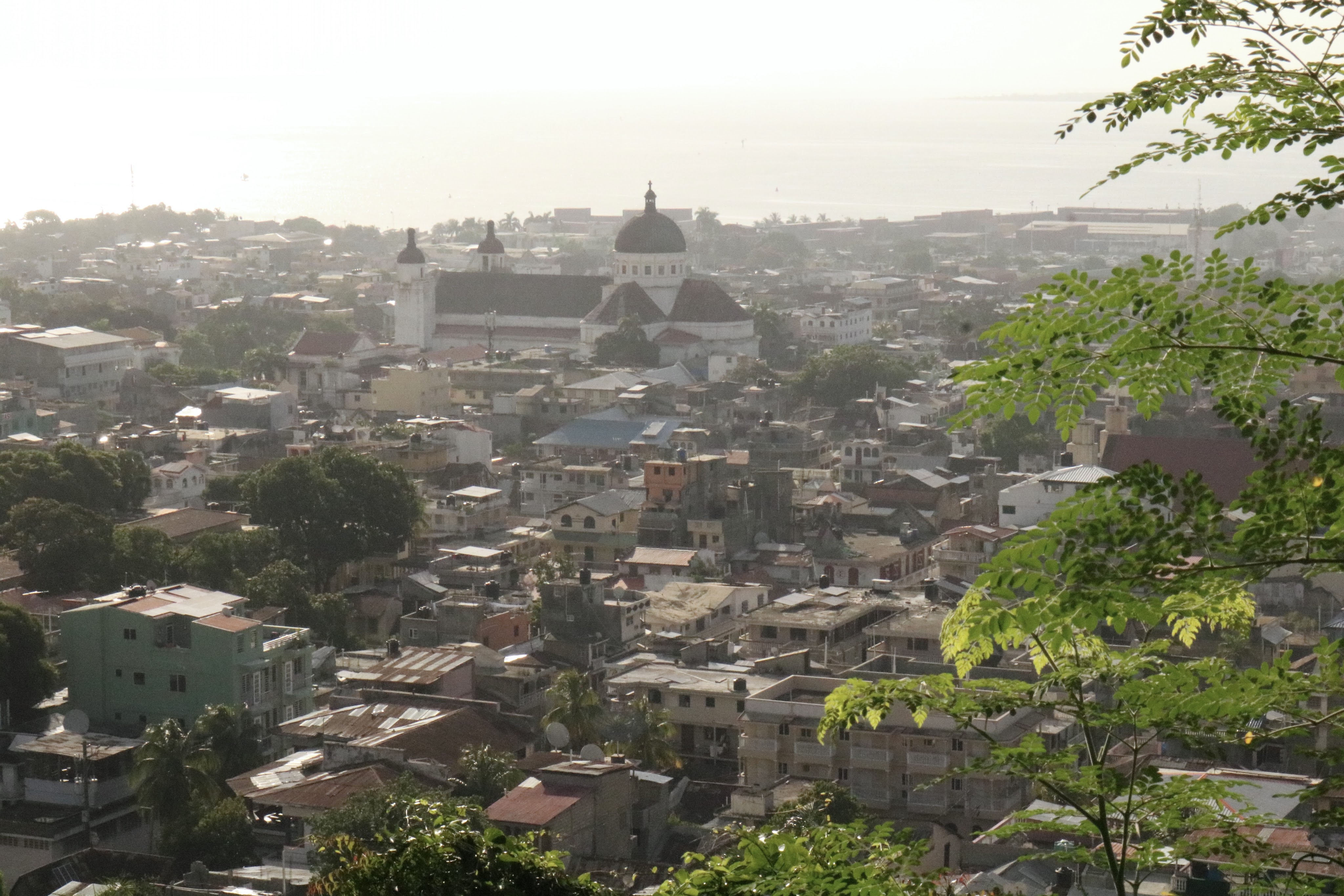
O-kap, as it is locally called, sits on the northern coast of Haiti. It was once the capital of the French Colony of Saint-Domingue, before the title was moved to Port-au-Prince in 1770. Under the rule of King Henri I, it became the capital again for a few decades until the country’s reunification. Back then, the city was affectionately known as the “Paris of the Antilles” for its colonial architecture and sophisticated lifestyle.
While almost all the riches of yesteryear have long since faded, Cap-Haïtien retains much of its historic appeal, with vernacular gingerbread houses lining its central urban grid and the massive cathedral dominating the cityscape. All of this could be easily seen from the hotel’s commanding location, and at times it felt like the safest thing to do without braving the streets below.
But that idea did not last long with the rise of an issue – lack of cash. The night before, the receptionist said the hotel had an ATM I could use to withdraw bills the next day. Guess what? The “ATM” was the same card-reading machine that declined my credit cards. I wasn’t sure if this was what the locals call it, but it definitely wasn’t what I expected of an automated teller machine. The receptionist said I could head into town and try doing it in banks, and she knew someone who could drive me down for that. I immediately said yes.
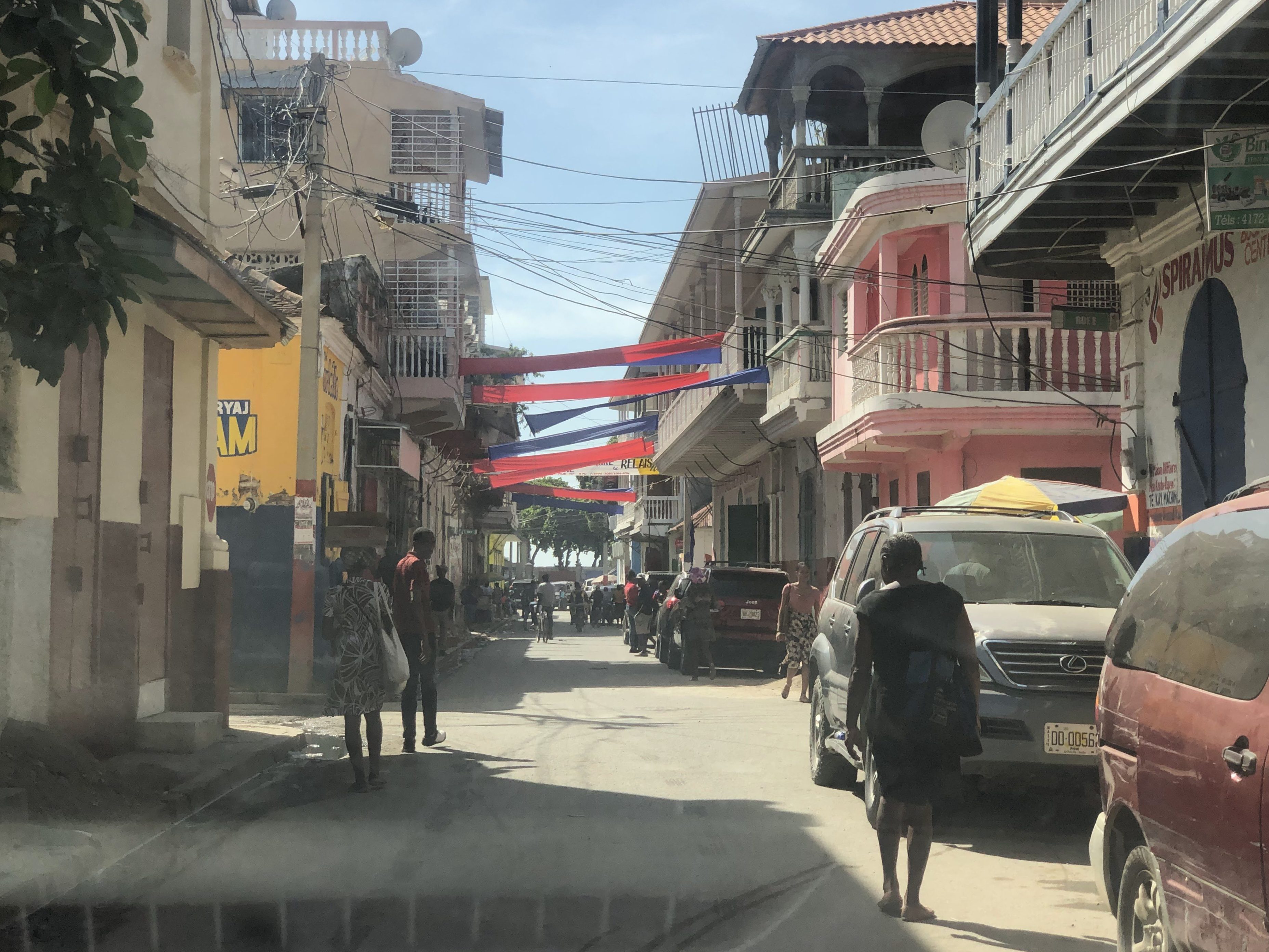
A young Haitian man in a red shirt (I forgot the name of, shame…) drove me down to the city center. It was perhaps the only time then that I could see what Cap-Haïtien really looked like at street level. The roads could only fit two cars at once, and with the number of people walking on them, our vehicle had to move very slowly. I had no complaints about this, as it allowed me to take in the surroundings behind the windshield in the safety of the passenger seat. The interesting mix of French-colonial architecture with the ugly concrete shells of today was shown all along the way, until the car was pulled aside; we arrived at a bank with an actual ATM.
The driver said he would wait for me while I tried my luck with the machine. Strangely, it wouldn’t accept any of my cards. So he took me to another bank nearby, and it was the same too. I came to the conclusion that not a single card of mine worked in Haiti. Disappointedly, we went back to the hotel, where I spent most of the day in my room, figuring out a few ways to transfer money to someone in the hotel in exchange for cash. Even though the staff I asked were happy to do so, the idea went down the drain as I could not link any of my bank accounts with the local Western Union.
Without enough cash other than food and the bus back to the Dominican Republic, I missed the opportunity to visit the ruins and the citadel in nearby Milot, which was my main reason for coming to Haiti. Sure, I could do it independently by riding a tap-tap (local minibus) and asking someone there to drive me to the sites, but it would be a far better (and safer) option to join a tour. Maybe someday 😢.
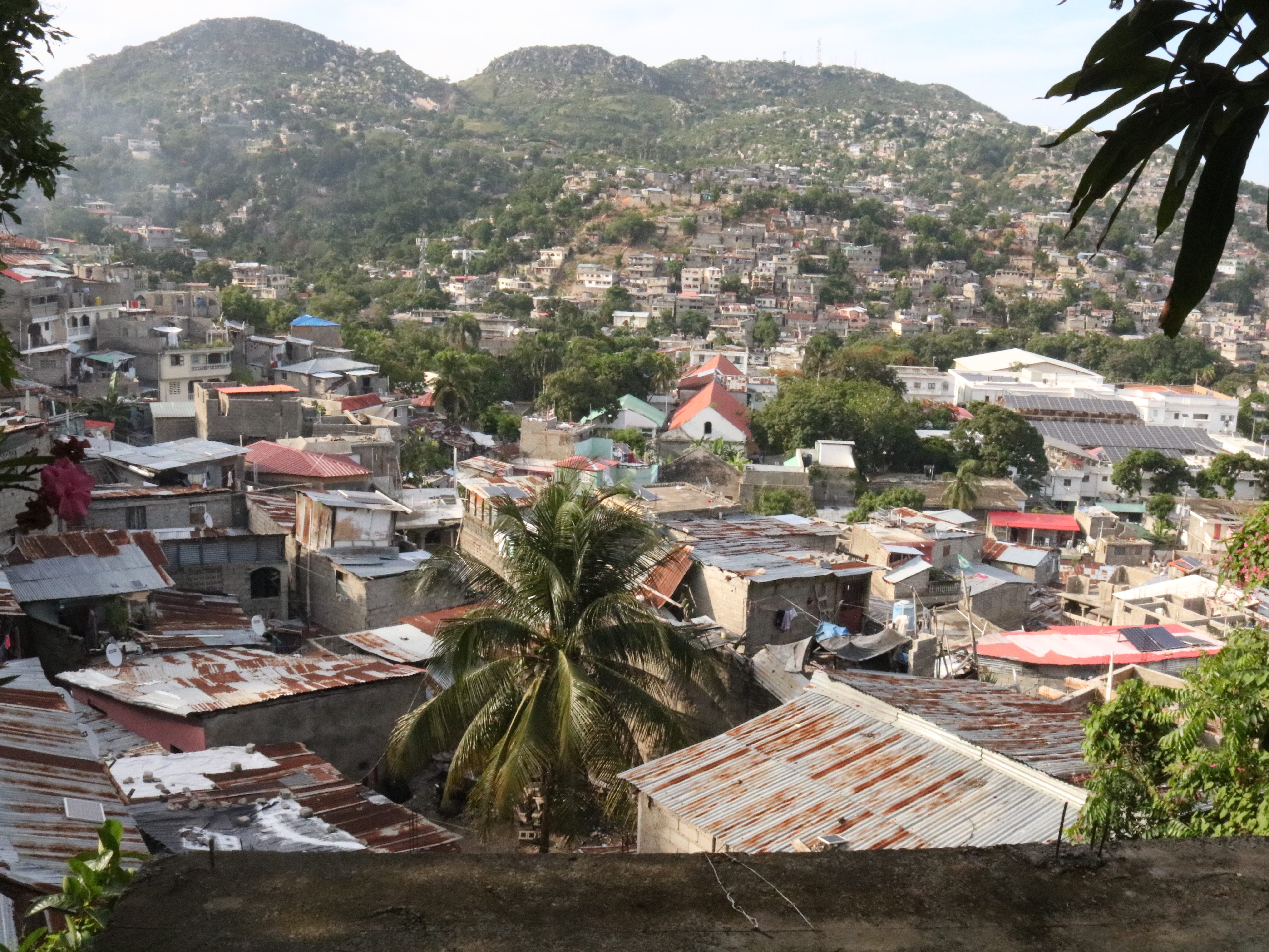
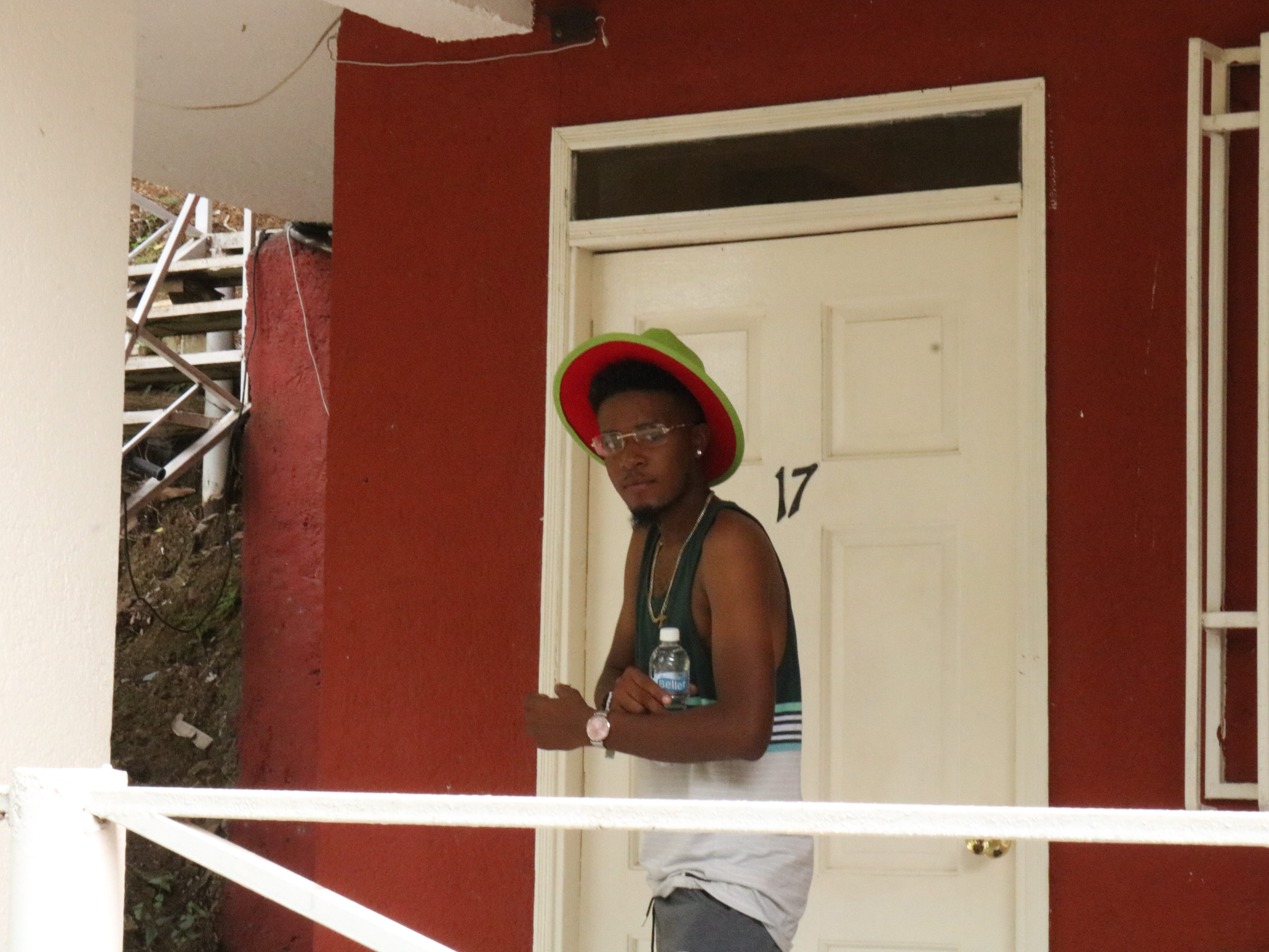
So what did I do with the rest of my time in the country? Walking around the hotel. As lame as it sounds, the elevated location of the hotel offered various vantage points of the city. It also had a little forested trail leading to another side with a building housing more rooms, where I met a man who asked me to take a picture of him (above). Overall, that helped to kill much of my time which should’ve been spent in Milot or somewhere else. Sometimes, you just have no choice but to improvise out of what you can.
Eventually, I had to leave the hotel, which was done the next morning. This time, I chose to walk to the bus station instead of taking a taxi. Google Maps told me I could make it there on foot in 20 minutes, so I held my breath and began walking down the road. Surprisingly, it was a straightforward journey down to the city center, and with a bit of extra time, I checked out the square in front of the cathedral. An elderly man approached me and asked me where I came from and my reason of visiting, which I gladly answered. From there, it was still a few blocks away until the bus station, so I gently explored around the streets, before reaching the waterfront where a few young men in motorcycles shouted “hello” while driving past me.
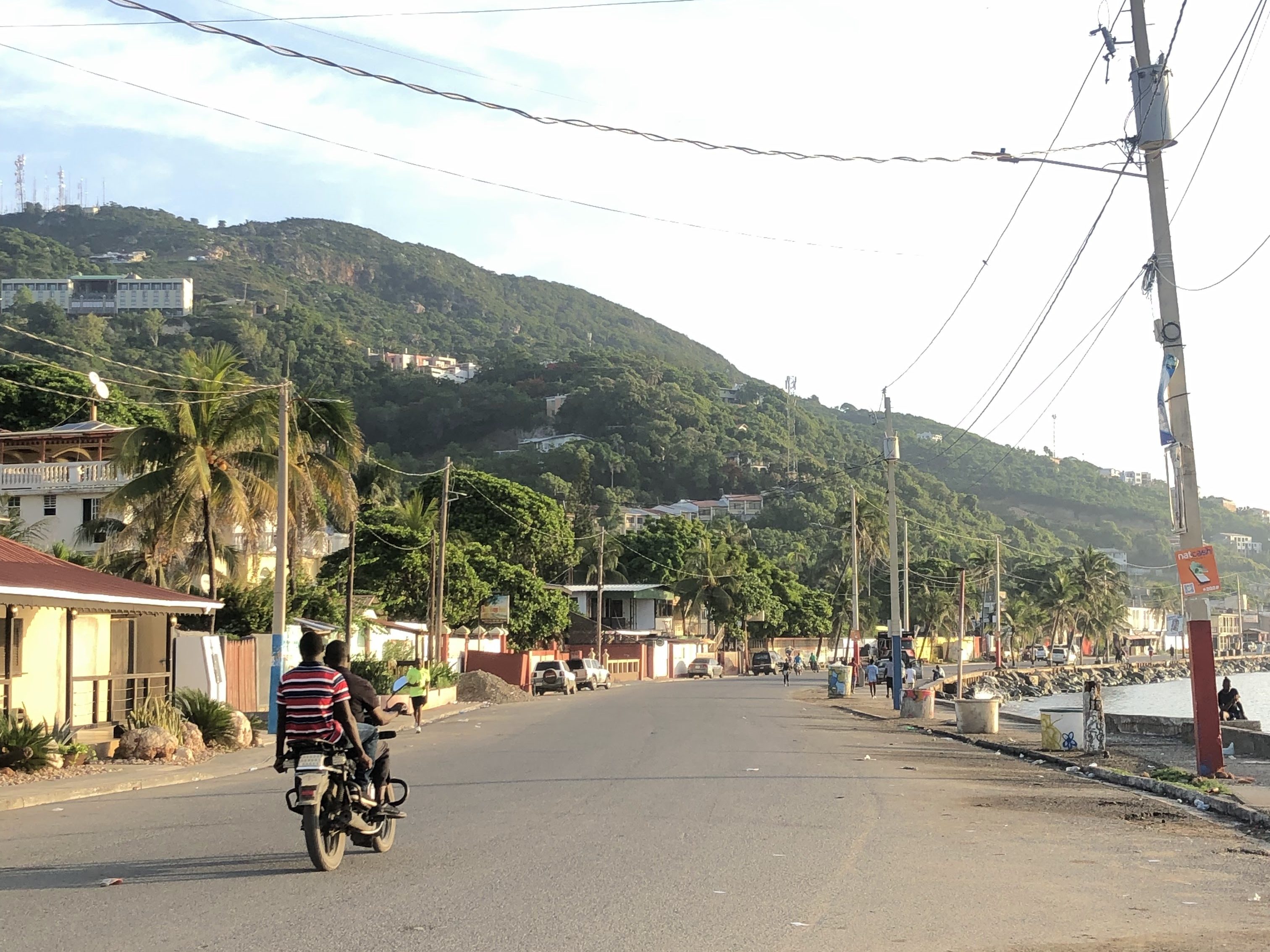
As scary as I first thought, I made it to the bus station without any issue. The people at the counter were also very nice to allow me to be the first in line to buy the ticket. Boarding the familiar yellow bus, I saw the city unfolded from the window for the very last time. There was a feeling in me that celebrated the departure, but also a bit of yearning and regret of not being better prepared.
Even though this was easily the roughest place I had stepped foot in all of my travels, Haiti really opened my perspective on what I first knew about the country. Yes, the poverty level here was the most extreme I had ever seen, and the fear of being a target of crime had never been so heightened. But after several encounters with some locals, and actually putting myself out in the streets, I realized that it wasn’t as bad as I imagined. Perhaps it was Cap-Haïtien where I was visiting, I could not say the same for the capital down south.
Regardless, it was one place I would not forget so easily.
*This visit was made in 2023, when the land border between the Dominican Republic and Haiti was still open.


Leave a Reply