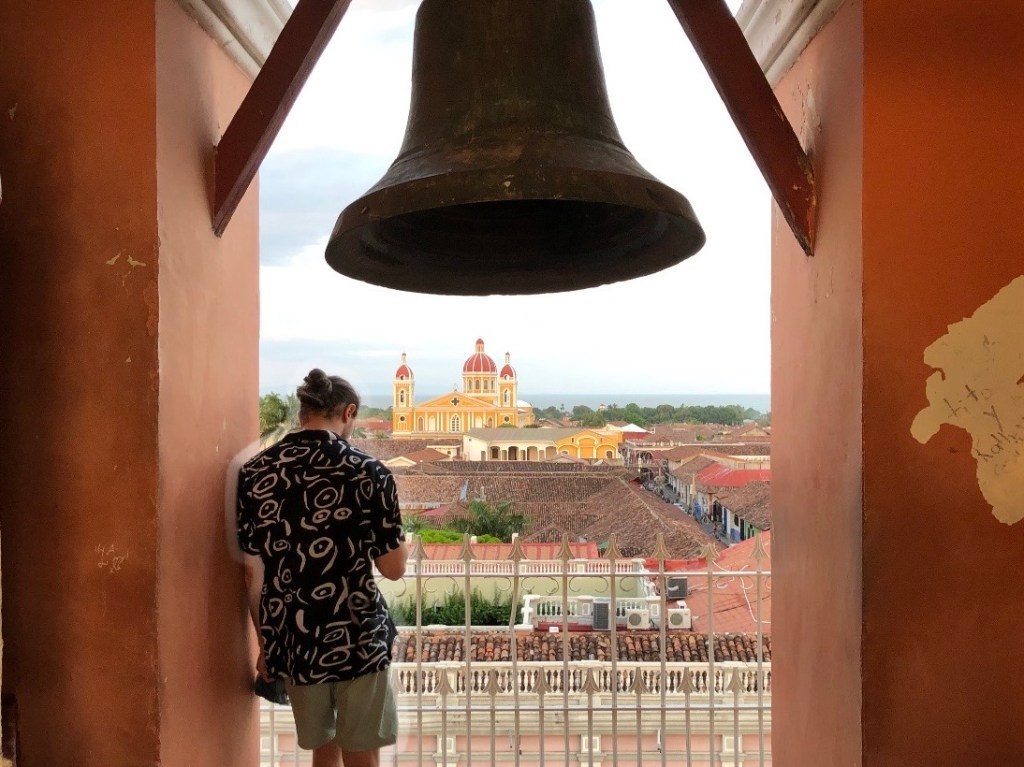
Between the two landmasses of the Americas is a tropical isthmus of seven independent nations. Where jungles meet the waves of the Pacific on one side, and the swampy coastline of the Caribbean on another, this subcontinent known as Central America has plenty to offer travelers coming for all kinds of niches.
Having no experience of traveling in the region, the selection for beginners like me should have been Costa Rica or Belize that were more tourist-friendly. But my interest went the other way; I wanted to see a different side of Central America. And after a bit of research, and possessing the confidence that solo traveling there was possible, I decided to visit the largest of them all – Nicaragua.
The Quick Jaunt in the Capital
The plane from Houston descended into a smog-like territory after three hours of clear sunny skies. Instantly recognizable were pyramid-shaped volcanoes that jutted out of the grey blanket, and right below, the urban sprawl of rusty metal roofs and towering palm trees faintly appeared in sight. Before long, the wheels touched down on the asphalt runway, and the announcement came first in Spanish, with the only words I could understand in the minute-long speech: “Bienvenidos a Managua“.
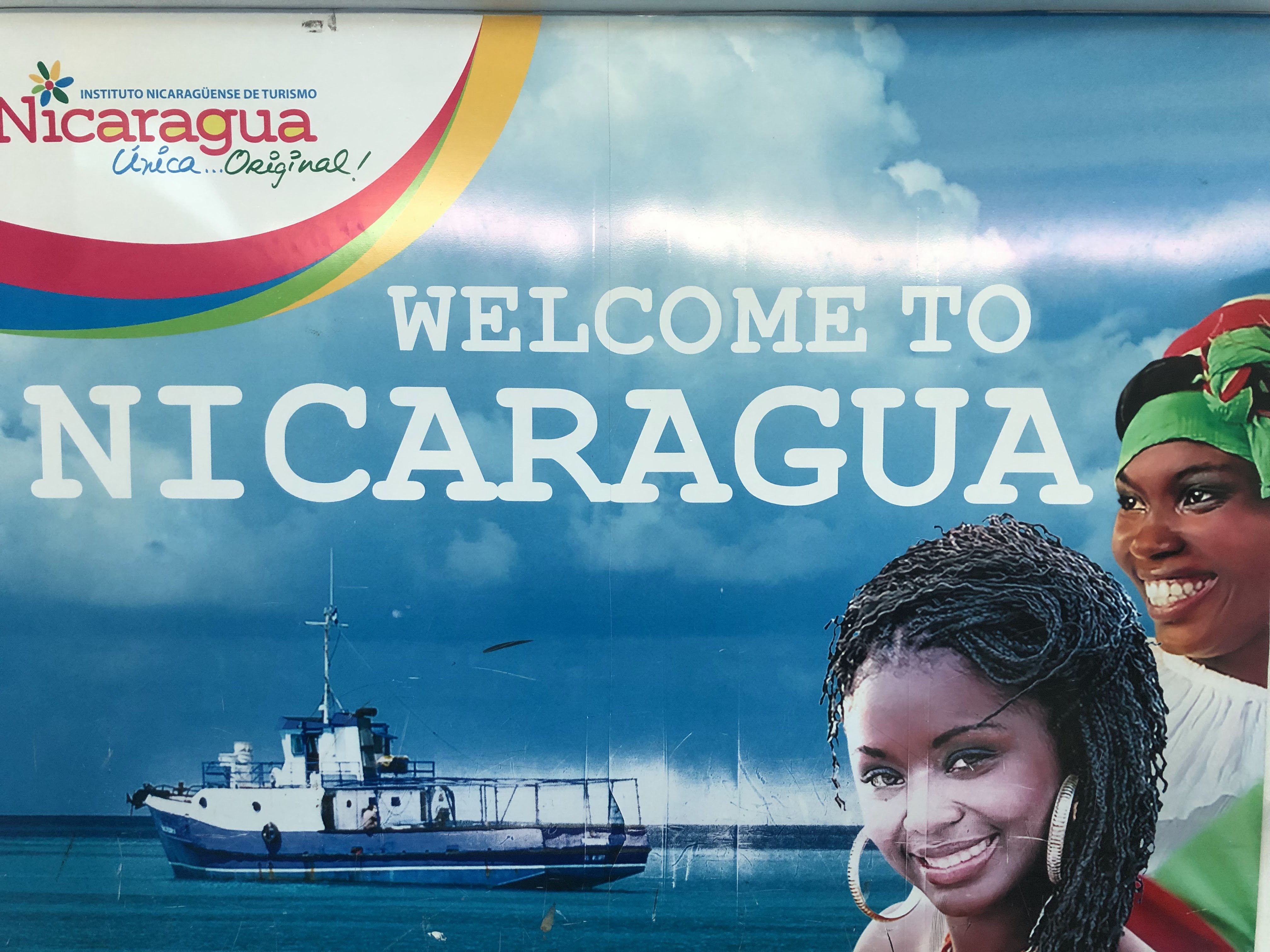
It was quite a while since I was in a tropical location; the 35’C heat that hit my skin right after exiting the aircraft was a strange feeling. Getting through immigration was quite an experience as well; the officers had a tough time recognizing my passport and were unsure if they had to send me back since I came without a visa, when I never needed one. After standing on one side for at least 15 minutes, a higher-up came back with my passport and issued a stamp at the counter.
Phew. No questions asked.
Just when I thought I was cleared, there was another process near the exit where all bags had to be opened and checked by customs thoroughly. I had nothing to hide. Right after this was done, I walked out of the terminal and crossed the highway to the front of the Best Western where three taxis idled. The taxi drivers saw my approach and immediately offered their services. On Google Translate, I wrote that I was going to downtown Managua to see a ruined church before taking the bus out. They understood the task and directed me to one of the cars; that was when I quickly asked for the price. “30 dolares“, the driver said. I insisted it was “muy caro” until we finally agreed on US$20.
Beating the midday traffic of Managua was something we had to get through, which made it an even more unbearable experience without air-conditioning in the car, along with the heat coming straight from the sun above and the dusty breeze flowing in from the window. Not all was misery, however. While stuck in the traffic, there were street performers coming in the lanes, entertaining the road with everything from juggling bottles to playing with knives. Yes, KNIVES. Too bad I didn’t get a picture when it happened.
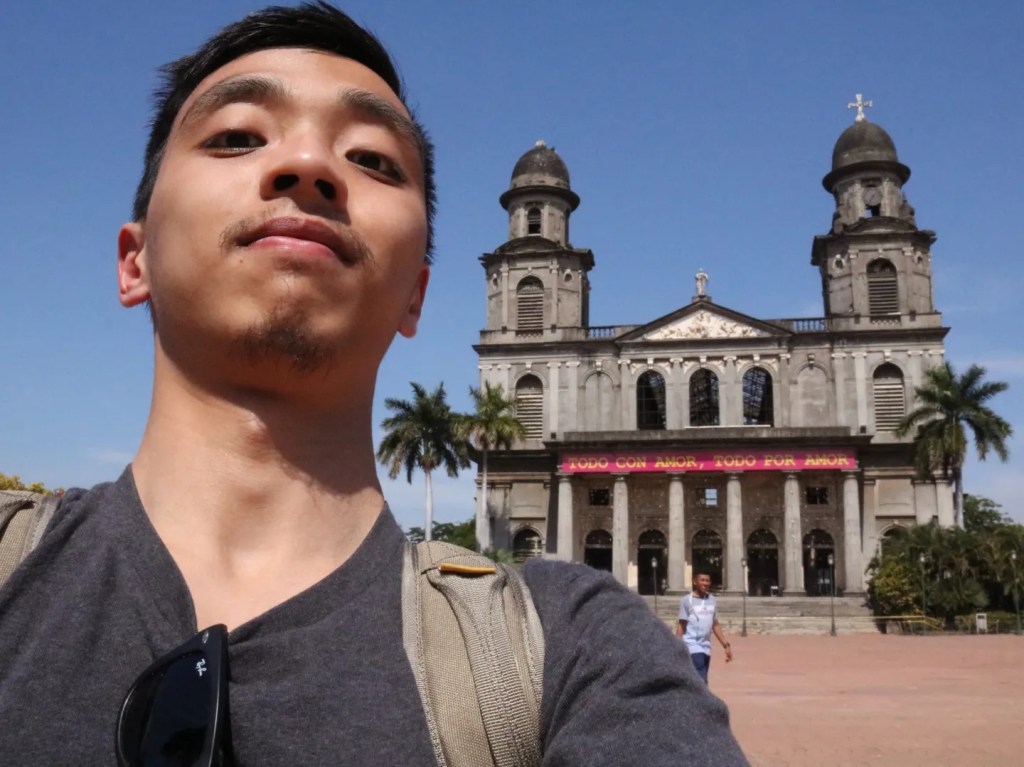
After nearly an hour, the taxi dropped me off on the side of the road. It was there that I saw the twin bell towers of the Old Cathedral behind shaded trees. The building was largely destroyed by the 1972 earthquake and has since been abandoned. Yet, the shell remained standing, in front of an empty plaza next to the even quieter waterfront of Lake Managua. Perhaps it was in the middle of a scorching afternoon. Overall, it was a cool structure for a quick sightseeing attempt.
The driver offered to drive me to my next destination for an extra US$100, which I kindly declined even though he kept convincing me to. Eventually, we arrived in a chaotic and messy market, where the “bus station” was located. I paid the fare and gave the driver a Japanese candy I brought along, before a yellow school bus drove next to the taxi, with a man standing at the doorway shouting “León, León, León!”.
City of Revolution and Intellectuals
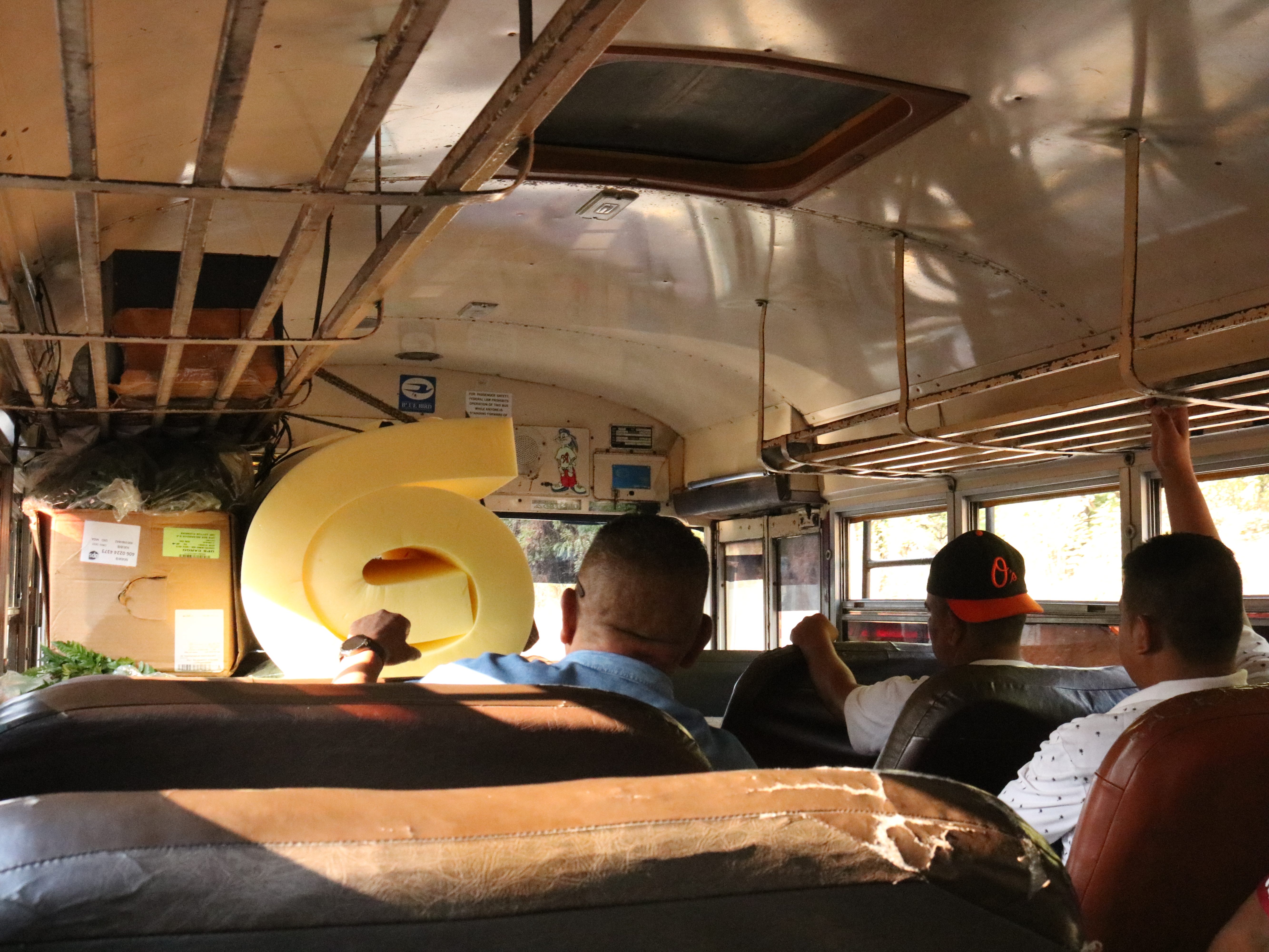
On board a converted American school bus, the ride didn’t remind me much of my younger days, but it threw me straight into the reality of how Nicaraguans get around the country. I was cramped next to a half-opened window by a middle-aged señor who spread his legs in their widest position, despite the couple of times I hinted at my slight discomfort by moving mine towards him. Vendors hopped on board selling chips and drinks, farmers brought in bags of grain and market goods, while women with children sat wherever there was still space. The two-plus-hour ride was gruesome but a stepping stone on what was to come on the trip.
The bus pulled into the nation’s second largest city, where hordes of people were either trying to board the bus or to get the attention of disembarking passengers. I walked to where all the motorcycles and rickshaws gathered, and asked for a ride to town. An enthusiastic teenage boy then invited me to hop onto his “bicycle taxi”, which at first I was a bit reluctant to do, as the idea was new to me, but eventually I agreed. Hugging my backpack on the front, he paddled as fast as he could through the streets, and in less than ten minutes, we were at the entrance of my hostel.
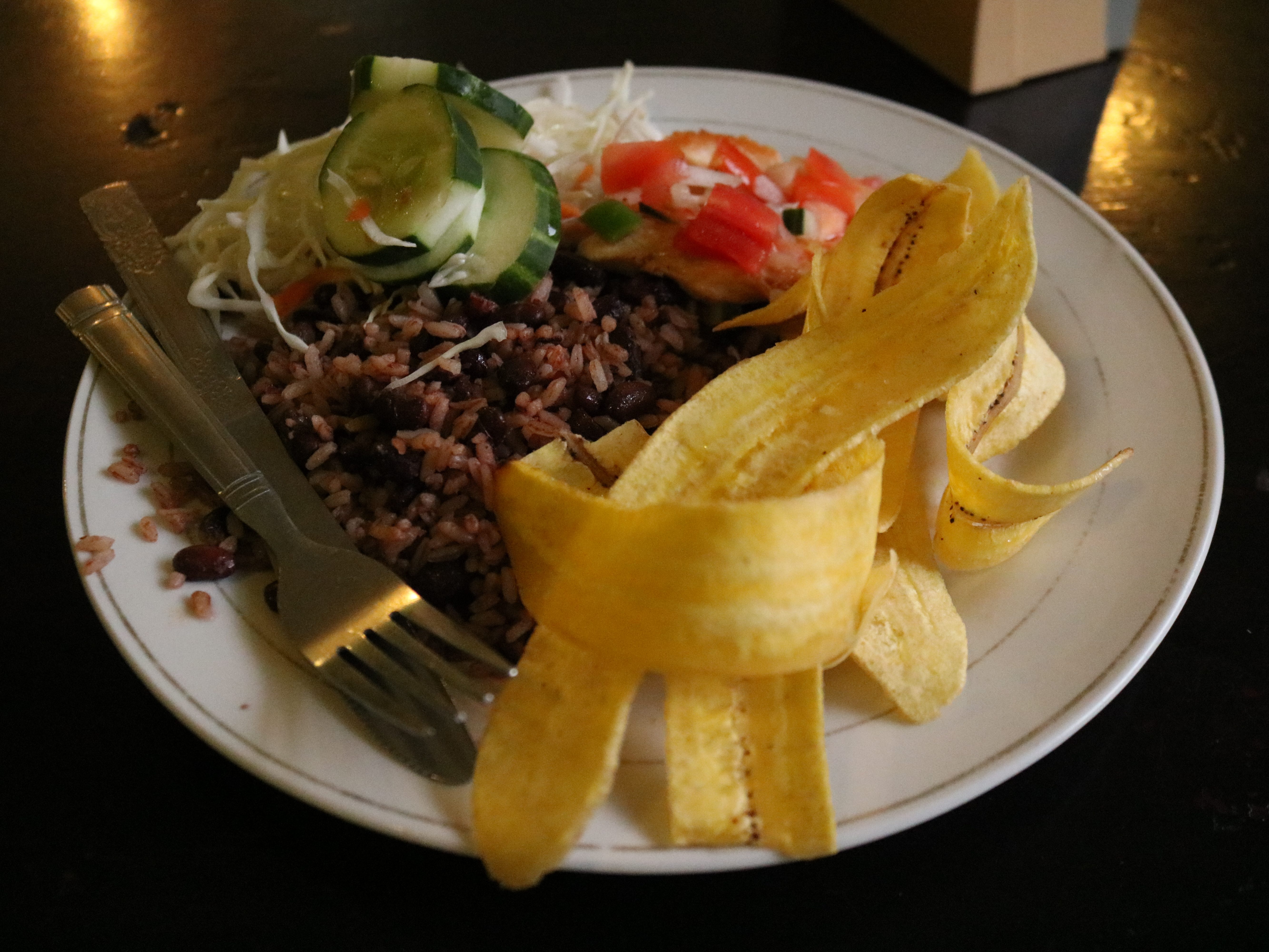
We took a selfie, and he gave me his WhatsApp number to send him the picture, as well as a contact if I needed a ride again. After checking in, I charged my phone and took a much-needed shower and a quick nap before heading out in the city near sunset time. I wasn’t ready for any exploring, so I went to the nearest cantina for dinner, where I got a dish of gallo pinto (rice and beans) with chicken and a few sides, for only 65 cordobas (equivalent to US$1.75)!
“WEEEEE WOOOOO WEEEEE WOOOOO”. That was probably how the sirens sounded, in addition to the engines of motorcycles and dog barks that absurdly woke me up at 6am the next day. Good thing I was energized from the 8-hour sleep, and with my day clothes on and backpack strapped, I was more than ready to explore the city.
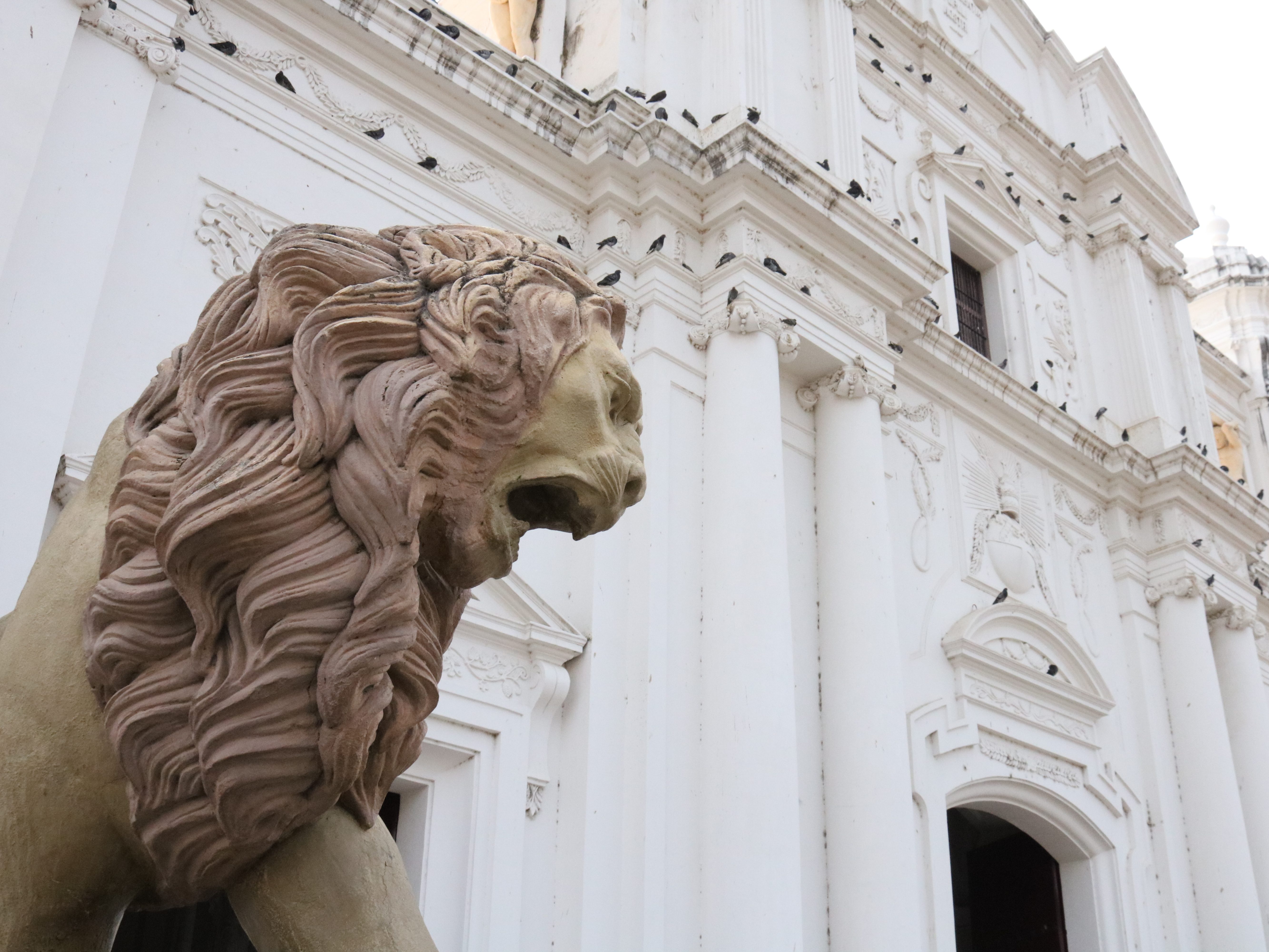
Staying fairly central in León, I was only a few blocks away from most of the major “must-see” spots, which included the chalk white monstrosity of León Cathedral. With a size of nearly 5,000 square meters, it is the largest of its kind in Central America, and a sole UNESCO World Heritage Site for its architecture, scale, and historical value. Seeing it from the outside was already sufficient to understand how massive it was, but once I entered the cathedral, the size surprised me even more with its huge columns and nave.
The cathedral was impressive on the ground and in the interior nonetheless, but it was the rooftop that most people visit it for. With a small fee, climb up a narrow stairwell on the right side of the building, before taking off your shoes to walk on the well-dusted flooring on top. This is a great photo spot to play around with angles of the cathedral’s many white domes, in addition to the panoramic surroundings of the city and distant volcanoes.
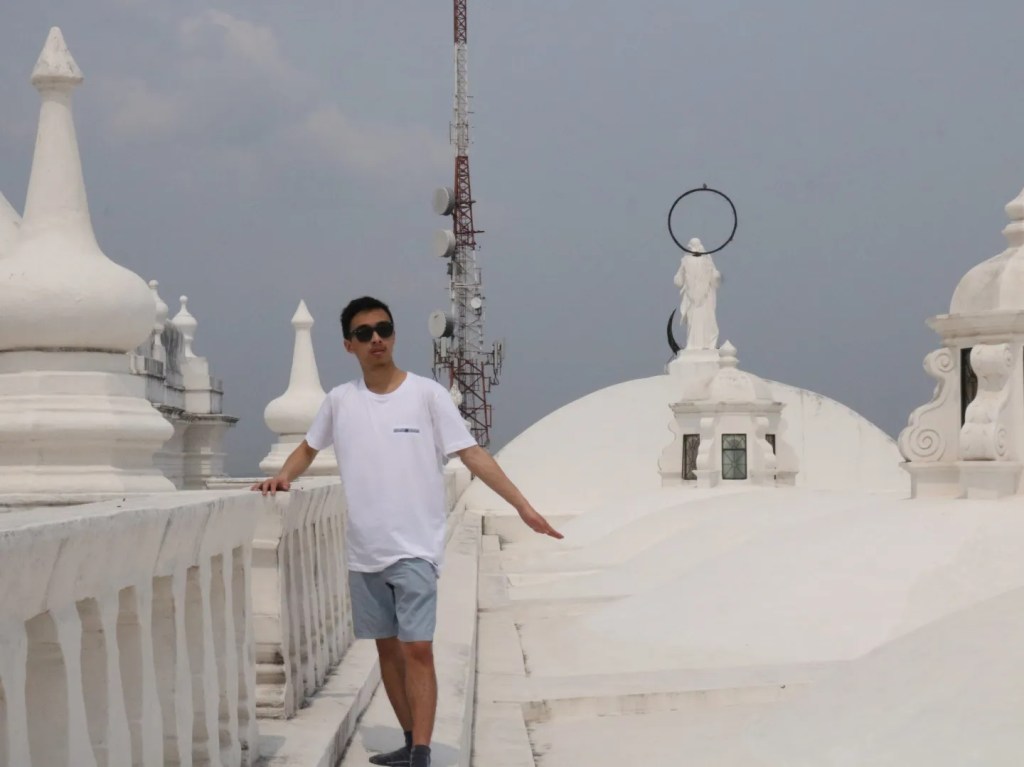
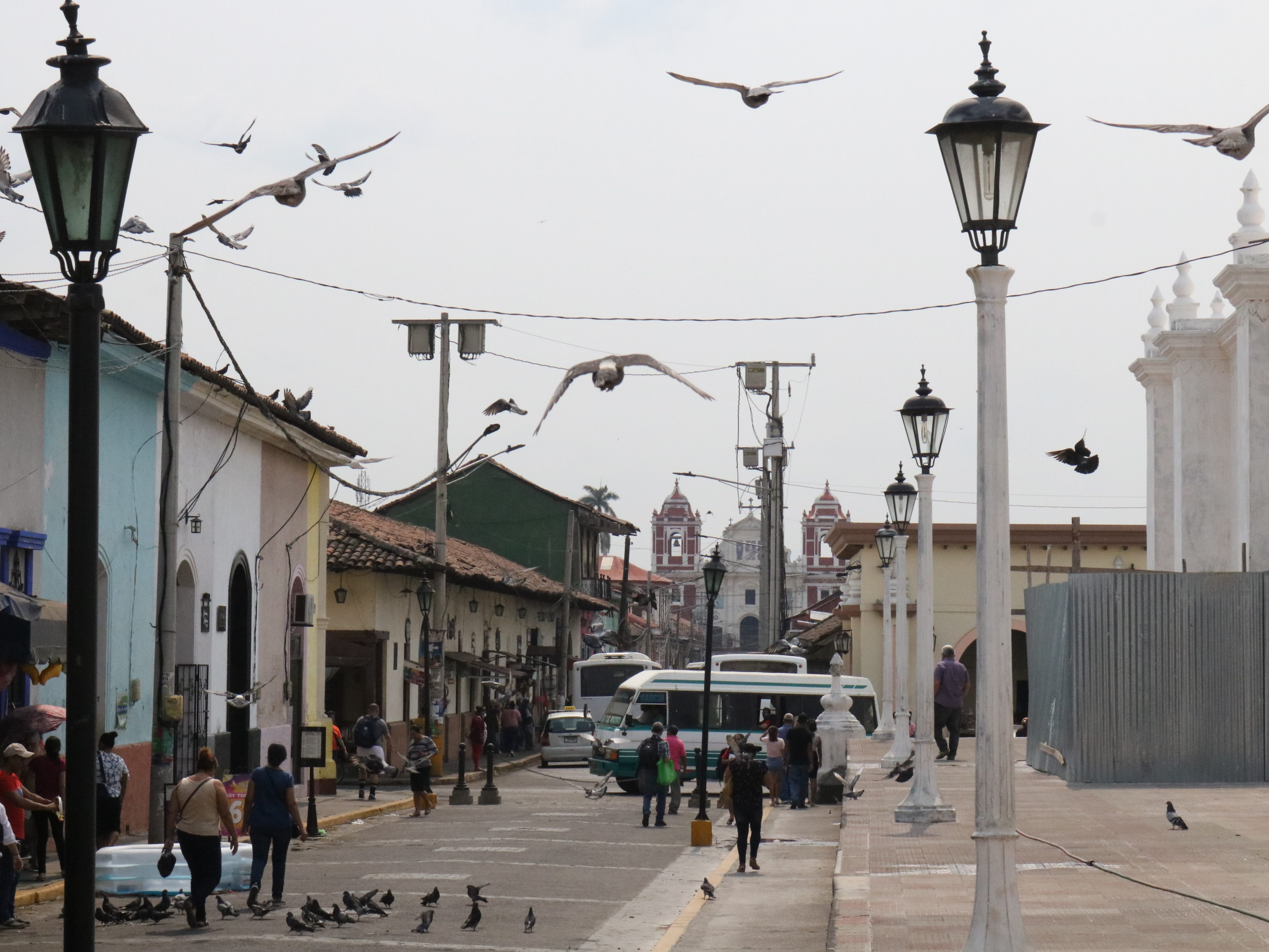
Then, I went across the street and visited the Museo de la Revolución. Being the primary liberal stronghold of the nation, the city was at the center of action of various political movements, including the overthrow of the Somoza dictatorship, which led to the Sandinista Revolution that changed the country forever. Much of what the city saw was depicted in the monochromatic pictures on the museum walls, as well as by the English-speaking guide on site. He then took us through the partially abandoned building, climbed staircases covered with pigeon poo, before reaching the top, where one had to walk on uneven, rusted roofs for another view of the city.
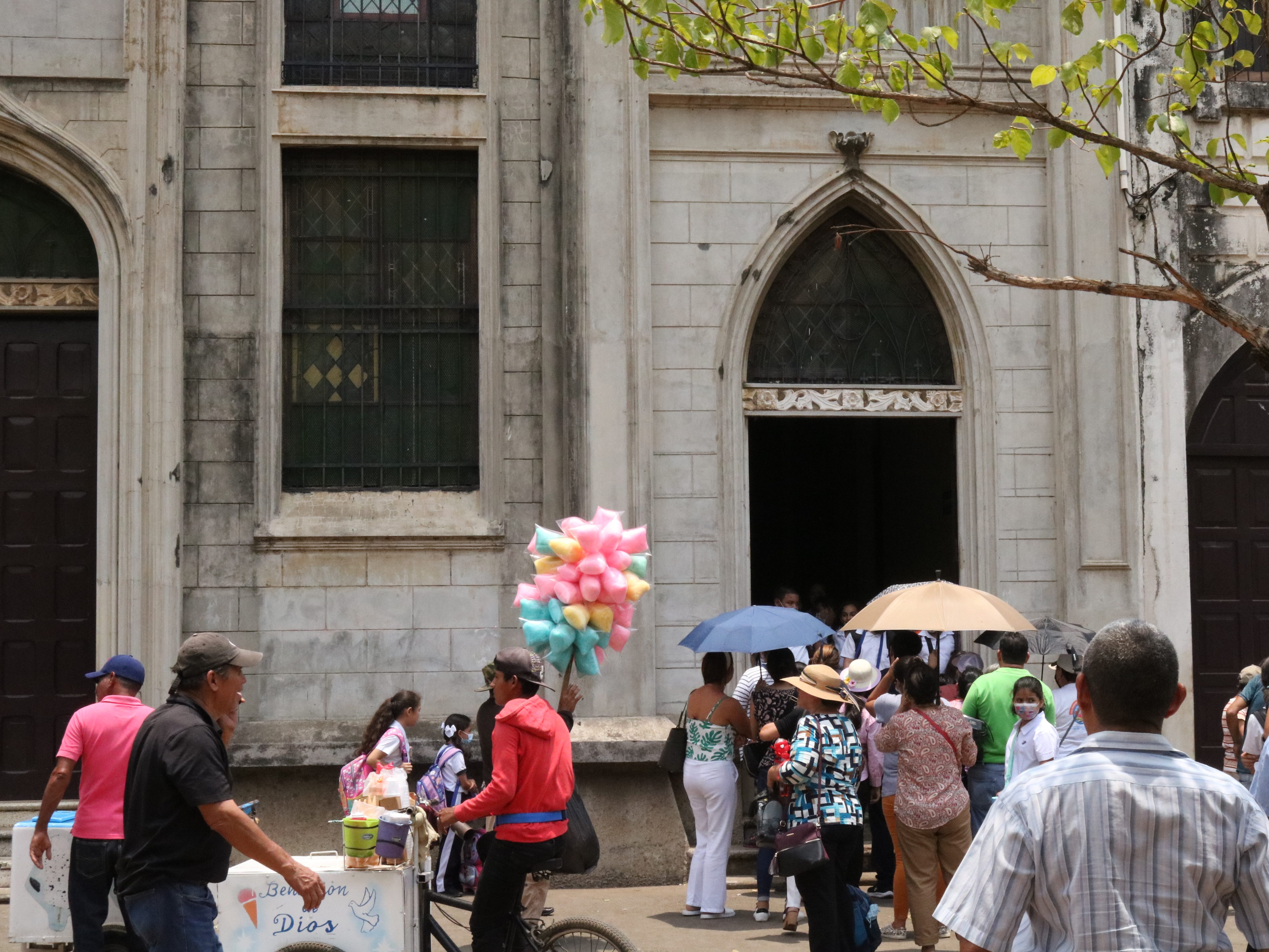
It was lunchtime when I finished the tour, and right outside of the museum, families were waiting for their children to come out of the Catholic school next door. Students in white uniforms exited the building and scattered over the park nearby, the same as all around the city center. I soon learned that the country’s most important university (UNAN) was first founded in León, and the original campus, dating back to 1812, was just two blocks north of where I was standing. Hence, all of this explained the vibrant student scene here.
Almost everyone I met in my hostel came to León for one thing – sandboarding the slope of Cerro Negro. I could see the appeal; it looked thrilling in pictures, but I couldn’t fathom myself doing it, especially when I had to stand and wait under the blazing heat with twenty others just for my turn to slide down the volcano, before climbing the slope to get back in line to do it again.
Instead, my focus was shifted to seeing more of the city’s colonial riches. Being one of the former capitals of Nicaragua, León has retained much of its original layout with plenty of historic monuments and churches. The latter is perhaps the greatest reason why this city is worth a visit – other than the main cathedral, there is also the Church of La Recolección, noted for its bright yellow exterior and Mexican Baroque design. Within proximity, the eye-catching colors and reliefs of El Calvario stand out with the building’s elevated position.
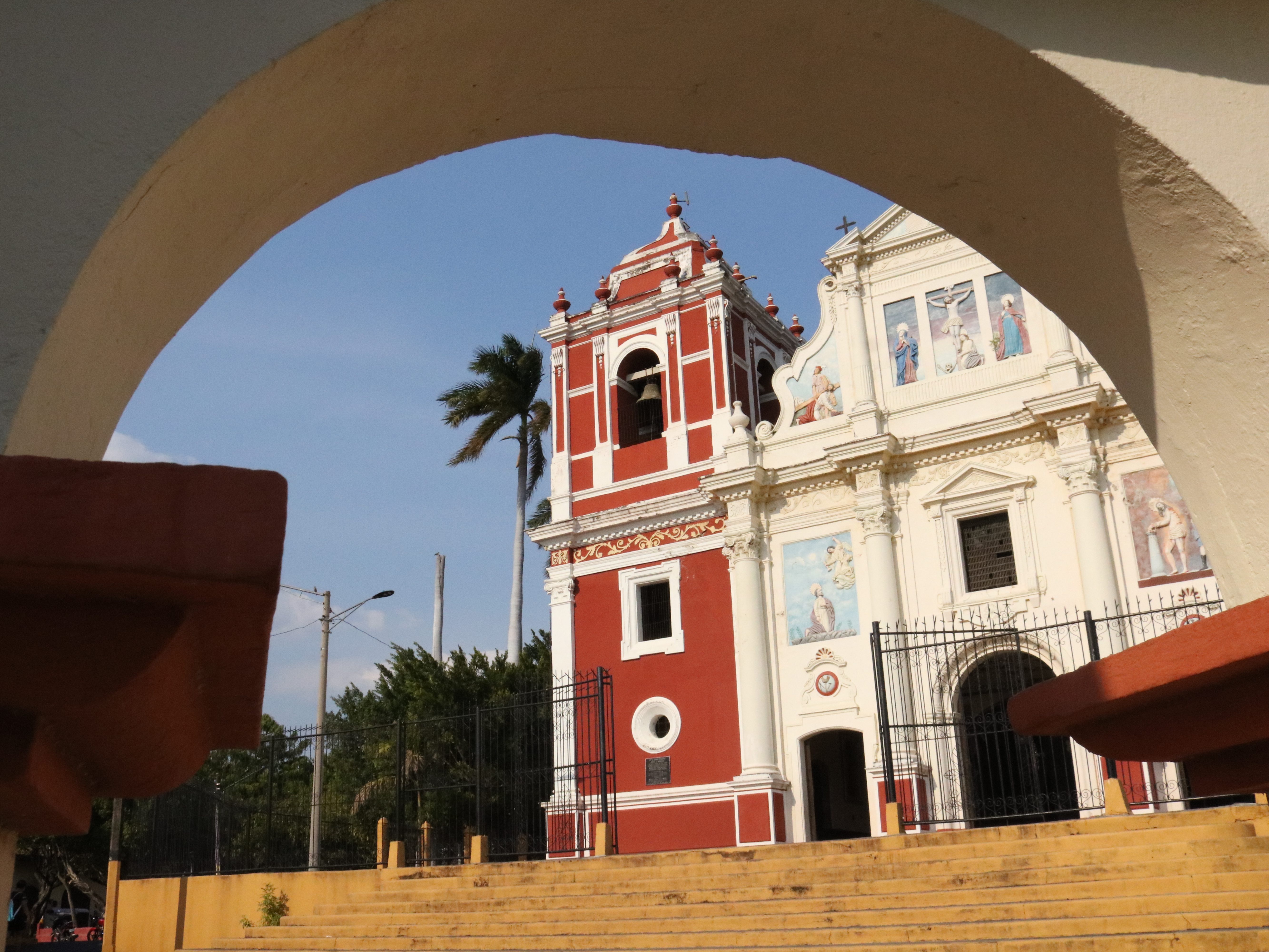
Interestingly enough, I realized I was one of the very few tourists exploring the city. The industrious and student-oriented culture of León was dominant; even though it had enough to impress visitors, the city almost felt distant from any kind of tourism. Perhaps it is the location north of Managua that makes it a little out of the way on most itineraries that focus more on the country’s south, but I was glad that I decided to visit the city even if it meant backtracking to the capital.
Colonial Beauty and Crater Views
A switch of buses in Managua later, I was headed to my second destination of the trip, and this was the one I looked forward to the most.
Two hours on the road, with cumbia blaring throughout the journey, the rural scenery of farms and dry forests gently made way for rows and rows of colorful houses, before the appearance of monumental churches and tree-lined boulevards. The first impression of Granada was, without doubt, an exciting sight from the bus window.
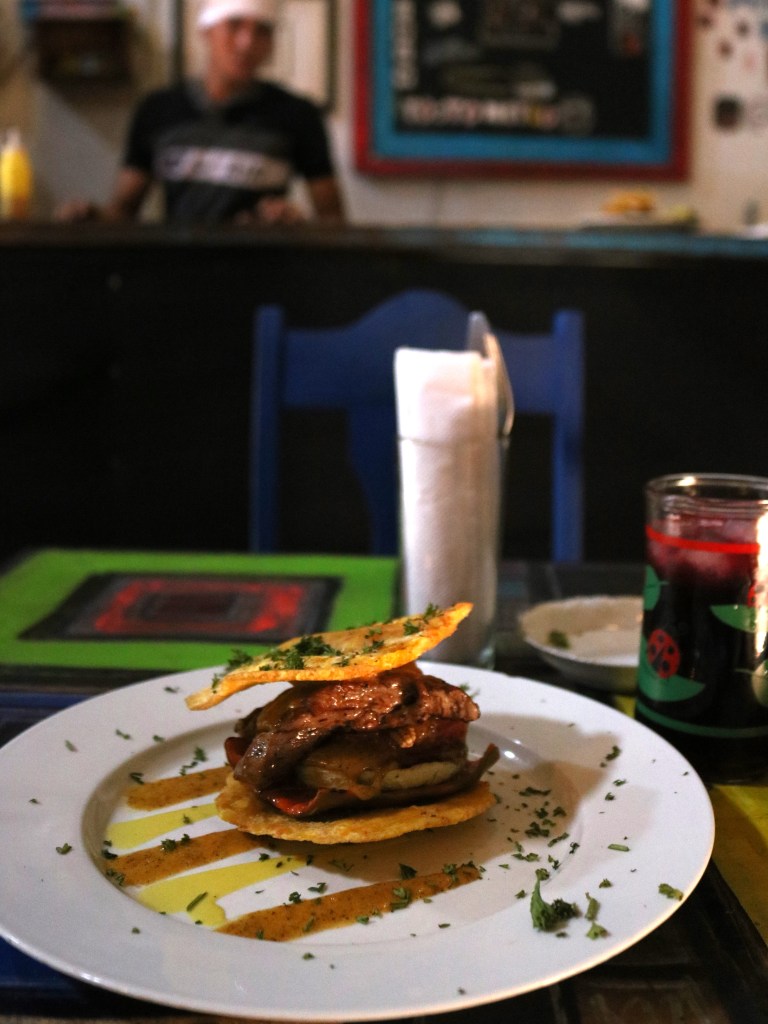
It was a short walk from the bus terminal to the city center, where my hostel was located. After leaving my bags behind, I went to a restaurant I bookmarked on Google Maps – Tostometro, which served burgers with a local twist by using fried plantains as the bun. The staff were very welcoming and cared to ask every diner how they felt about the food, which was out of this world. One of them even suggested me to try their hibiscus (jamaica) tea, which I first declined, but eventually ordered. Despite not exactly the typical local Nicaraguan meal I should be sticking to, the burger and drink, along with the hospitality of the staff and restaurant, were incredible.
Granada’s compact historical center is one of the most attractive in the region. With the earliest beginnings dating back to 1524, it is the oldest continuously inhabited city on the mainland of the Americas, and was once paired with Antigua in Guatemala for its commercial prosperity and importance in shipping between two sides of the isthmus.
A few centuries later, however, Granada slowly fell into despair from political rivalries, looting, and even a complete foreign takeover by American filibuster William Walker, who later instructed the city to burn to the ground. Luckily, the city was rebuilt. The churches rose up from the ashes, the once deteriorating townhouses were restored to their best pastel colored vibrancy, and with recent government efforts, the city has seen significant improvement in its local economy, especially from the increase in tourism.
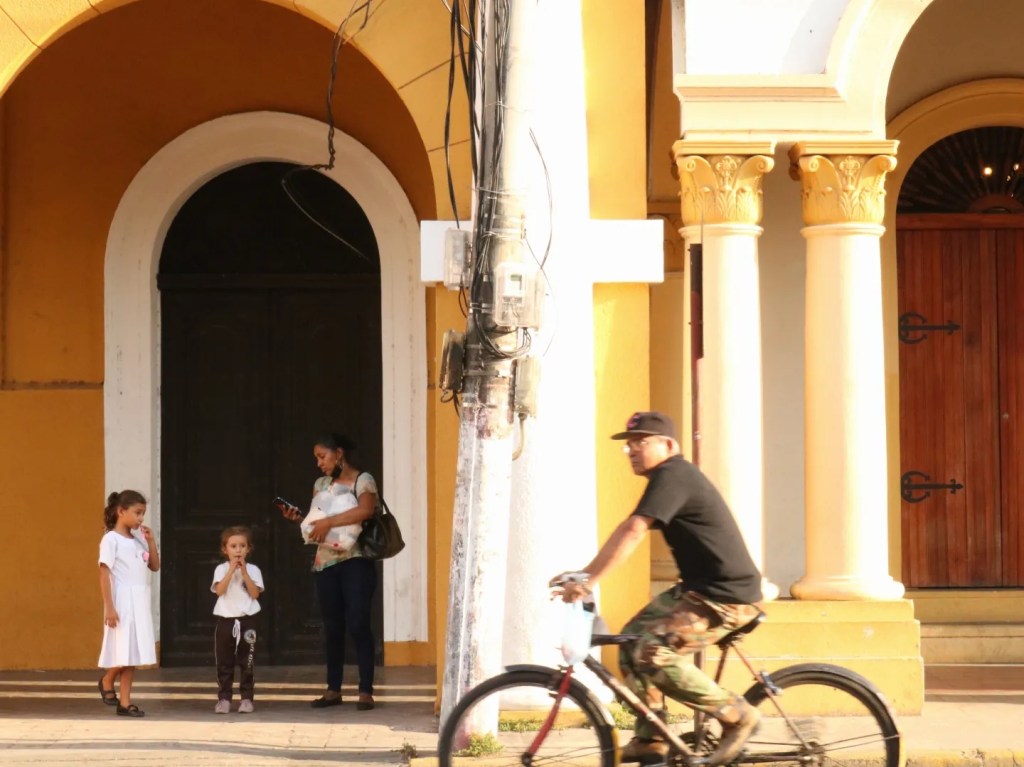
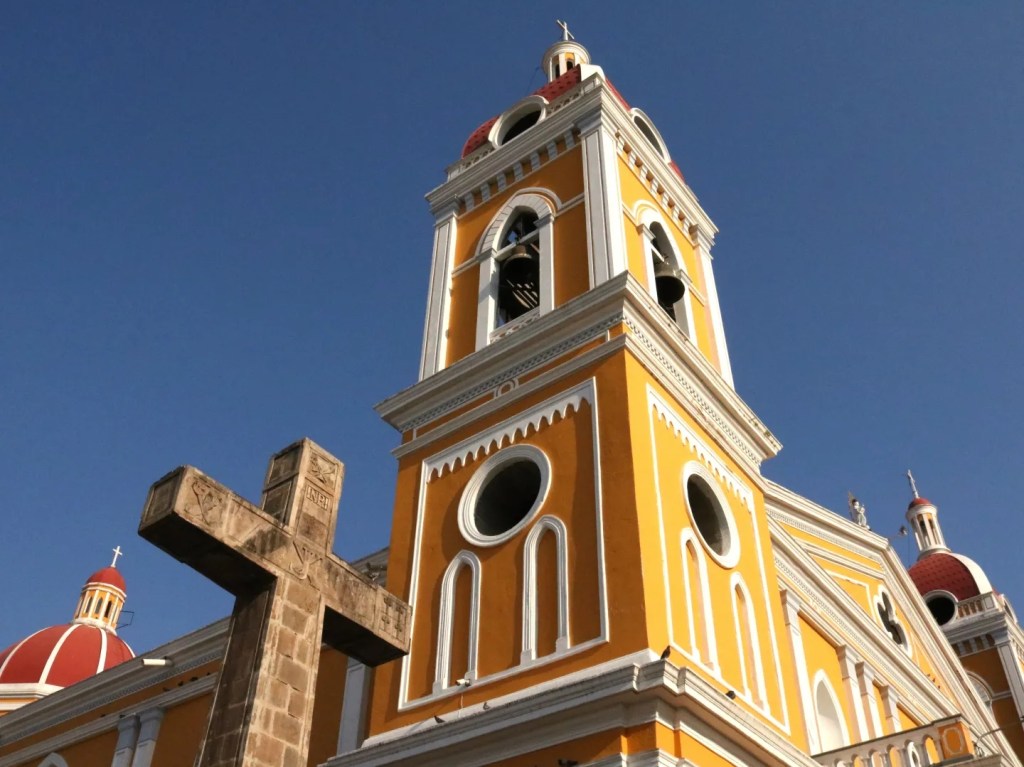
Walking around the few blocks surrounding the marigold-toned Granada Cathedral in the balmy afternoon revealed a side of the country I hadn’t seen. The pace of life here was so much calmer – elders chatting under the shade of trees, youngsters riding bicycles all around, and families enjoying street food from vendors at the plaza. The largely pedestrianized zone of the historical center had a big role in creating this relaxed and much-needed atmosphere.
I swapped the serenity of the city center for the bustling scene of Mercado Municipal. While most of the local produce is sold inside the neoclassical building, the market overflows into the surrounding streets, with hundreds of stalls selling everything from household items to schoolbags and electronic gadgets. The whole place can be overwhelming for some, but it is worth the visit even if you have no intention of buying anything.
Honestly, I found myself getting lost in the area a few times. But from my prior research, the market was the best place in Granada to try vigorón, a dish that originated in the city. When I found a vendor who served it, I was told to sit on one of the plastic stools with a few others before it was delivered to me in the most unassuming way possible.
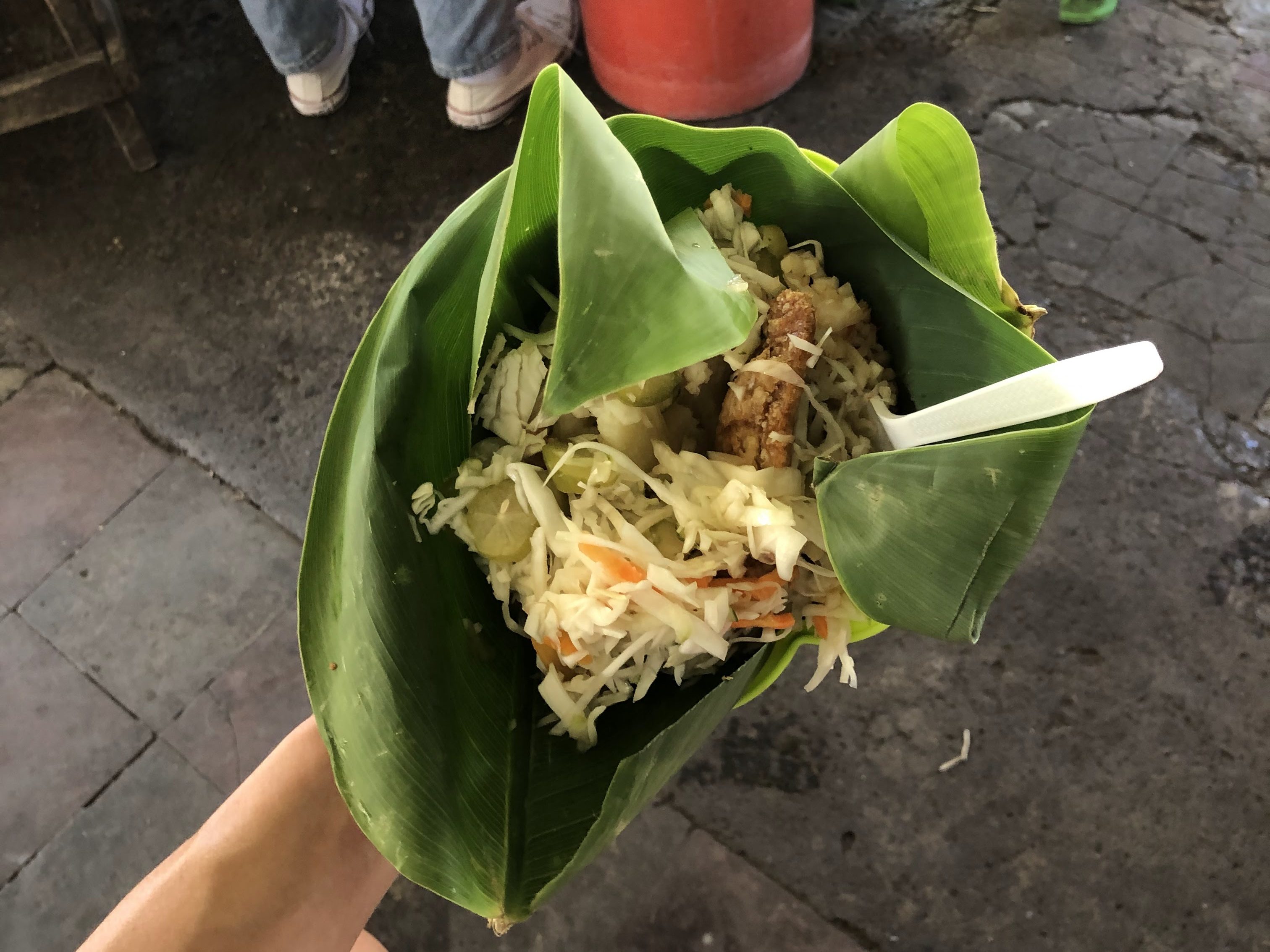
Wrapped in banana leaves, the dish consisted of shredded cabbage and carrots marinated in vinegar, chunks of yucca, and a generous amount of chicharrones (fried pork rinds). The whole concept of this local dish was like nothing I had ever tried, but there was always the first time in everything, so I dug in anyway.
The next day, I joined an afternoon tour to higher grounds. Granada is in close proximity to several volcanic wonders, from the peaks of Volcán Mombacho that overlook the city to the crater lake of Laguna de Apoyo, both of which are popular daytrip destinations for the adventurous. But head further west, and you will find one of the best definitions of an active volcano not just in the country, but also in the entire Central American region.
Like something that was blasted by an asteroid, the volcano of Masaya was out of this world. The lookout over the massive crater was truly a breathtaking sight with the evening sunlight; the never-ending plumes coming straight from the core were quite an addition to the already dramatic scenery. But our tour guide insisted it would be even more of a show after sunset, before gathering everyone to follow his lead up the pebbled trail. The moderate climb around the half rim rewarded great views of the caldera at every step, before reaching the “summit” where the entirety of the crater with the setting sun was seen.
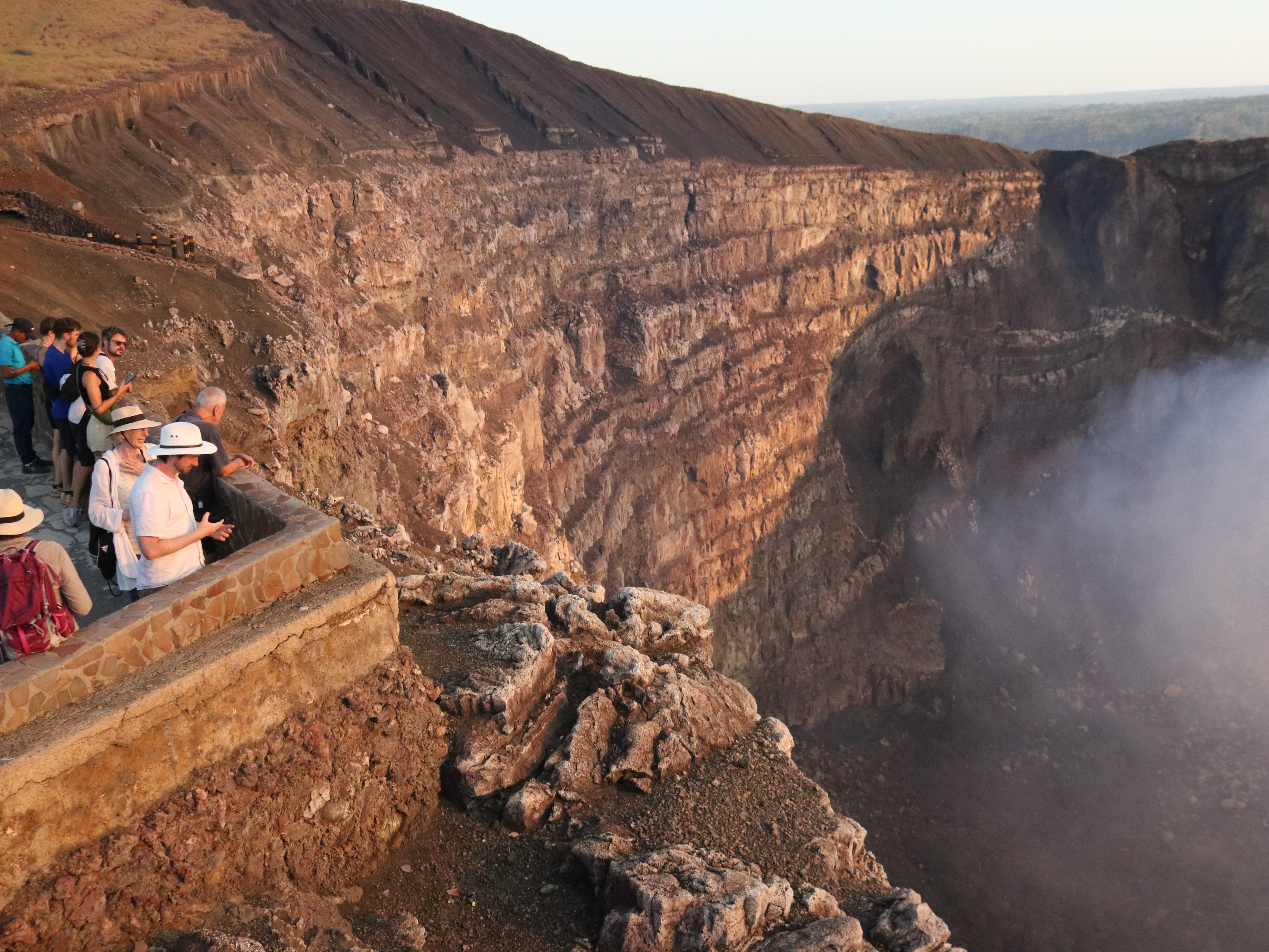
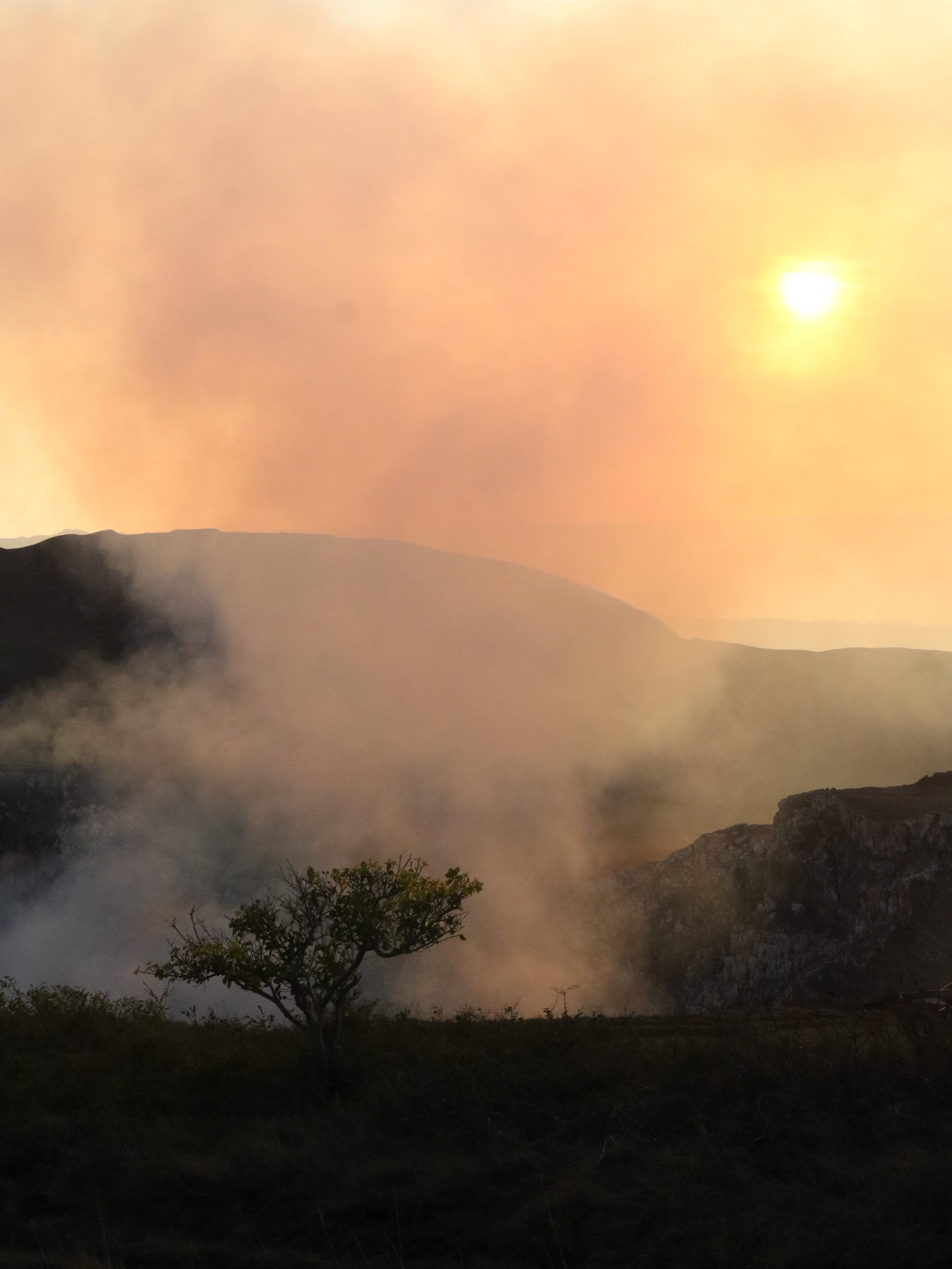
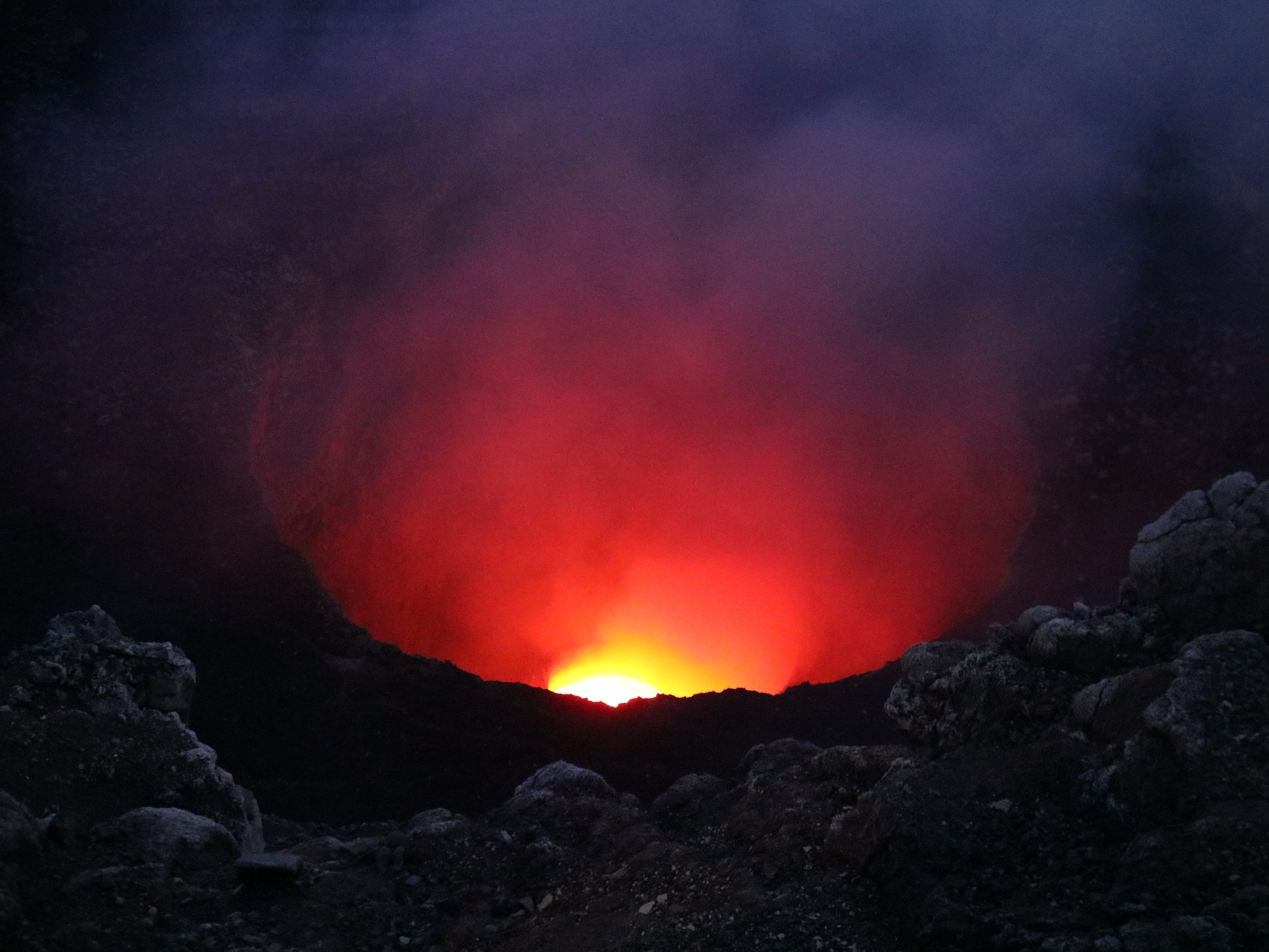
The race to be the first to witness the crater in its most incredible form had almost everyone pacing their way down the trail. A girl beat me to it, but being second place wasn’t bad either, as we were among the very few people at that time who got to see the famous lava glow of Masaya, which was only possible in the dark due to the constant smoke emitted by the volcano. It was my first time seeing actual lava, and I just couldn’t believe my eyes.
Over to More Volcanoes
If you didn’t know, the country bears the nickname “The Land of Lakes and Volcanoes”, and this cannot be more true when both geographical forms are located in the same place, and Nicaragua has that place.
A crowded local bus drove south to the town of Rivas. More than two hours later, I found myself stranded in town, looking for a minivan to take me to the pier some 5km away. There was none. For not wasting more time, I reluctantly hired a taxi with no one to share with to the lakefront, and paid more than 500 cordobas for the short ride. Regardless, I walked over to the ticket booth and grabbed a ticket for the next sailing. There was also a mandatory US$1 fee to pay for tourists. With a bit of time to kill, I explored around the area where I had my first glimpse of the island’s towering volcano.
Ometepe was just a stone’s throw away from the shore. An island made of two volcanoes – Concepción and Maderas, sitting in the murky waters of Lake Nicaragua, it is the largest in the body of freshwater. Seeing it from the mainland was already impressive, but it was even more of a stunner when sailing towards it, as it only grew larger the closer the vessel approached its west-facing shoreline.
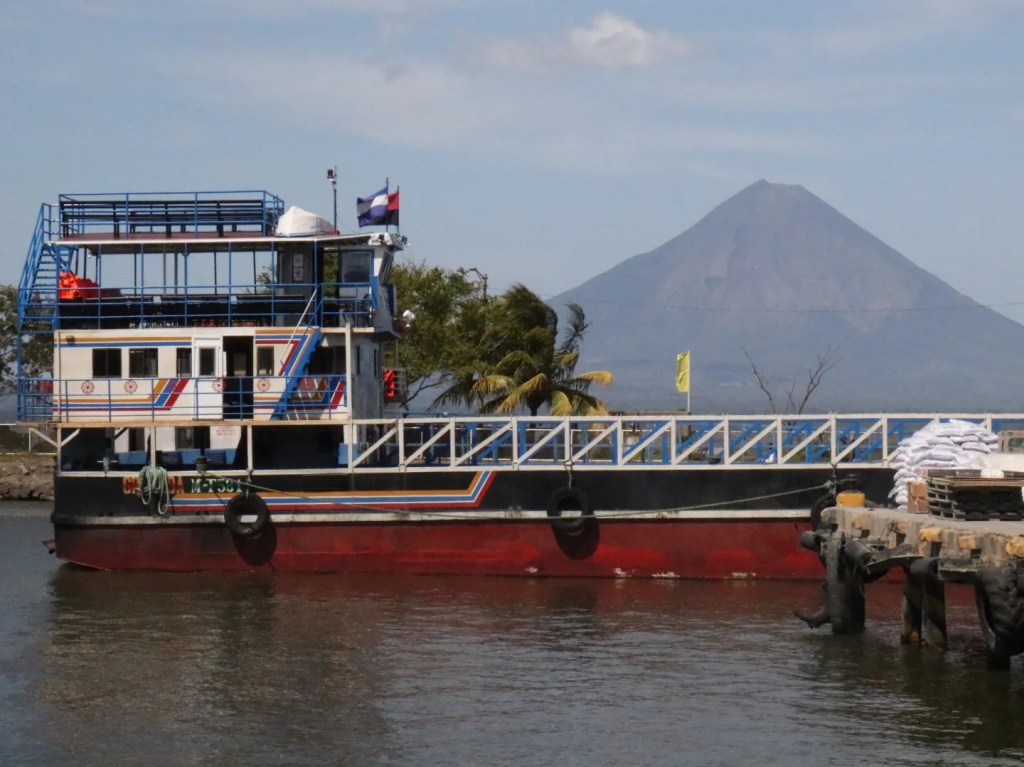
In less than an hour, the ferry docked at the pier of the island’s main settlement – Moyogalpa. As a car-free island, there were very few ways to get around: bicycles, motorcycles, ATVs, and a public bus that didn’t really run during my time there. So I relied almost completely on walking, since I didn’t want to cycle on the rugged roads or drive the aforementioned vehicles without prior experience.
What a loss, you may say. But my time on the island was rather relaxed, with no plans made, just swimming in the hostel pool whenever I wanted or walking around town and discovering local restaurants (the carne asada here was the best thing I ate on this trip). However, with the help of my hostel, I spent a late afternoon heading to the base of the volcano with a farmer.
“¡Ha llegado!”, screamed the receptionist who arranged the excursion for me. A man came to the doorstep with two horses and asked if I was the one for the trip. “Sí,” I responded, before he instructed me to climb on one of the horsebacks as if I knew what I was doing. I didn’t know what I was actually doing.
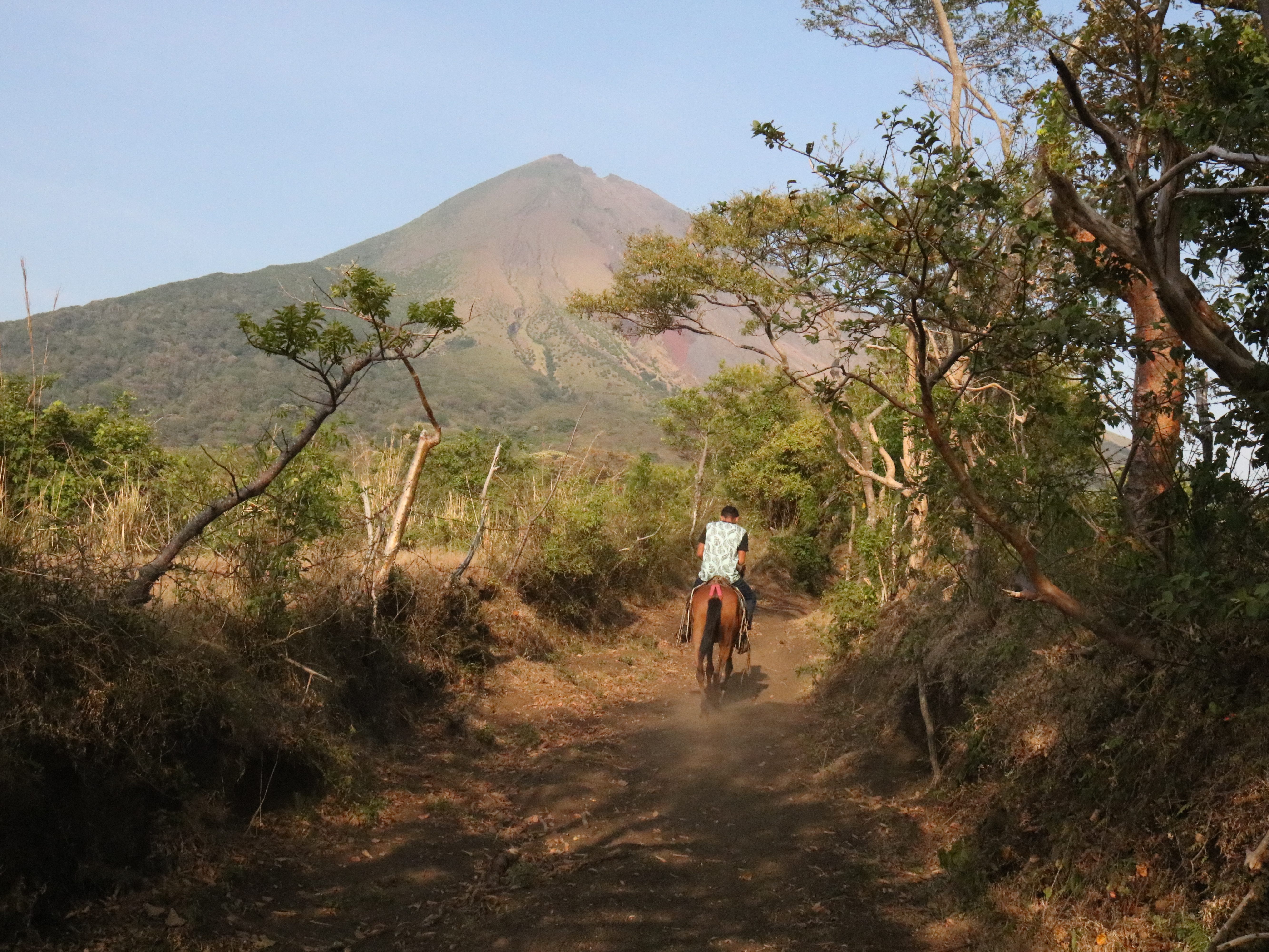
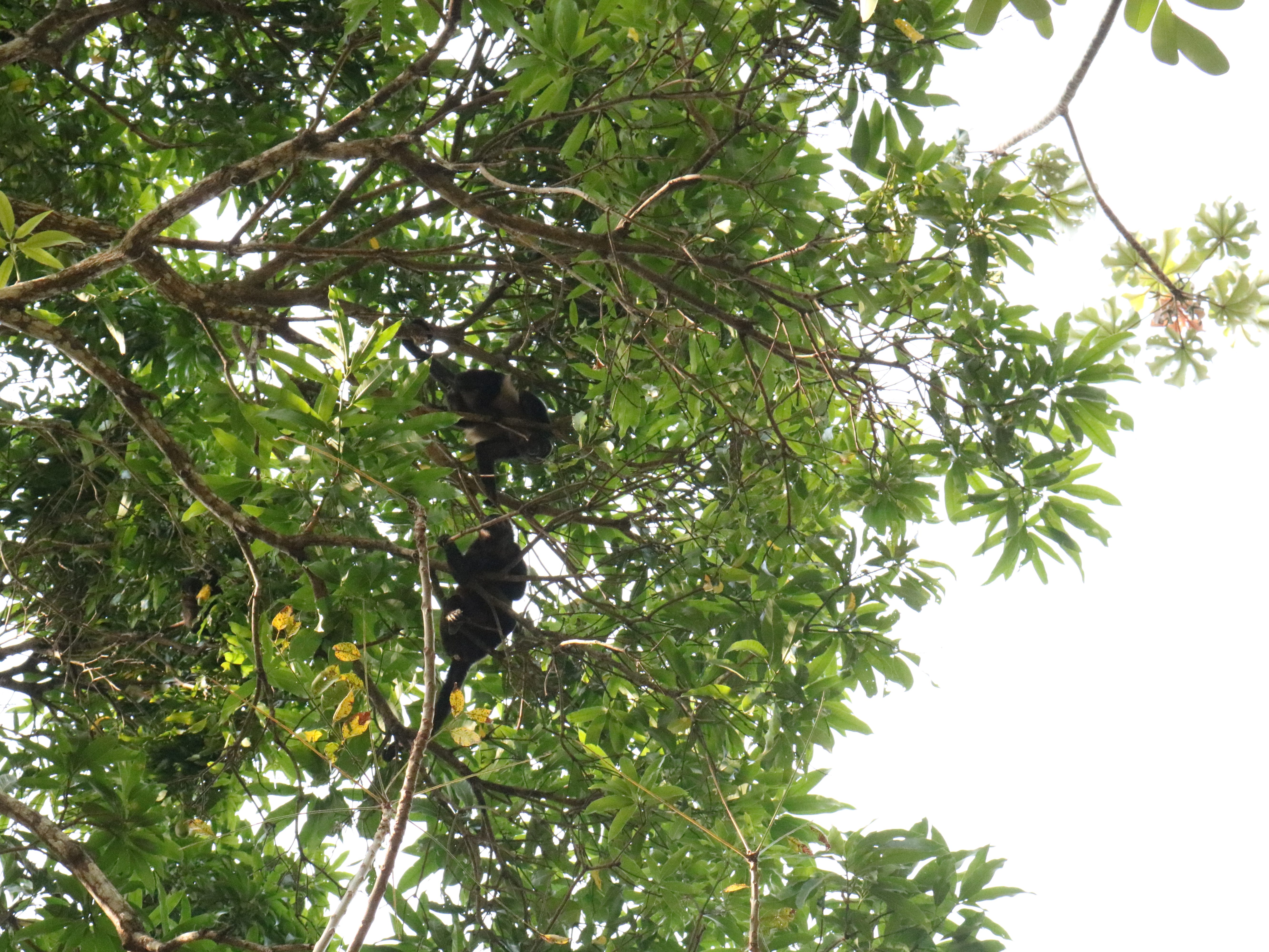
After successfully mounting the back of the horse, he pulled the string of mine to follow his lead. In no time, we entered a forested trail where we encountered plenty of blue and white magpie-jays known locally as urraca. The deeper we went, the more wildlife we saw, including howler monkeys and the national bird – motmot. Soon, the trees made way for the volcano to appear in the backdrop.
The trail became harder to climb the more we proceeded. The farmer had to help me control the horse a few times on uneven ground. I was afraid of falling off and hurting myself just because I didn’t know how to operate it. Understanding the difficulty, he tied my horse with his and continued the journey. Very soon, we arrived at the “end,” where there was an empty patch of grass that made a great photo stop with the volcano.
He pointed towards the opposite direction, saying his casa was right there. The town looked incredibly small from here; the lake became the horizon itself, and all was silence but the island’s nature around us.
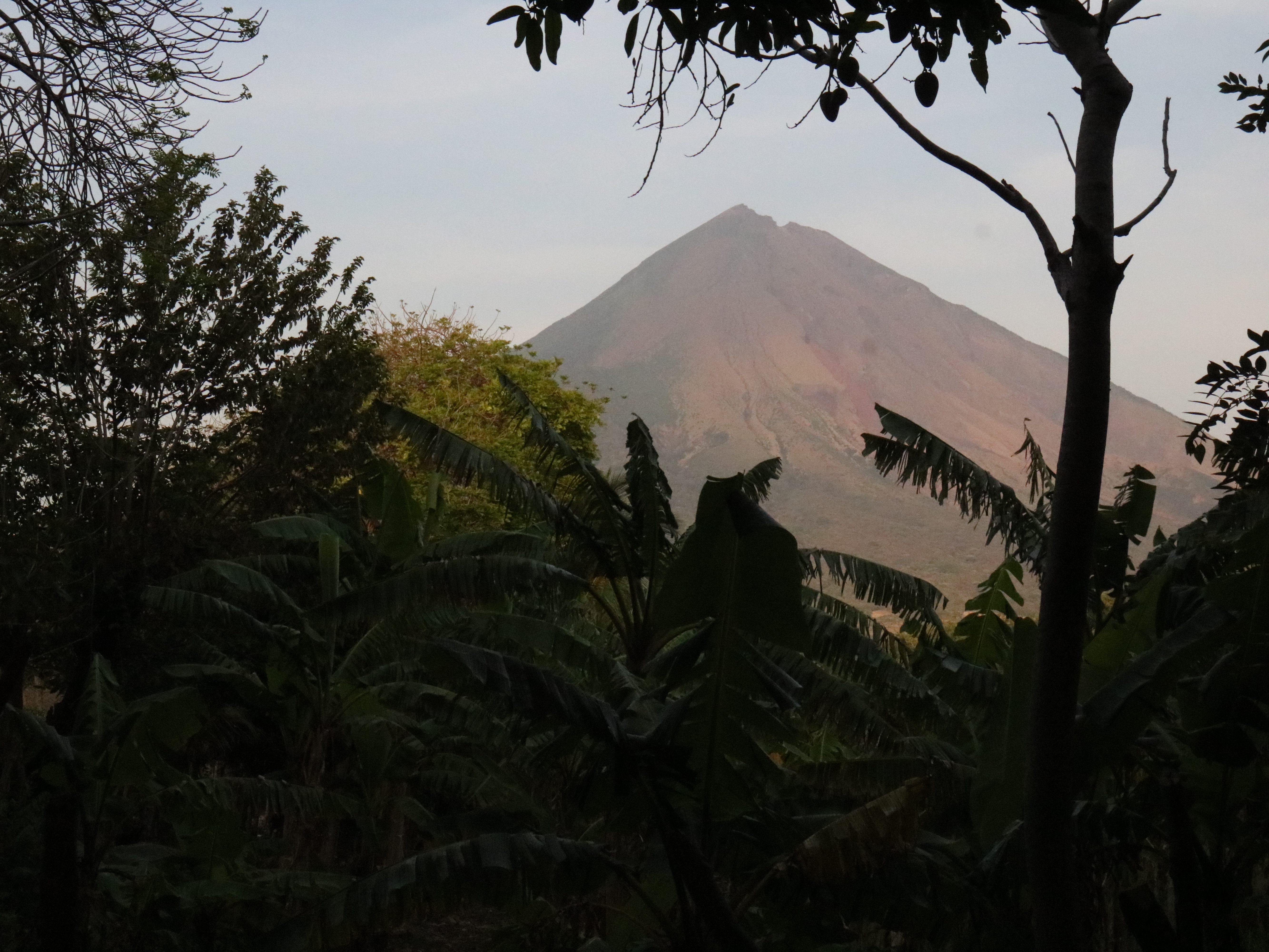
The decision to spend one week in Nicaragua for my first dip into the region was a bold move, but I had no regrets. The country perfectly delivered the Central American experience I was looking for, and I felt safe everywhere I went. Despite my infancy in Spanish vocabulary, the locals I met were eager to help and get to know me. This nation has a place in my heart.
 dtnctravel
Leave a comment