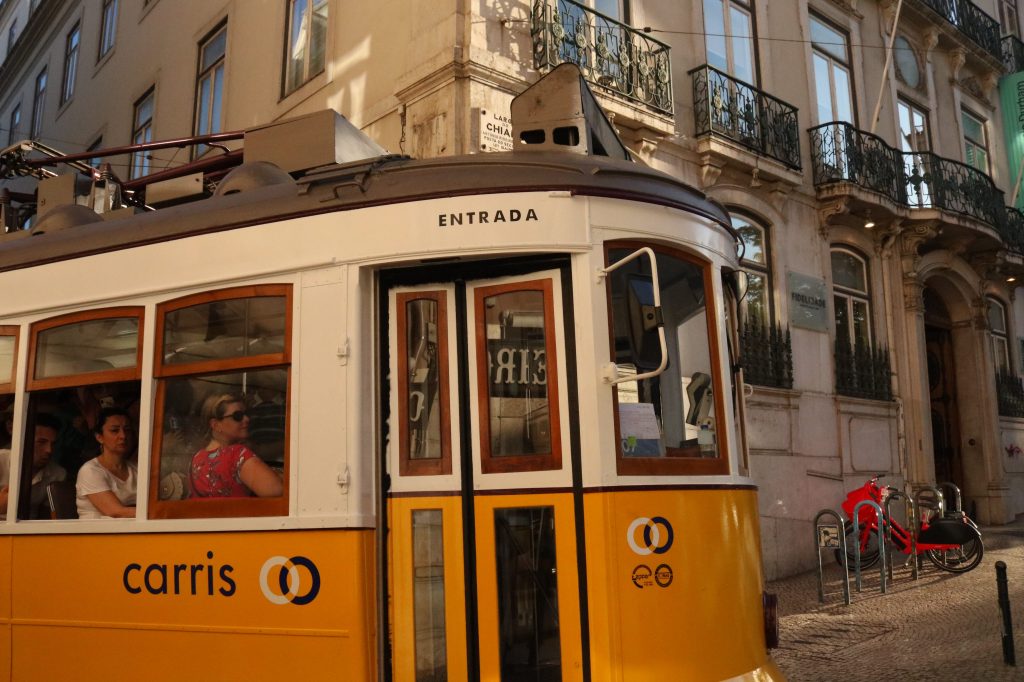
In the far western point of continental Europe, there is a city that defies the impossible – the conquests of several kingdoms, the devastating earthquake of 1755, and the political turnover and instability just over a century ago, along with the decline of the colonial empire it controlled that followed. Any city that has experienced such fate should be in an unimaginable state today, but that isn’t the case for Lisbon, the still shimmering and soulful capital of Portugal.
Flying in from the north, the short but scenic plane ride over the Iberian Peninsula eventually hovered above a sea of terracotta roofs. The eye-catching landmarks of Cristo Rei and the 25 de Abril Bridge were then seen right from the window. It was clear that I was almost touching down in Lisbon. After disembarking, it was a quick one-way out of the terminal to the metro station, where the purchase of a lime green tap card was made, before hopping on a train to the city center.
Given the short distance between the two, traveling from the airport to downtown Lisbon should have been straightforward and easy, but the metro line running from the airport (Linha Vermelha) had no direct service to the city center. Luckily, it was a quick switch at a station that intersected it with one that was connecting to there, and in just a little over ten minutes, I had walked out of the underground. The summer sky had never been this blue, and all around me was just how I imagined this city to be – buildings covered in tiles, the iconic yellow trams, and looming in the distance, the Castle of São Jorge crowning the highest point of the old town.
Where the Old World Lingers
Lisbon is one of the oldest capital cities on the continent. The many events that shaped it for millennia can easily be seen all over its “seven hills”, rolling from the banks of the Tagus River to the castle that has watched it all happen for over three thousand years.
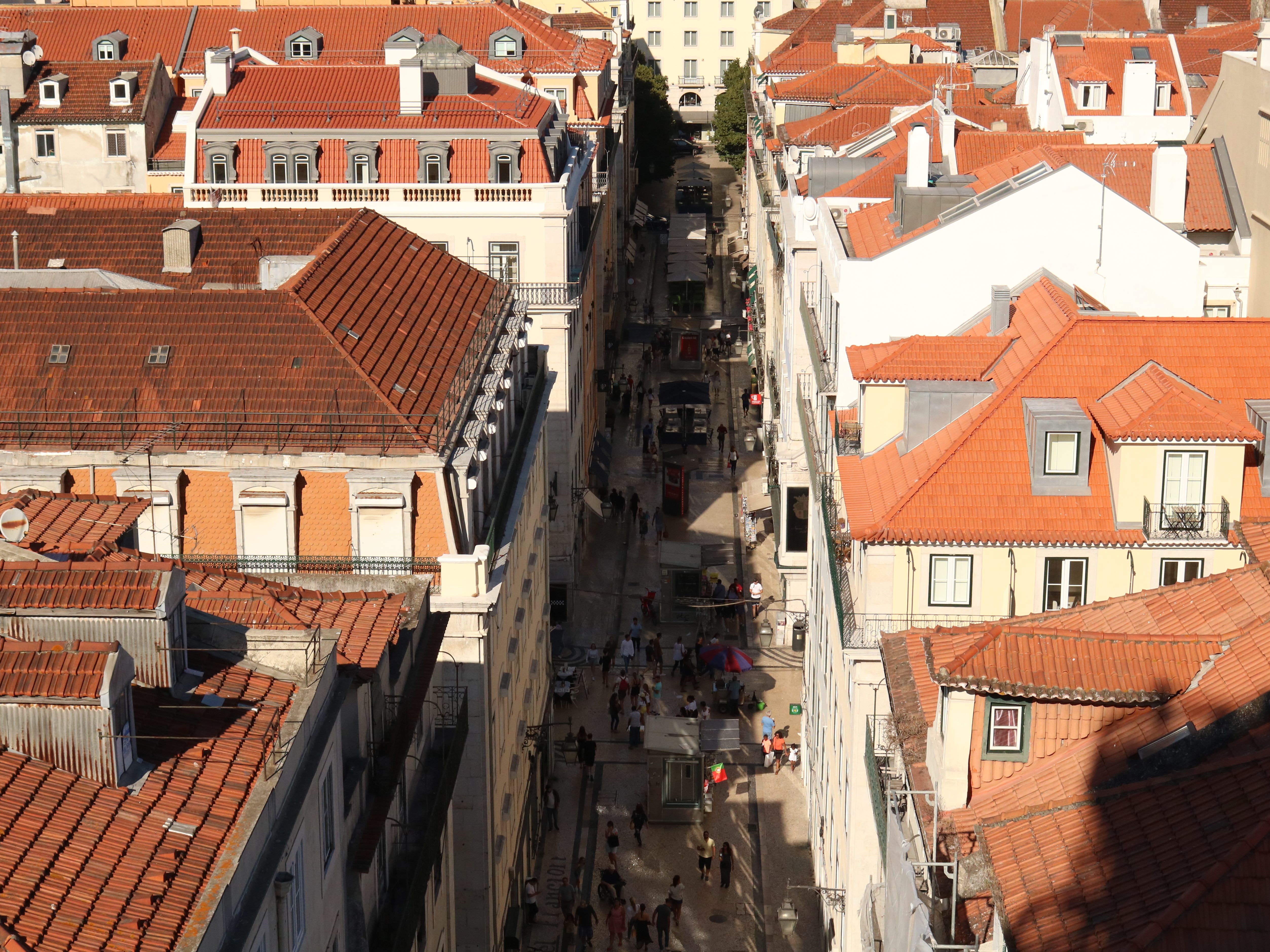
Like most visitors, I stayed right in the center of action, conveniently within walking distance from the major sights and sounds of the city. Baixa, as it is known, is almost entirely constructed after the earthquake in the 18th century. The orderly grid layout of the district is nowhere near the twists and turns of the older and surprisingly intact neighborhoods nearby, but being the commercial heart of the city, it is alive both day and night.
Baixa is not all shops and restaurants; this comparably newer part of Lisbon has some of the most recognizable landmarks around – from the ivory monolith of Arco de Rua Augusta, which serves as the “gate” between the district and the massive square of Praça do Comércio, to the odd-looking iron structure of Elevador de Santa Justa that connects the lower part of town with Largo do Carmo uphill. The latter offers unparalleled views of the city and the river from its tightly squeezed terrace and observation deck on top, which eventually links to the ruins of Convento do Carmo, a former monastery that never recovered from the destruction of the 1755 earthquake.
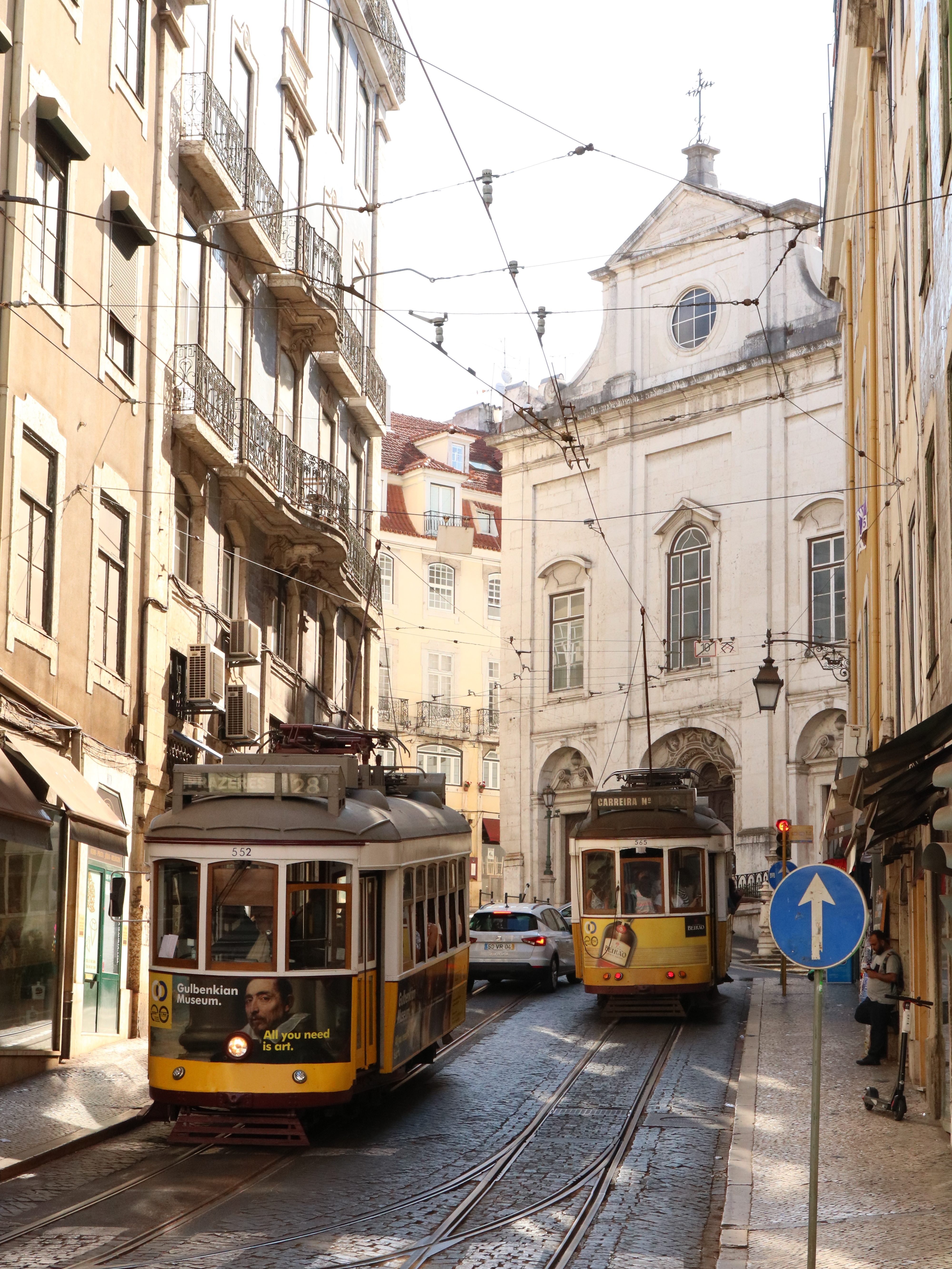
Seeing the best of what the area has to offer is not only better on foot, but also on the city’s most iconic yellow trams. First introduced in 1901, the electric-operated vehicles can only carry so many people in one go, but even without obtaining a seat, riding one while standing on board is a quintessential Lisbon experience. Either way, allow the trams to save your footsteps as they travel up and down the city’s hilly streets in the most old-fashioned way possible.
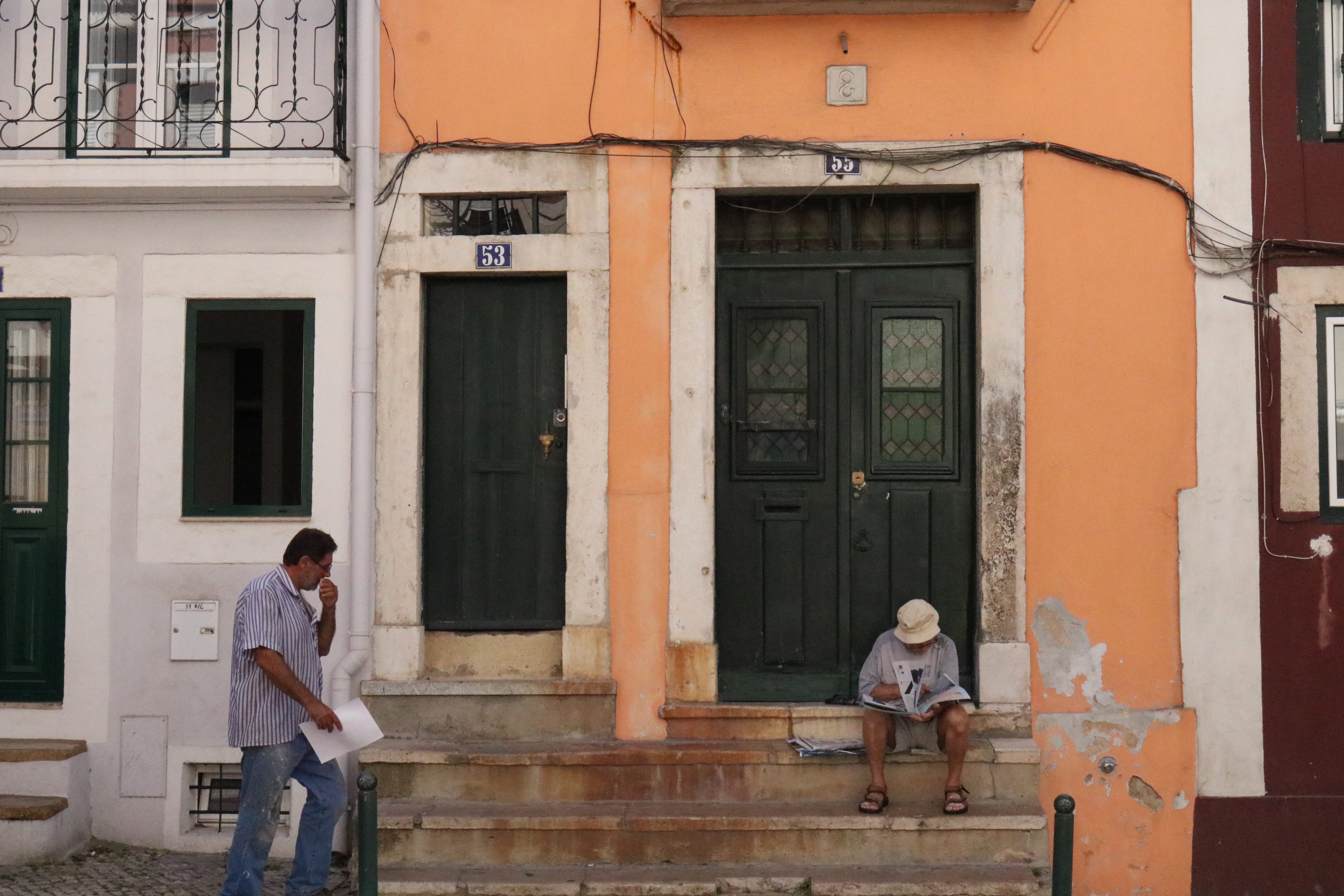
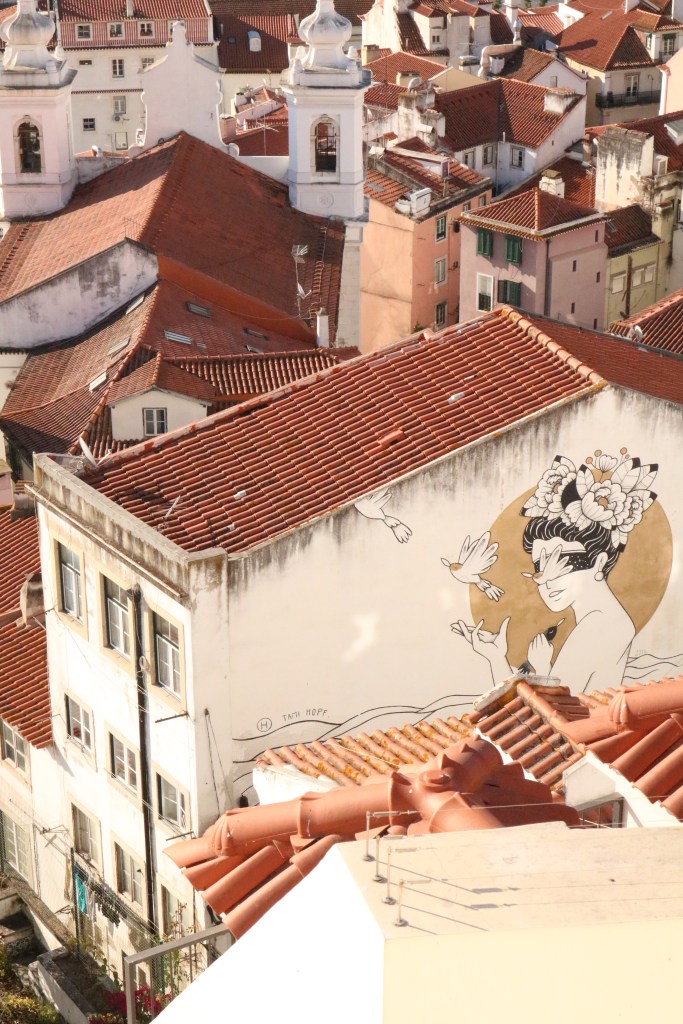
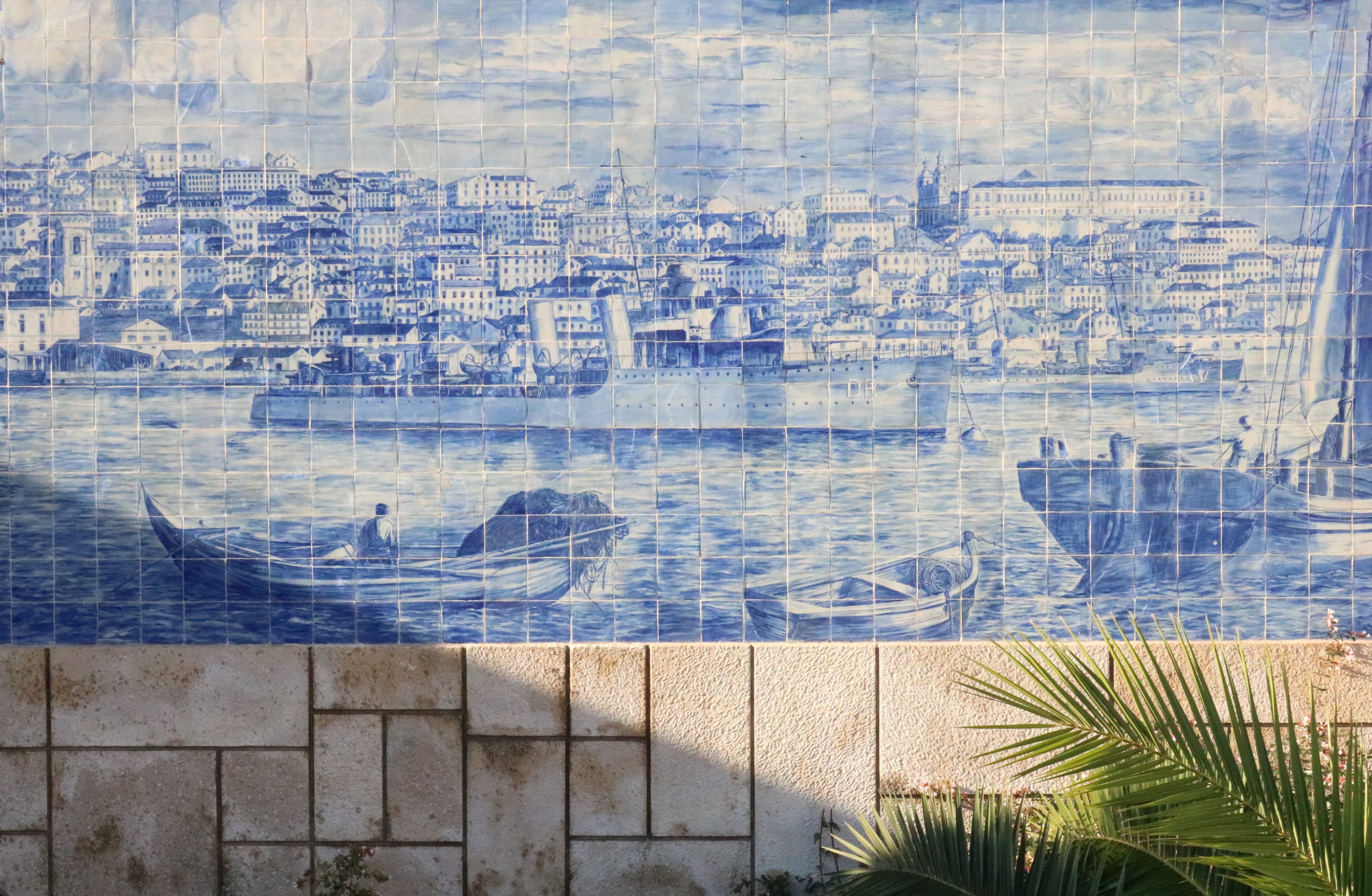
The trams are also the best method to get to Alfama, the oldest part of the city. Largely intact after the 1755 earthquake, the district is characterized by its winding streets and elevated topography, and was once home to the lower class and fishermen. The reputation continues on today, but Alfama is the heart and soul of the city’s lingering past, with many buildings still retaining traditional architectural elements of tiled (azulejo) facades and balconies occasionally flowing with bougainvillea all across the district.
Alfama is perhaps the best place in the city to get lost, for good reasons. Taking one of the yellow trams (No. 28) up from Baixa, get off at the main cathedral (Sé) and start exploring on foot. While the hilly streets are quite the workout for the knees, they all lead to some of the most important historic sites such as the Pantheon, miradouros that offer spectacular vistas of the city, and slices of local life that have long disappeared in other parts of Lisbon. The atmosphere here is as nostalgic as it can get.
Vestige of the Past
The city’s history extends far beyond the borders of the central districts, and this is especially true in the neighborhood of Belém. This freguesia in the farthest west of Lisbon proper commemorates the Portuguese Empire in grandeur, resembling an outdoor museum with its many monuments along the riverbank. Luckily, they are all within walking distance of one another.
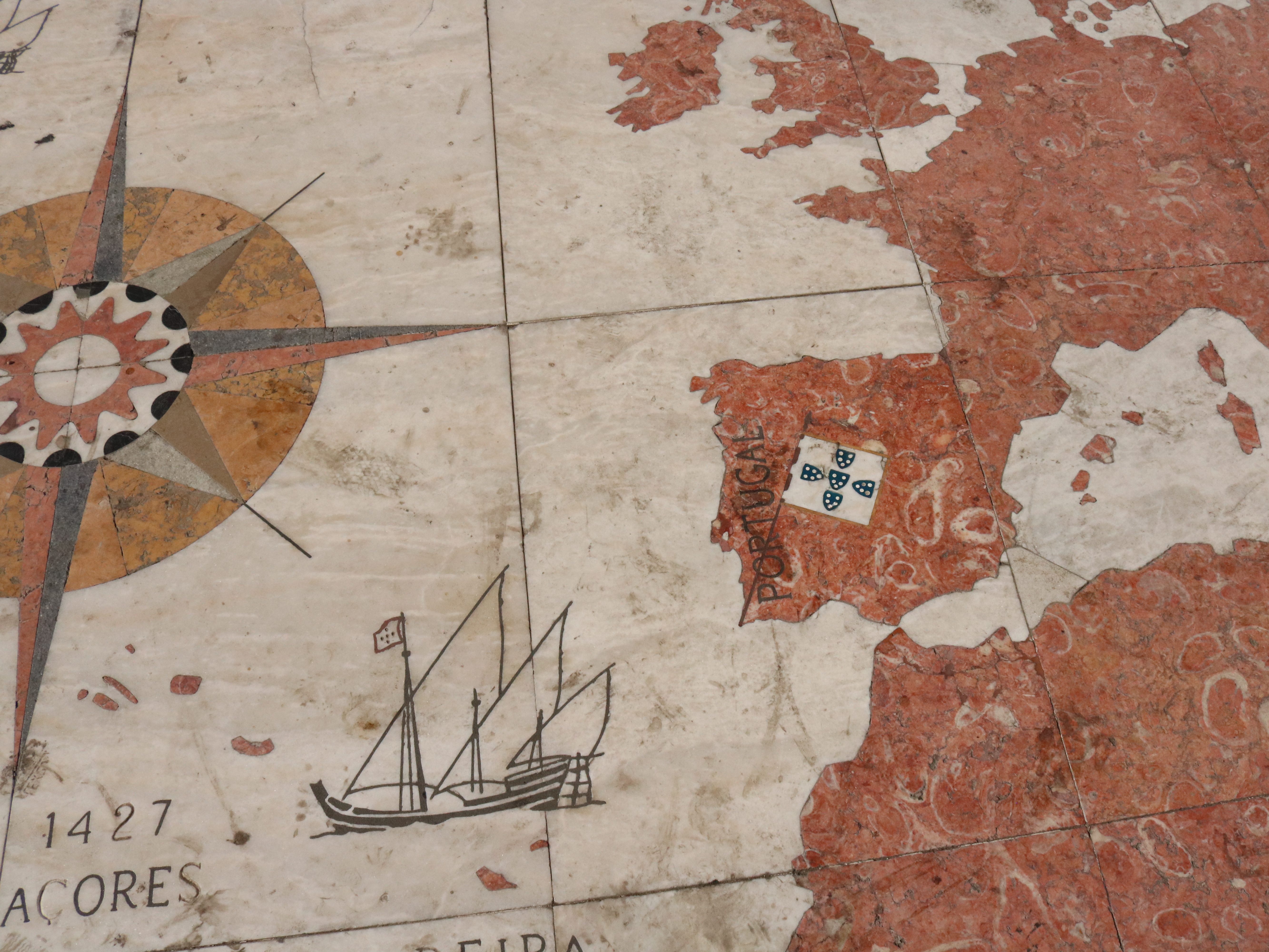
Watching the tides of the Tagus in the most handsome position, the Monument to the Discoveries (Padrão dos Descobrimentos) is built on where ships departed for trade and exploration of the unknown in an era known as the Age of Discovery. The ascending statues of notable sailors and missionaries on each side of the monument are a work of art, as is the map of the Portuguese Empire on the ground. A short walk west brings you to the Belém Tower, perhaps the most recognizable structure in the district, and an undeniable symbol of the power and prestige of the ill-fated empire even today.
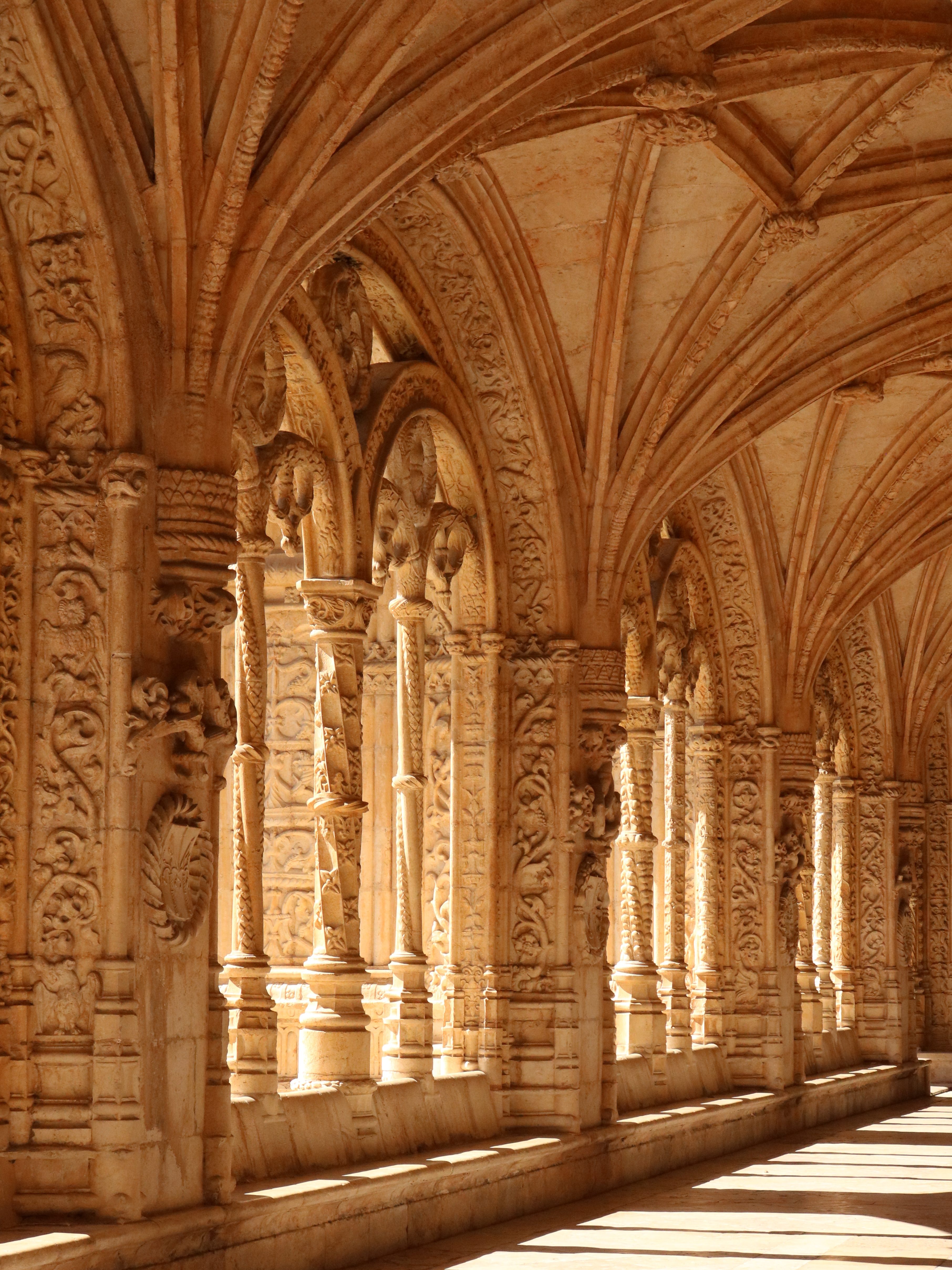
However, the most impressive site of them all has to be the Jerónimos Monastery. The complex is at the height of late Portuguese Manueline architecture, with cloisters of exceptionally ornamented arcades and vaults, leading to the three-aisled church where one can find the sculpted tombs of the famous explorer Vasco da Gama and the country’s greatest poet Luís de Camões, along with the resting places of two kings the former served.
More of the country’s maritime history is honored at the Museu de Marinha next door, sandwiched between several other museums in the area. Belém is also the home of the nation’s president, who resides in the National Palace just meters away from the monastery.
Room for Appetite
All the immense history of the city feeds the mind, but not so much for the belly. Well, rest assured, this is a haven for food. Before stepping away from Bélem, a pilgrimage to make is the Fábrica de Pasteis de Belém, the bakery that serves the “original” Portuguese egg tart, whose recipe was first made at the monastery in the 17th century.
The line to get into the bakery is long, but many say it is worth the wait. While there may be a noticeable difference in taste and texture, the pastry can also be found elsewhere in the city. A shop that specializes in it is Manteigaria, where one can observe the entire making process of the pastry from the counter. The fragrance of the baked product coming straight out of the oven, before it is handed to you on a ceramic plate, is an experience in itself. Eat it while it is hot; the crispiness of the crust that comes with the tart creaminess is unlike anything that your mouth has ever tasted.
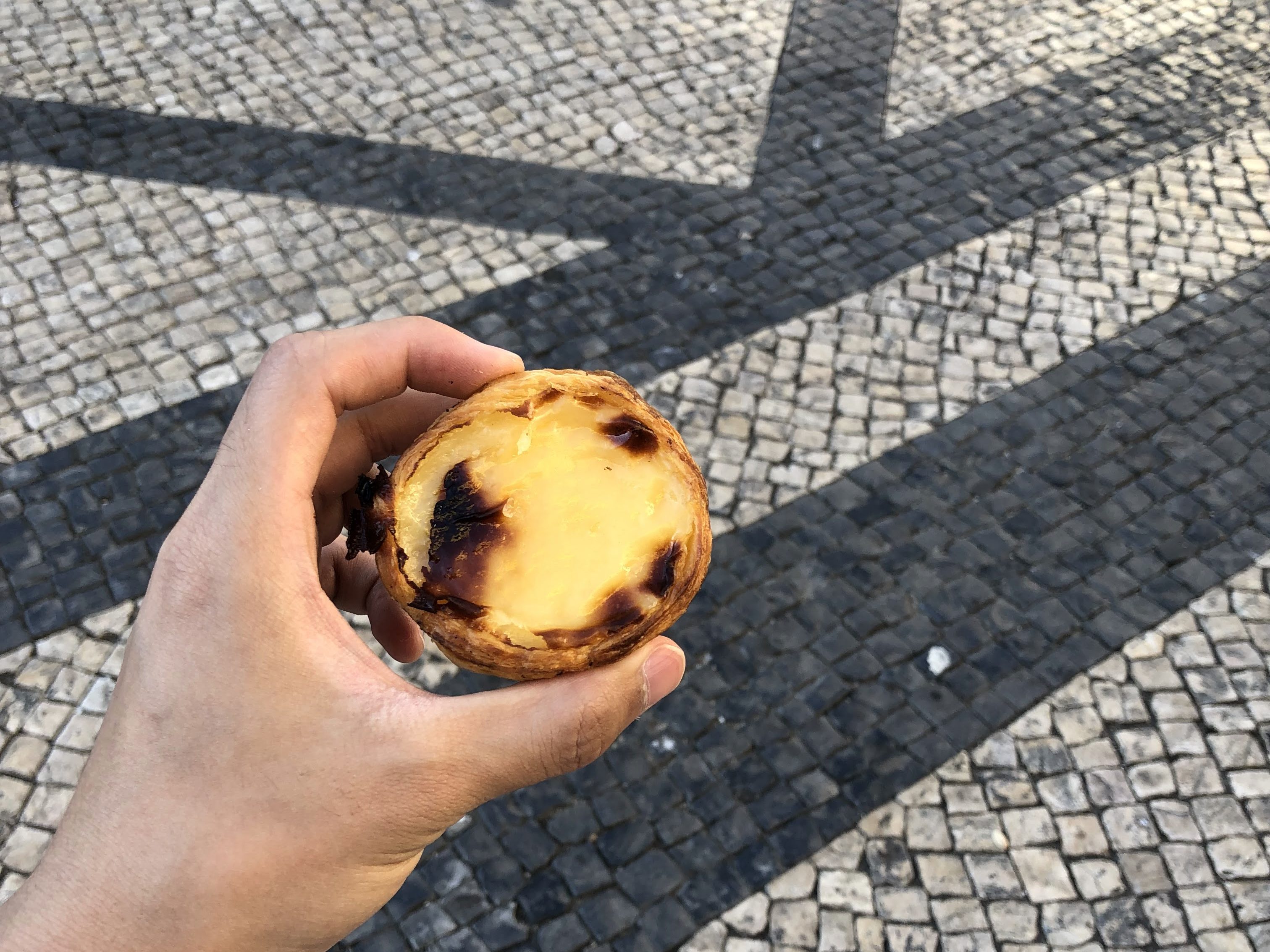
The first bite of a pastéis de nata is revolutionary, but the same can be said of many other dishes served in the city. Being one of history’s most significant seafaring nations, the Portuguese diet has always been comprised mainly of seafood, and there is no better dish for it than bacalhau. The codfish is usually sold dried and salted, which becomes soft after soaking in water or occasionally milk; that is when it is ready to be cooked. While there are countless ways of serving the fish, the most common is simply grilled or steamed, before drizzling with olive oil and lemon juice.
This was the dish I had the most in restaurants across Lisbon, pairing it with potatoes and vegetables on one side, along with a jug of vinho da casa on another; the combination is sublime. Another popular fish option is sardines, which are usually served grilled on menus, but there is also a smaller version of the fish called petingas, which is fried to become a favorite local appetizer.
One of the best places to sample the fish and other seafood dishes is right across the water. A quick ferry ride from the city brought me to Cacilhas. This is the jumping-off point for many visitors heading to the Cristo Rei monument, but the waterfront is just as appealing with views of the river and the bridge. It is also here that the seafood restaurants are found, concentrating from outside the ferry terminal to the entire stretch of Rua Cândido dos Reis that follows.
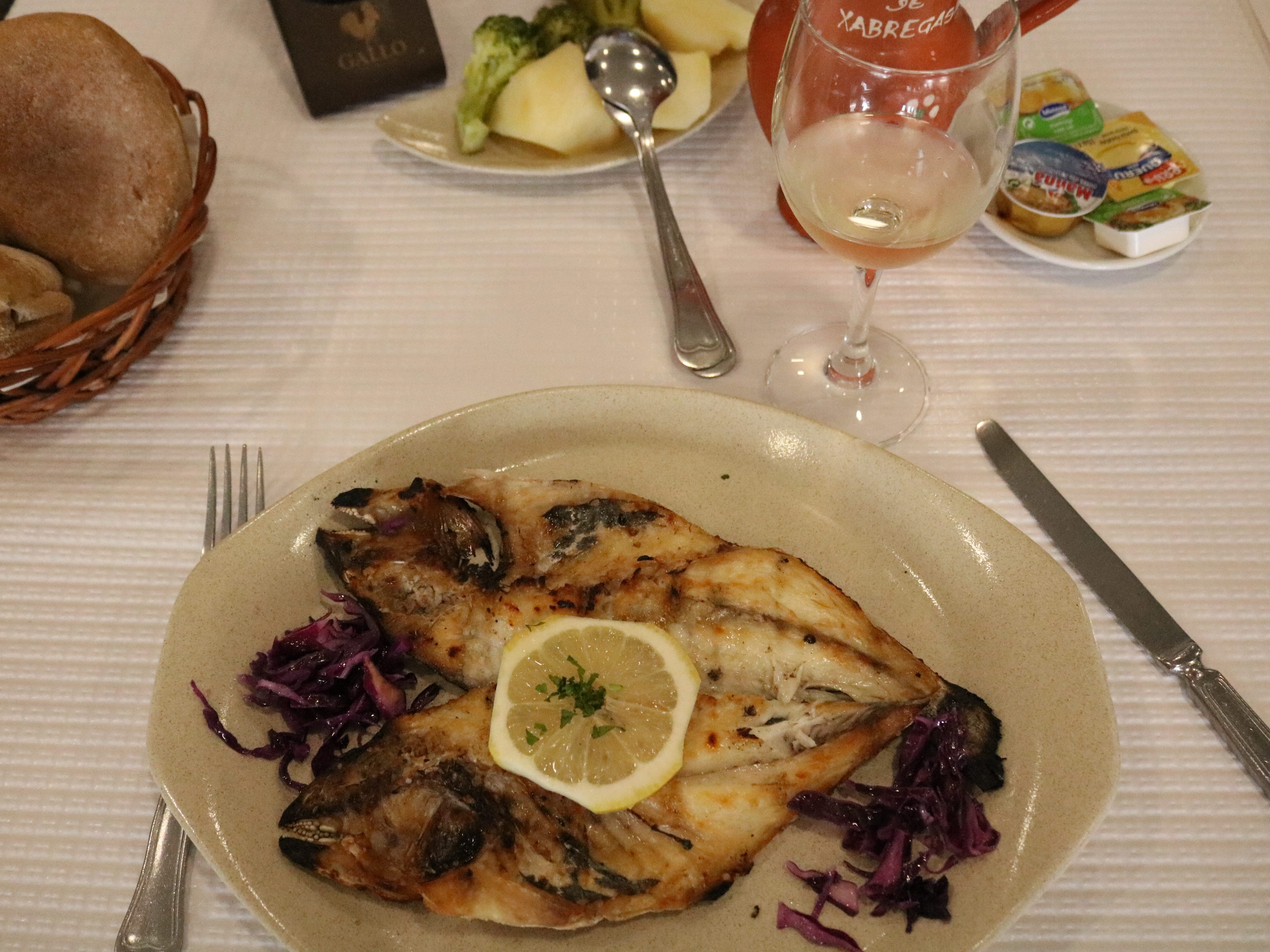
While I didn’t necessarily try every place there to know which stood out the best, the one I can recommend is Farol de Cacilhas, a surprisingly large restaurant usually frequented by locals for its fair portions and prices. Don’t expect any fancy cooking; however, it was the down-to-earth style of its dishes that really made up for the dining experience for me.
Melancholic Melody for the Evening
If there was a soundtrack for the city, it would be the soul-stirring tunes of fado. Originated from the poorer neighborhoods of Lisbon, the genre was created by the influence of various music styles and was mainly sung by the working class in taverns in the 19th century. Since then, it has been popularized across the city, with designated “casas de fado” for singers to perform and people coming in just to listen. And with the help of famous artists such as Amália Rodrigues, the music genre is internationally renowned for being associated with the culture of Portugal today.
Even before visiting the country, I had enjoyed listening to fado on streaming platforms like YouTube, especially from the “Rainha do Fado” (Amália) herself. The melody of the genre is often deep and sorrowful, as the people who first sang it were sailors and port workers; the lyrics usually included the feeling of missing someone out at sea or being poor. The well-known Portuguese phrase “saudade” describes this well, which loosely translates to the sense of longing for something or someone.
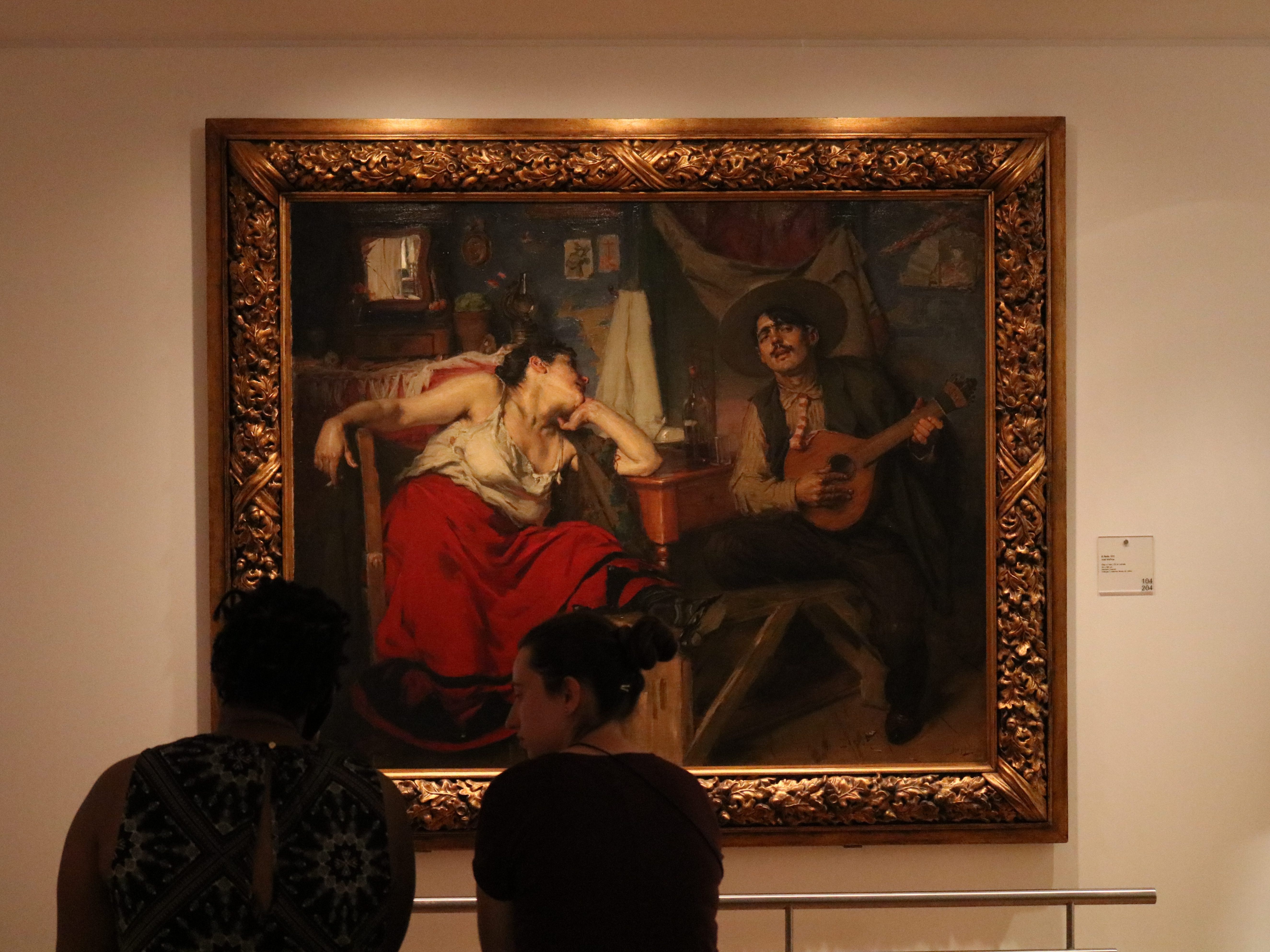
Fast forward to today, fado still bears this melancholic element, but it can be sung about anything with life, as well as the rhythm it is paired with. To better understand the music, a visit to the Museu do Fado is a must. Housed in a former water pumping station, the museum sits conveniently in Alfama, showcasing artworks and instruments of the genre, along with a wide collection of videos, recordings, and biographies of some of the best-known artists in the music’s history.
Experiencing it firsthand is another thing, and I was really lucky to have done it more than once when I was in the city. One of the best neighborhoods for this is Bairro Alto, where restaurants and bars come alive the more it gets dark. Simply find a tasca (tavern), sit down and order a meal with a drink, and let the tunes of the guitarra and the voices of the singer do their magic. It is easy to stay seated for hours.
The Final Glimpse
Spending nearly a week in Lisbon felt as if I was transported back in time. The winding streets of its colorful neighborhoods, the vintage yellow trams, the memory of past voyages, and the nostalgia that surrounds them. Even though I had made short trips nearby to places like Sintra, in the end, the city still drew me back to its very streets.
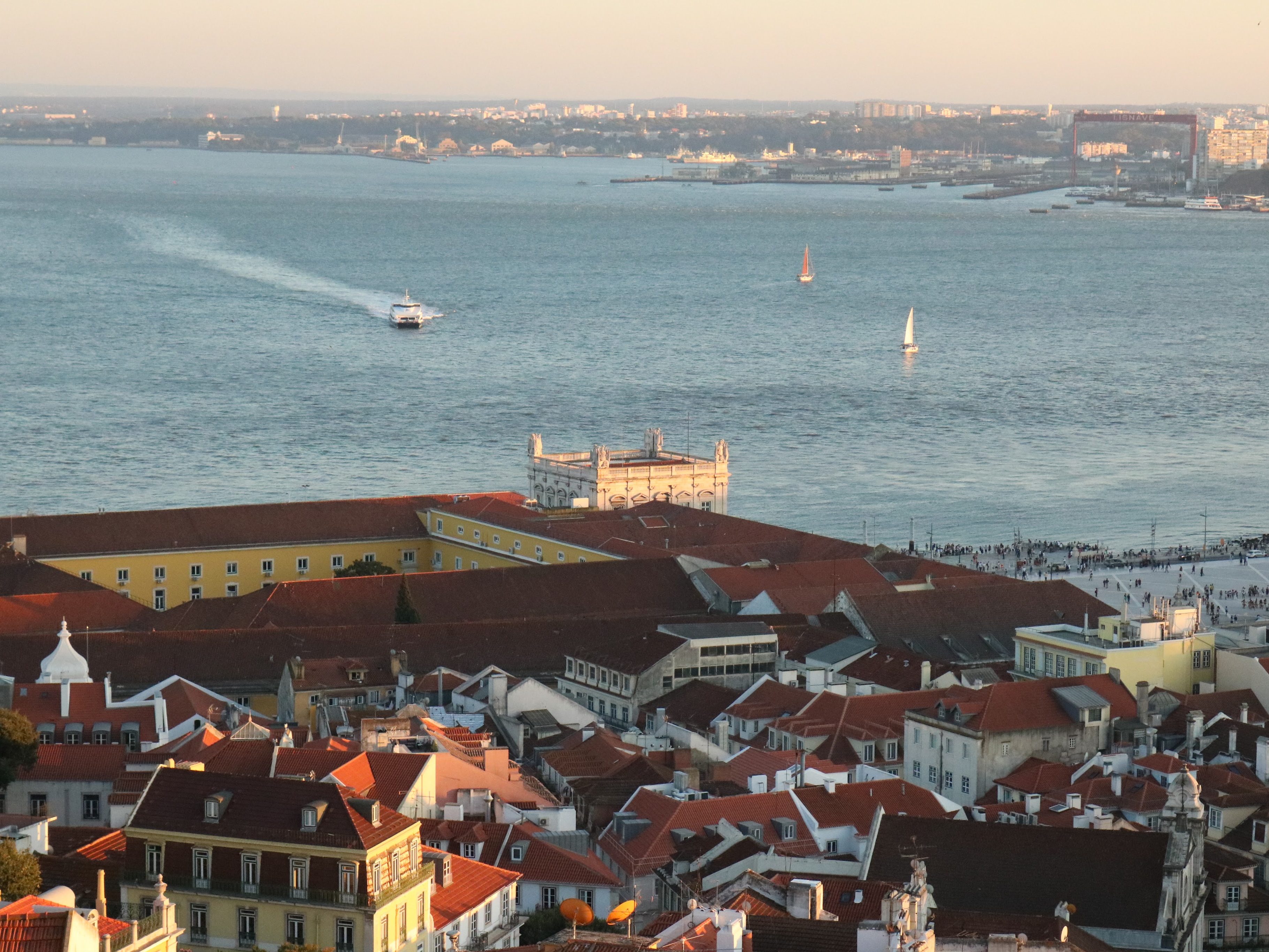
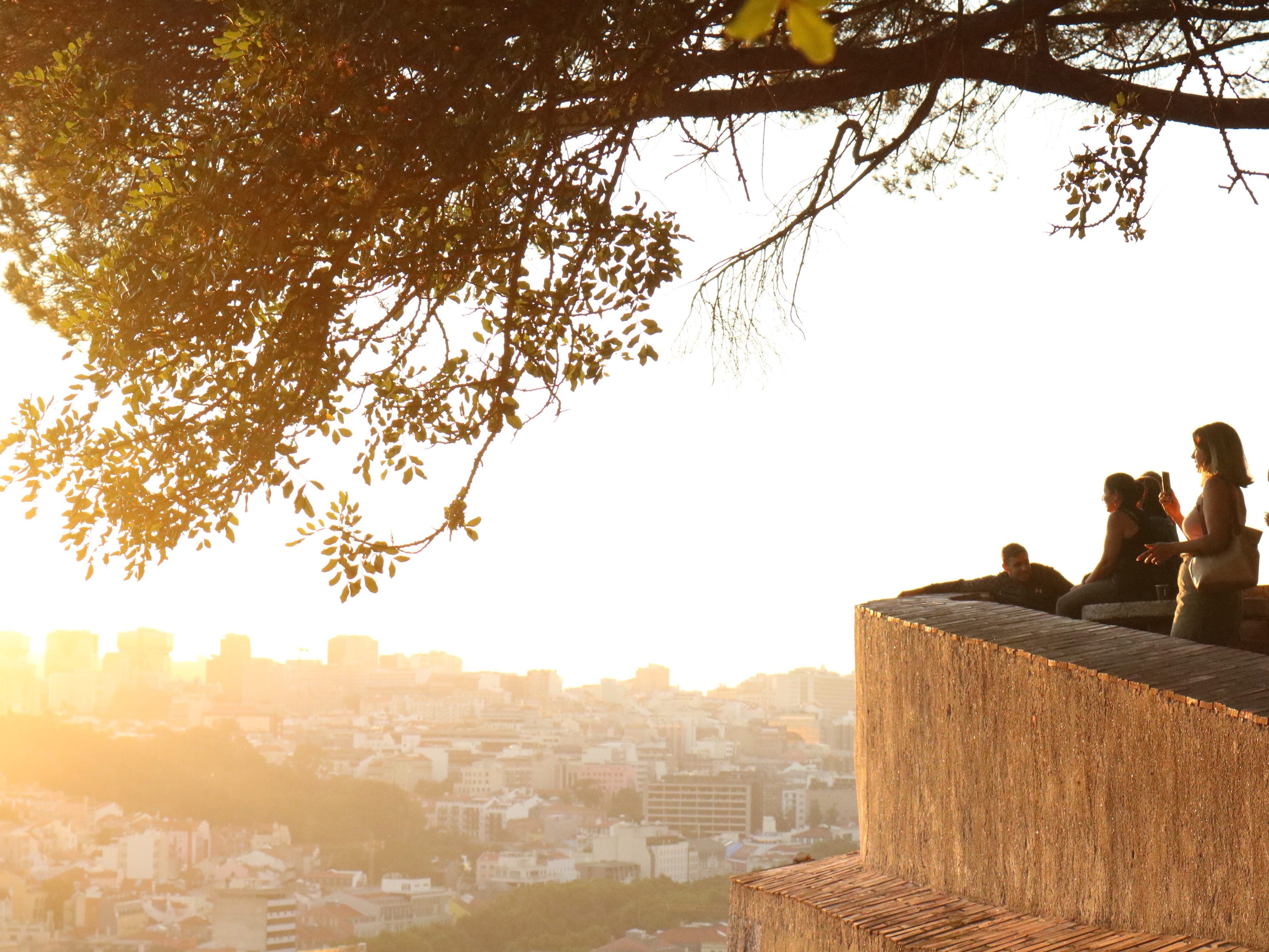
Every evening, I would find a spot to watch the sun go down. The options were limitless, as long as I was on higher ground, everywhere could be counted as a miradouro. But the sunset from the top of the castle was particularly memorable – the river stretching as far as the eye could see, the recognition of landmarks in the view, as well as the lively atmosphere of the place. There, I made a promise to return someday, and when the time comes, I hope I will be more than happy to experience the city all over again.


Leave a Reply