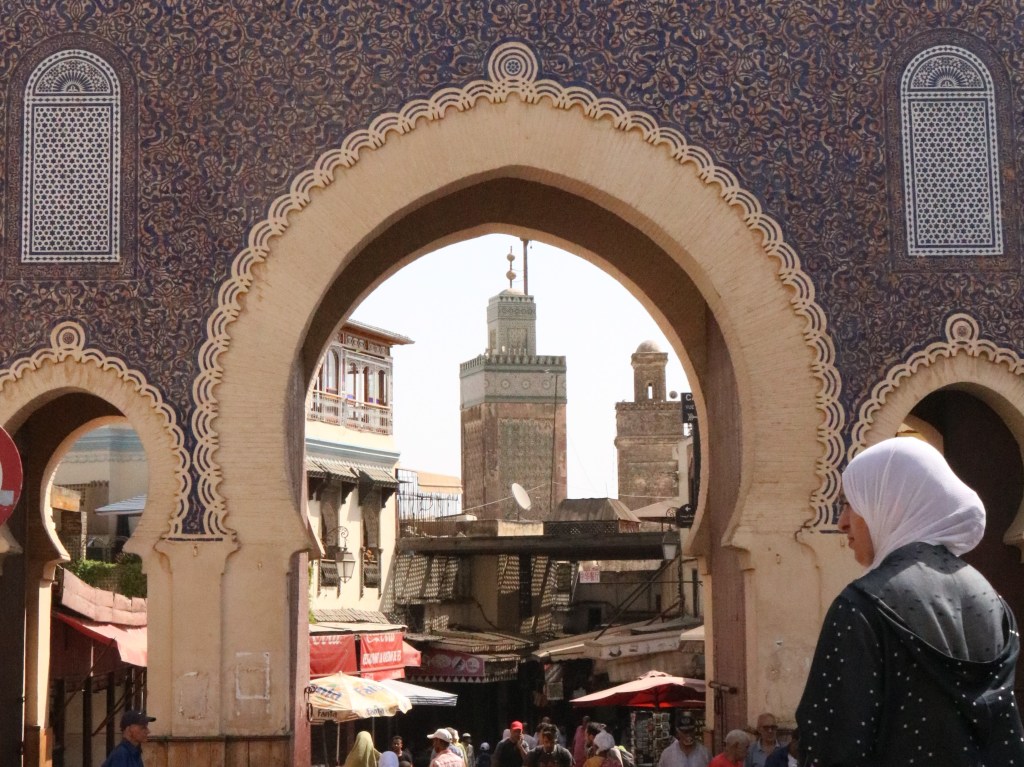
Imagine a place where centuries-old traditions are incorporated into the norm of daily life: streets meandered by women in djellaba and donkey-pulled carts, coppersmiths hammering brass at the entrance of workshops, the arousing scent of the spiced and foul in the air, and a loud atmosphere of bargaining and hustle in the souks, only to be silenced by calls of prayer emitted from towering minarets. This is Fez at its chaotic best.
The train from Tangier dashed through the Moroccan countryside from the coast to the interior. The olive landscape quickly transitioned to a dry, desert-like scenery of rolling hills, and when it finally arrived in Fez, the sun was at its most scorching. Getting off the train, the regret I had was immediate: of all the seasons in the year, why did I choose to come in the middle of summer?
Without a second of hesitation, I hopped on the closest taxi to take me into the city. The air-conditioning was not on; the only source of cool air was through the windows, but even then, everything that came into the car felt like sandpaper on my already charred skin. The taxi driver spoke very little English, but he managed to get me to one of the many entrances of Fes-el Bali, the medina of the city, in just 10-plus minutes from the railway station.
Maze of All Mazes
Similar to the medina in Tangier where I was previously, Fes-el Bali is also car-free. In fact, it is the largest car-free zone in the world, which makes sense when you look at it on a map. The narrow streets and twisting alleyways make this place impossible to drive within; motorcycles could work, but they are banned inside the medina as well. So everything has to be done on two feet (or four if you are a horse or donkey).
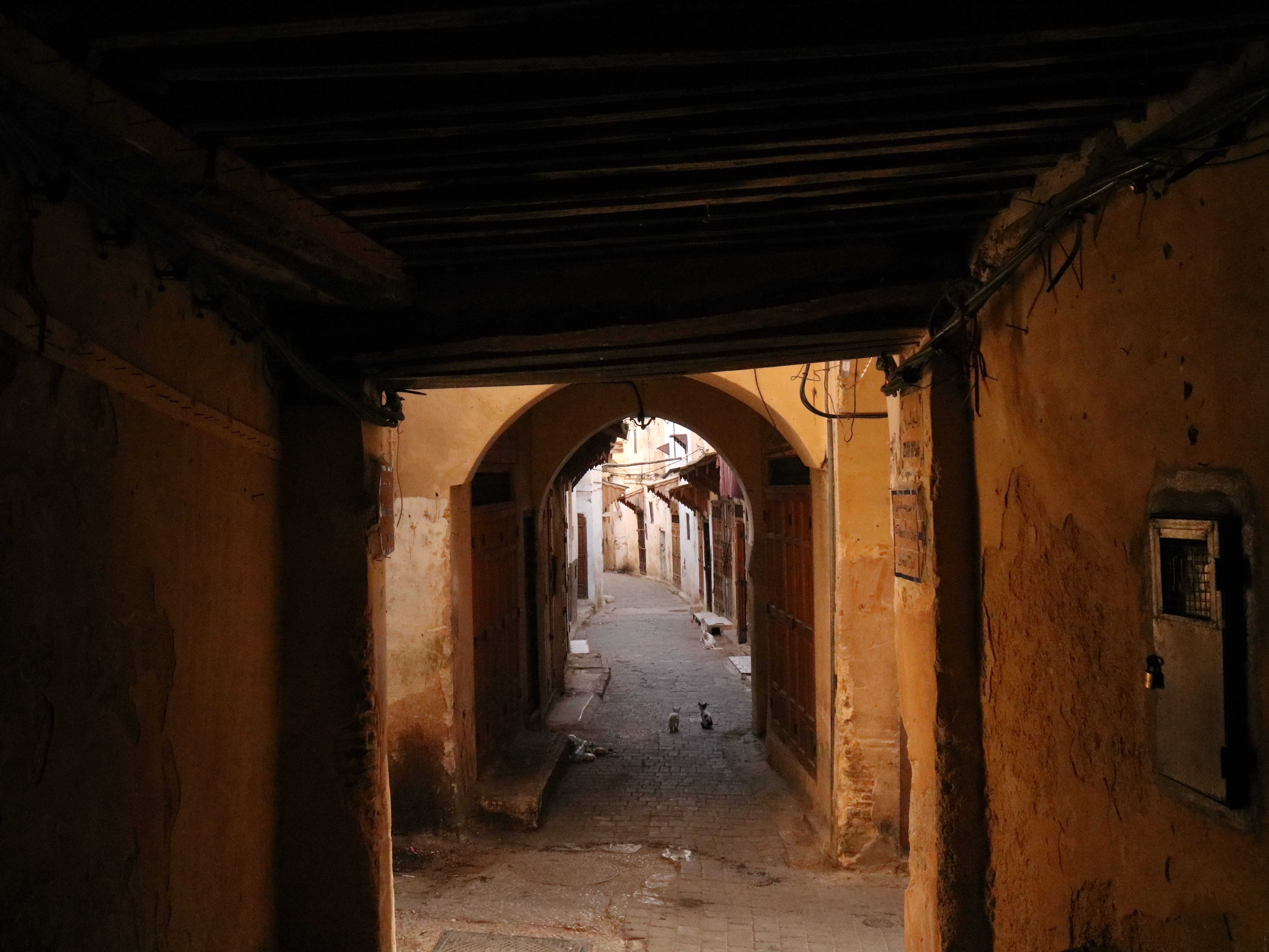
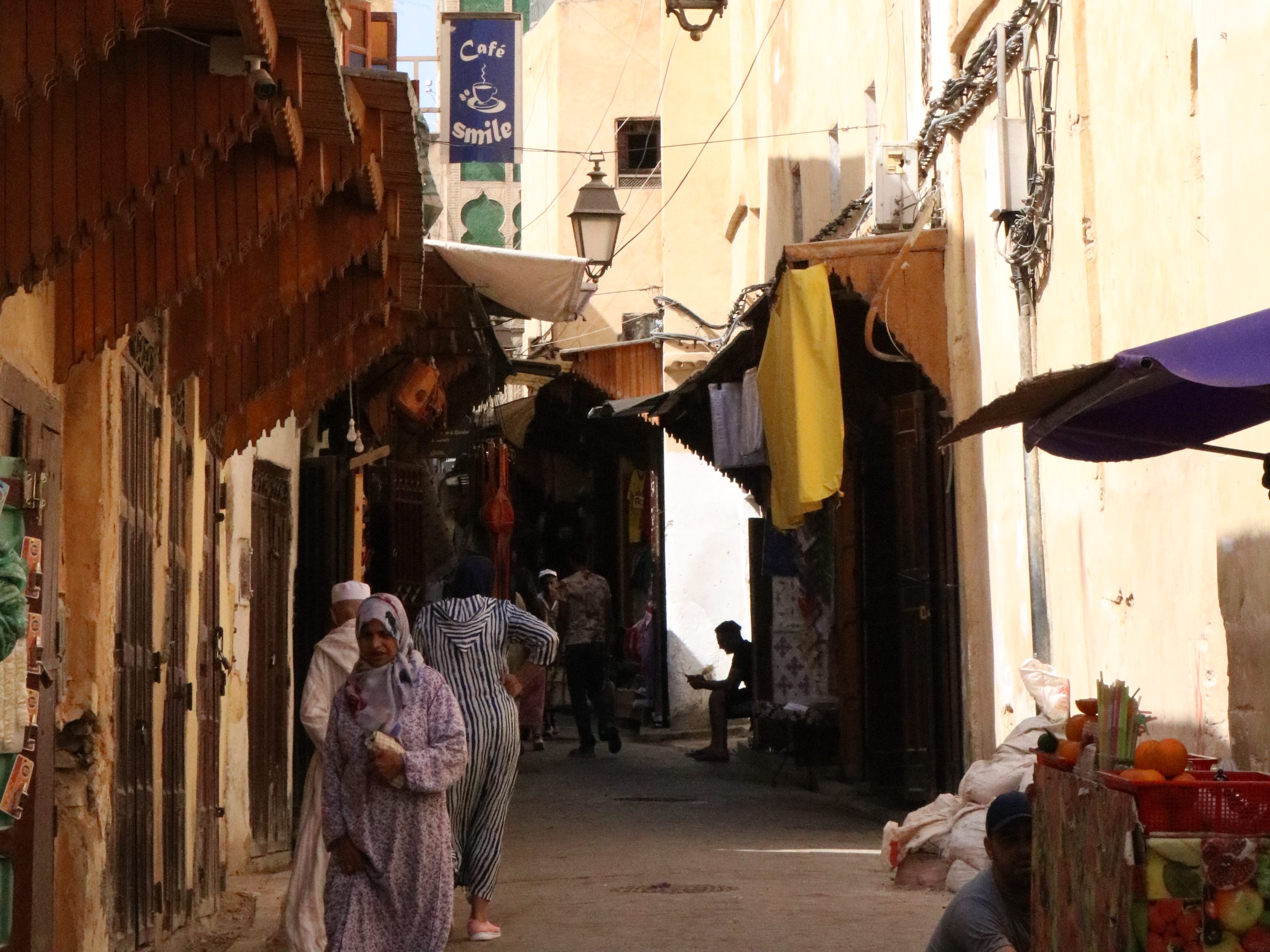
Getting to my accommodation from the gate the taxi dropped me off at was ten times more challenging than in Tangier – its location was at the very center of the medina. Fortunately, I had received instructions from the host, which were clear enough to follow… until they suddenly didn’t make sense after a few turns. The confusion of which street to walk on when they were all pointed in the direction I was supposed to go. I had to make a decision. So I went with the one that felt the most accurate, but it didn’t take me long to realize it wasn’t the right choice, and by then I had already made several turns and didn’t even know exactly where to backtrack to the last location.
Panicked, I looked at my offline maps, but I couldn’t understand anything at all. The streets marked on screen were non-existent, the layout looked wrong, and comparing the maps with what was around me, nothing really matched. It was then that I came to the conclusion that relying on them was useless in a place made of thousands of hidden lanes that don’t necessarily have names. I was actually lost.
A young man saw me in distress; he approached me and asked where I was going. With what I had experienced in Tangier, I really didn’t want to fall into the same situation again. But this time, I surrendered and told him I was lost. After seeing the address of the place I was staying, he guided me through the medina, passing through alleyways I had never walked on, and a few zigzags later, we arrived at the front of a large wooden door. It was the riad where I would be spending the next few days.
And yes, the demand for money followed. As this was a much longer and “trickier” walk through the heck of a maze, I generously tipped him 50 dirhams. He wasn’t content at first, but decided to keep the amount as it was after the host of the riad opened the door and welcomed me in.
Refuge in the Middle of Chaos
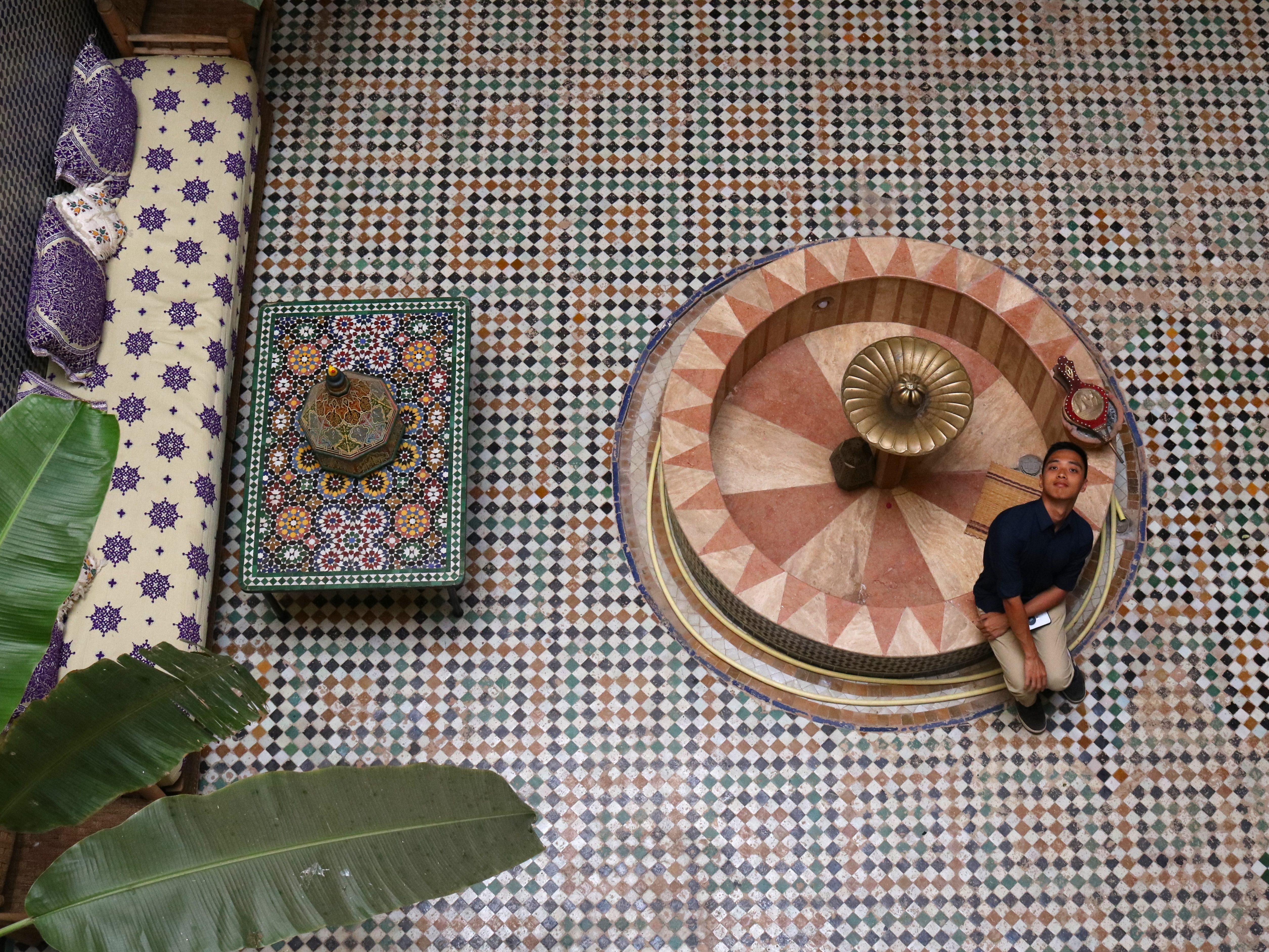
Dressed in a traditional blue gandoura, Mohamed greeted and showed me the small but beautiful riad before taking me upstairs to my surprisingly spacious room. Leaving my backpack on the floor, I went back down and snapped plenty of pictures of the building, especially its tiled courtyard. Even before coming to Morocco, I had been fascinated by the designs of this kind of housing; no matter the size, they almost always look like their very own palaces. The decor, the tilings, and, to top it all off, the use of plants to create a garden-like setting surrounding either a fountain or pool in the courtyard.
The riad, while situated in the middle of the medina, was a peaceful place to spend a few nights. Perhaps it was the lack of vehicles, or maybe it was away from the center of action, or it could be how soundproof the walls were. The only times I was interrupted from my sleep were at dawn when nearby minarets blare the call to prayer, but this was expected as I was in one of the oldest, if not the oldest, cities in Morocco. Thanks to this, I didn’t really have to set up my alarm for the morning.
Minarets, Madrasas, and More
The risk of getting lost again was high, but that wasn’t an excuse to not explore one of the greatest historic centers in the country. Stepping out of the riad, I followed the winding street into uncharted territory. My sense of direction was uningited, my fear of being astray was both heightened and lowered, but my curiosity, however, had never been so piqued.
Fes el-Bali was overloaded with sights and sounds. The walled city with its clustered urban layout was a true labyrinth to be in, but perhaps that is the reason why people visit it. The main idea of being in the medina is to put aside what you know and let the streets guide you. While this can be a horrific thing to do, especially when you need to get somewhere, wandering without any clue of where to go is the best way to understand its complex yet captivating character.
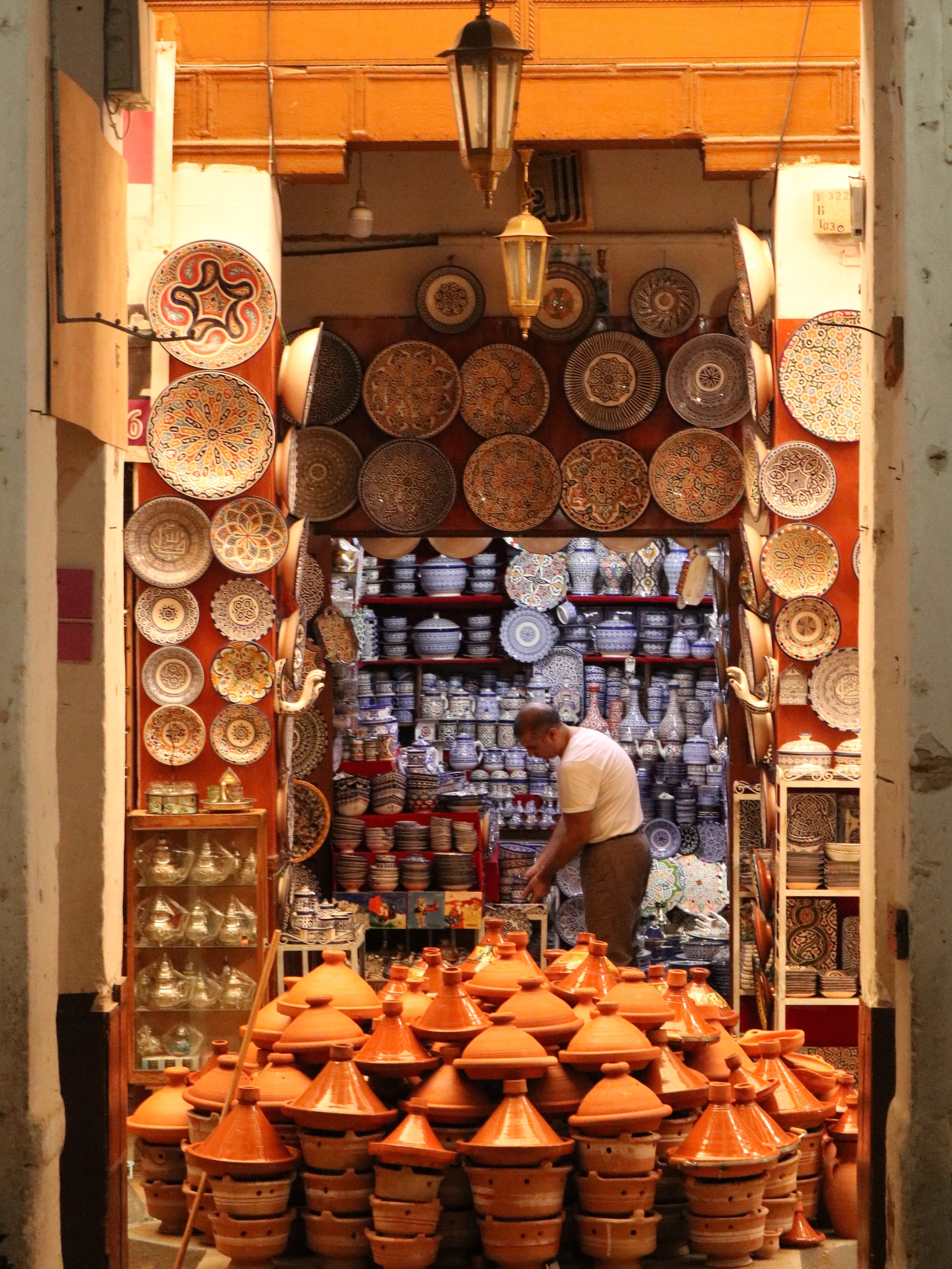
The early hours of the day began to brighten the shadowed streets of the medina. With the temperature still remaining below 30’C, I explored as much as I could before the heat climbed higher. Walking past storefronts that were more than ready for business, doorways hung with colorful textiles and carpets, and vendors calling every soul to check out their carts of fresh produce. The silence of the morning quickly diminished the further I walked away from my riad, as if it was made perfectly clear that this wasn’t the place for it.
Eventually, I found myself on the main thoroughfare of the medina – Tala’a Kebira. This entire street was jam-packed with activity, with countless shops selling everything from clothes to jewelry, side by side with restaurants, tea houses, and spice stalls. A portion of it remains open-air, but the rest of it operates under the roof, creating an almost indoor setting. While the street may feel endless, anyone walking the whole length will find themselves either at the western end where it meets the famous Bab Boujloud (Blue Gate), or at the very east near the al-Qarawiyyin Mosque, home to the oldest university in the world.
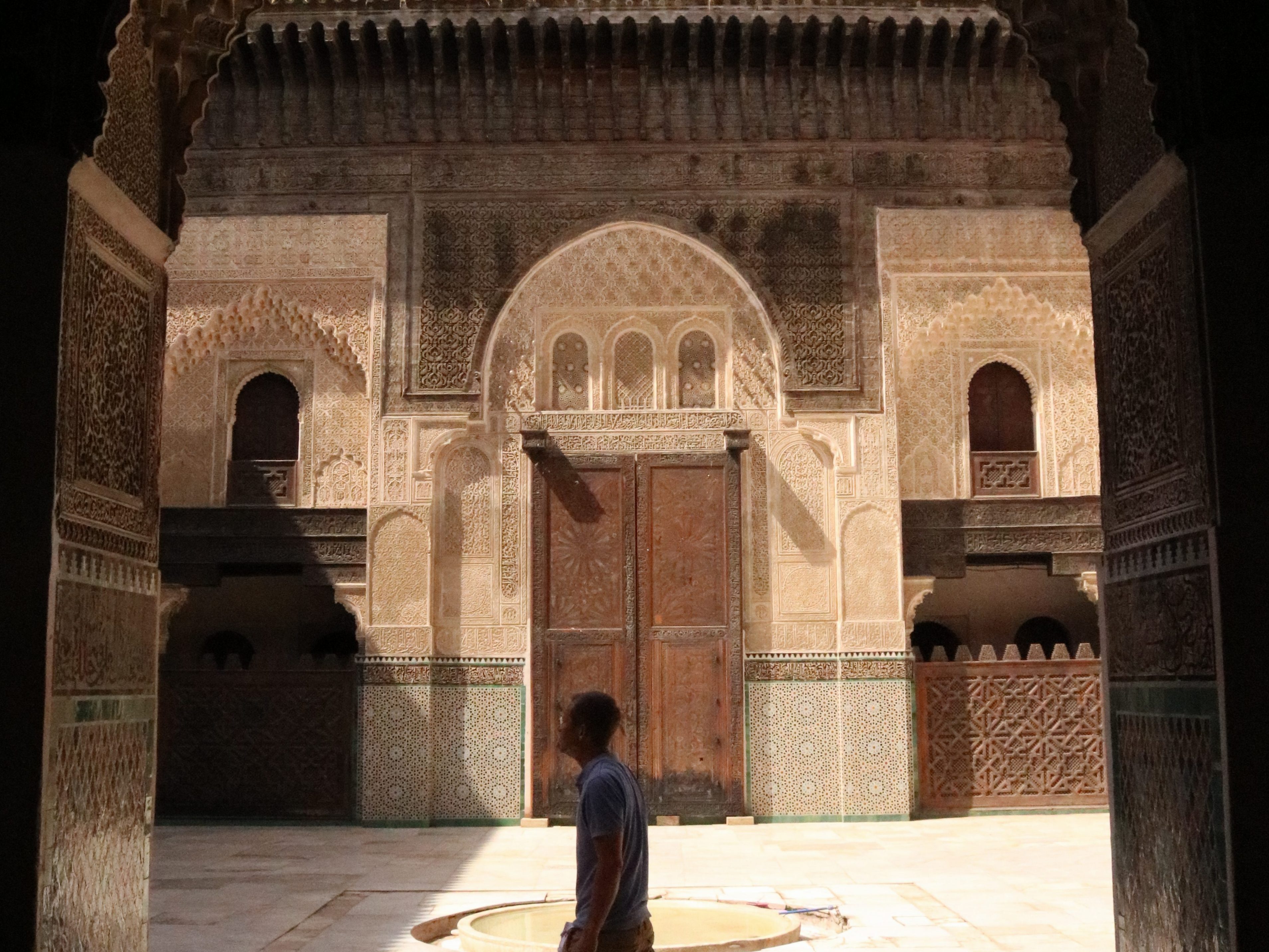
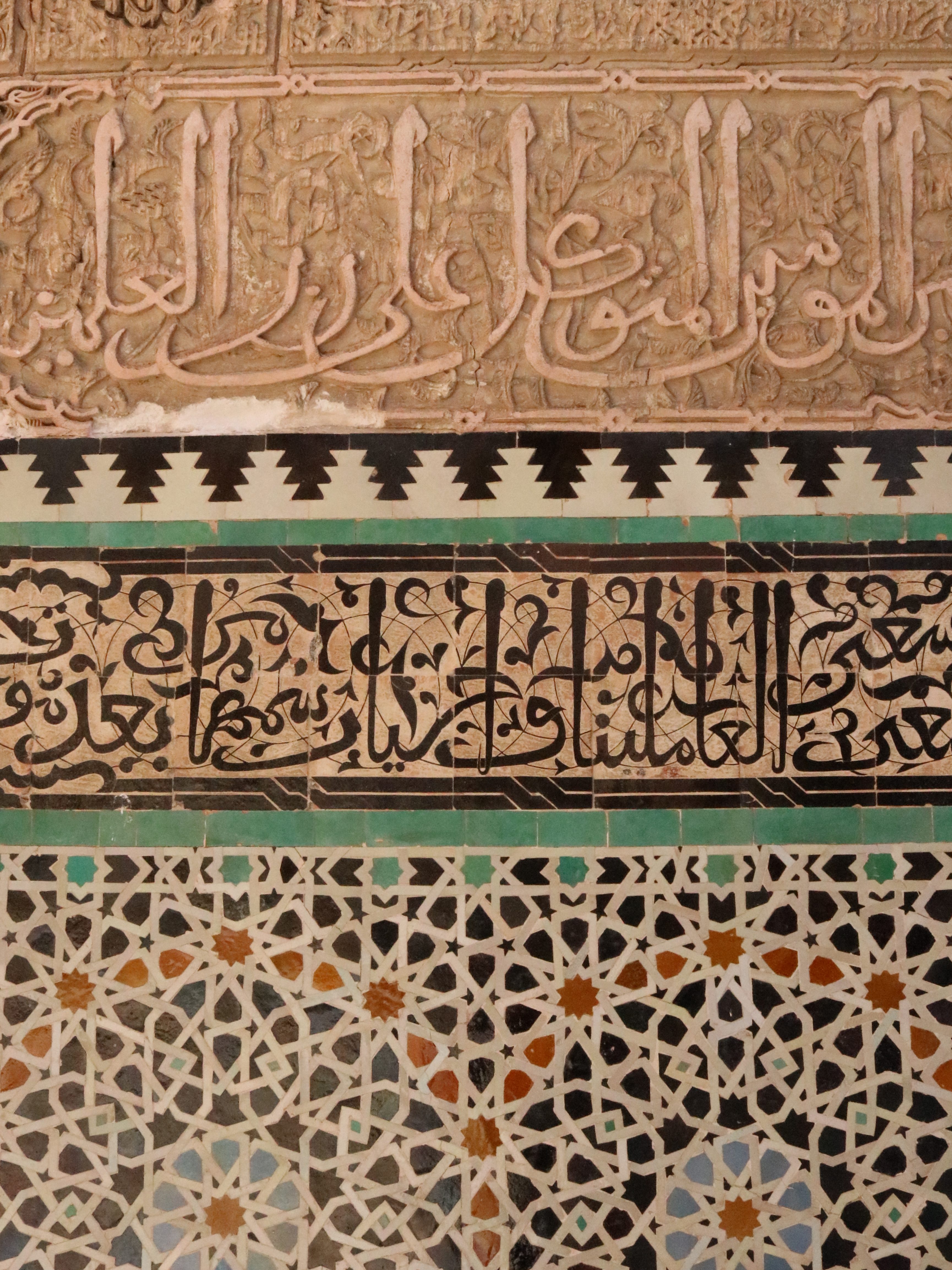
The mosque and its university are among the must-sees in the medina, but they are almost entirely restricted to Muslims. When I was there, I could only peek through the entrance where a security guard monitored everyone who was there for the same reason. Yet, many other places in the medina allowed access to non-believers, such as the Madrasa of Bou Inania, another historic Islamic institution where one of the main minarets stood above a courtyard of stunning zellij tilework and carved stucco.
Sight of Stench
While the mosques and madrasas were undoubtedly the main attractions in the medina, the highlight for me, however, was visiting one of the leather tanneries. Tucked in the deeper reaches of the walled city, getting to the site was an adventure itself – the many twists and turns through unfamiliar hidden alleyways, uneven and sometimes unfinished brick roads, and especially in the final stretch, the unexpected darkness that covered the sheltered lanes. While all of these could easily lead anyone in the wrong direction, the excessive amount of signs hanging above the streets or on the walls, calling every pedestrian to enter their shops or restaurants for the “best” view of the tannery, would be more than enough to tell that you are on the right track.
But perhaps the best indicator of the site is the foul smell that only gets stronger the closer you are to it. The same with the damp floors and the increasing mud puddles (they are most likely not mud) along the way. As a visitor, you are almost always limited to seeing the tannery from the vantage points, which are usually found in leather stores and dining halls that overlook it. However, if you happen to meet one of the people who work there, be it a laborer or the person who oversees it, when permitted, you are in to experience one of the most mind-boggling sights the medina has to offer.
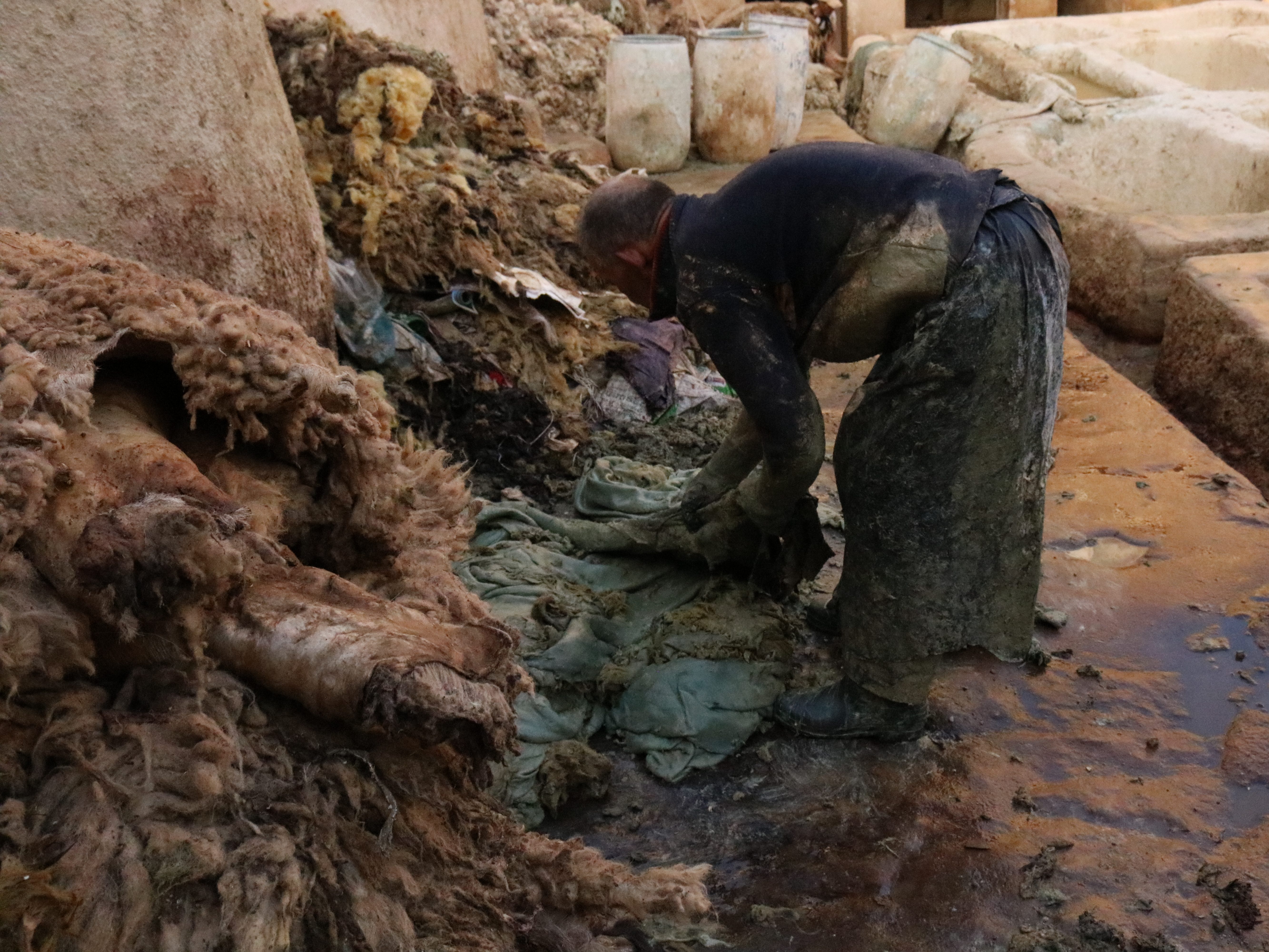
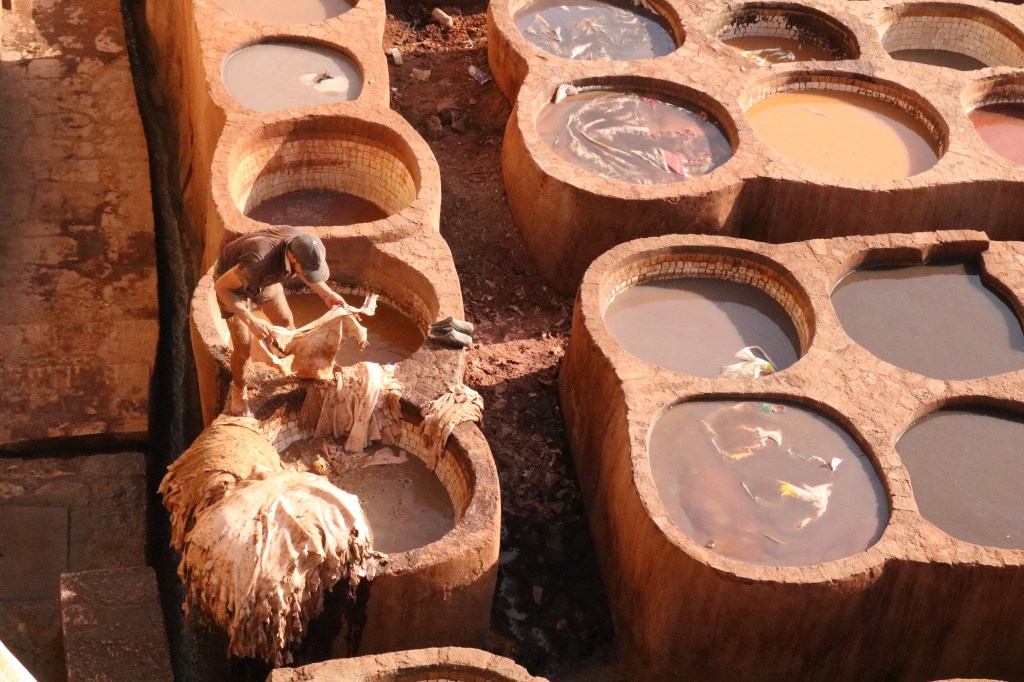
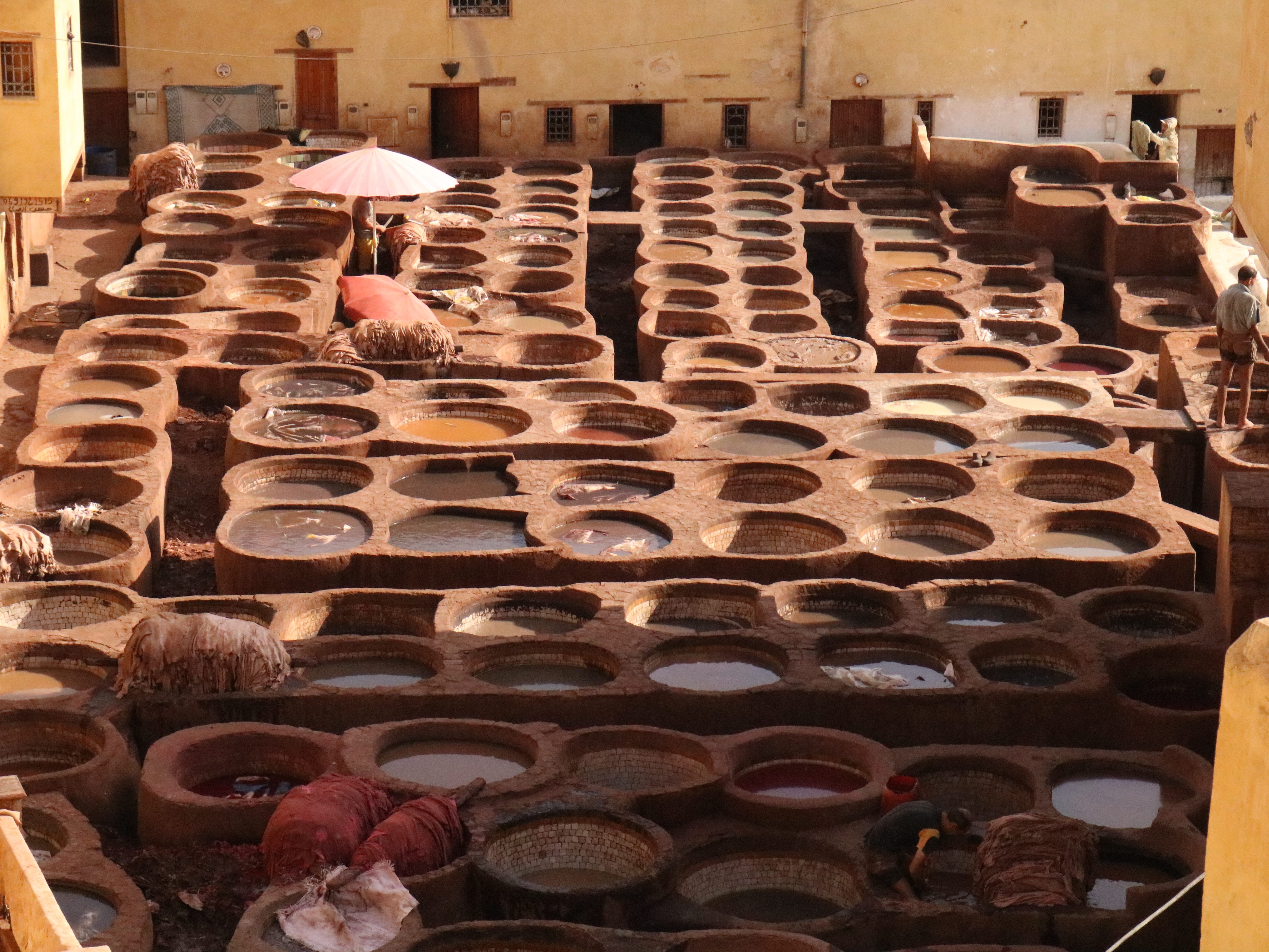
With my runners stepping on wet ground, I followed a worker into the tannery while holding my breath. Piles of animal hides, many of which still had fur on them, were stacked next to circular stone vats, each filled with multicolored dyes for tanning. Before the coloring process, the hides are first soaked in bracket-shaped pits containing a type of white liquid made of ingredients ranging from quicklime, salt, and water to the more bizarre additions of pigeon feces and cow urine. Iferd, as it is called, is the source of the unbearable stink in the tannery, but the liquid is necessary to clean and soften the hides, which are fermented in the vessels for at least three days before being dyed.
I salute the workers who have the power to endure the smell and environment of the tannery; I just couldn’t stay any longer. But what I could do was see the whole place from one of the surrounding balconies. One of the men who managed the site invited me to one by walking up a stairwell, and there, the vats displayed their greatest colors with the morning light. This was the biggest reason why I was visiting Fez: seeing the honeycomb layout of one of the world’s oldest tanneries in one frame. Despite the horrible scent and mess revolving it, I was beyond amazed by everything that was presented in front of me.
The same man then asked for a tip before taking me to a leather shop which belonged to a friend of his. Many of the leather creations – handbags, purses, and jackets- were either too big for the remaining space I had in my backpack or out of my allocated budget for shopping. But with all the incredible leather craftsmanship around me, I couldn’t just walk out empty-handed. So I bought a wallet which I still cherish today.
Treasures Out of Town
Fez isn’t just limited to its ancient medina; the Ville Nouvelle area offers a completely different slice of the city with wider boulevards, leafy parks, commerce, and entertainment not found in the old town. In between, the gold-plated gates of the Royal Palace of Fez are worth checking out.
But the real treasures lie outside of the city limits, and fortunately, most of them are within reach in just a couple of hours of driving. As I wasn’t too confident to rent a car and hit the road all by myself, I opted for a shared taxi to visit some of the sights for the day. In the same vehicle, a solo traveler named Leonardo had a similar idea. I learned that he was visiting from Mexico and had already explored plenty of cities in the country. I was not sure how he could handle the blazing summer heat in the far south, but his travel stories kept most of the conversation going.
In about an hour, the taxi driver made a turn. Detaching from the highway onto a dusty road, he drove to the very end, where we found a two-storied building hiding behind the trees. It was a museum filled with artefacts, which eventually led to the outside, where a cobblestoned path climbed uphill. There, the crumbled walls and pillars of Volubilis piled all over the arid landscape.
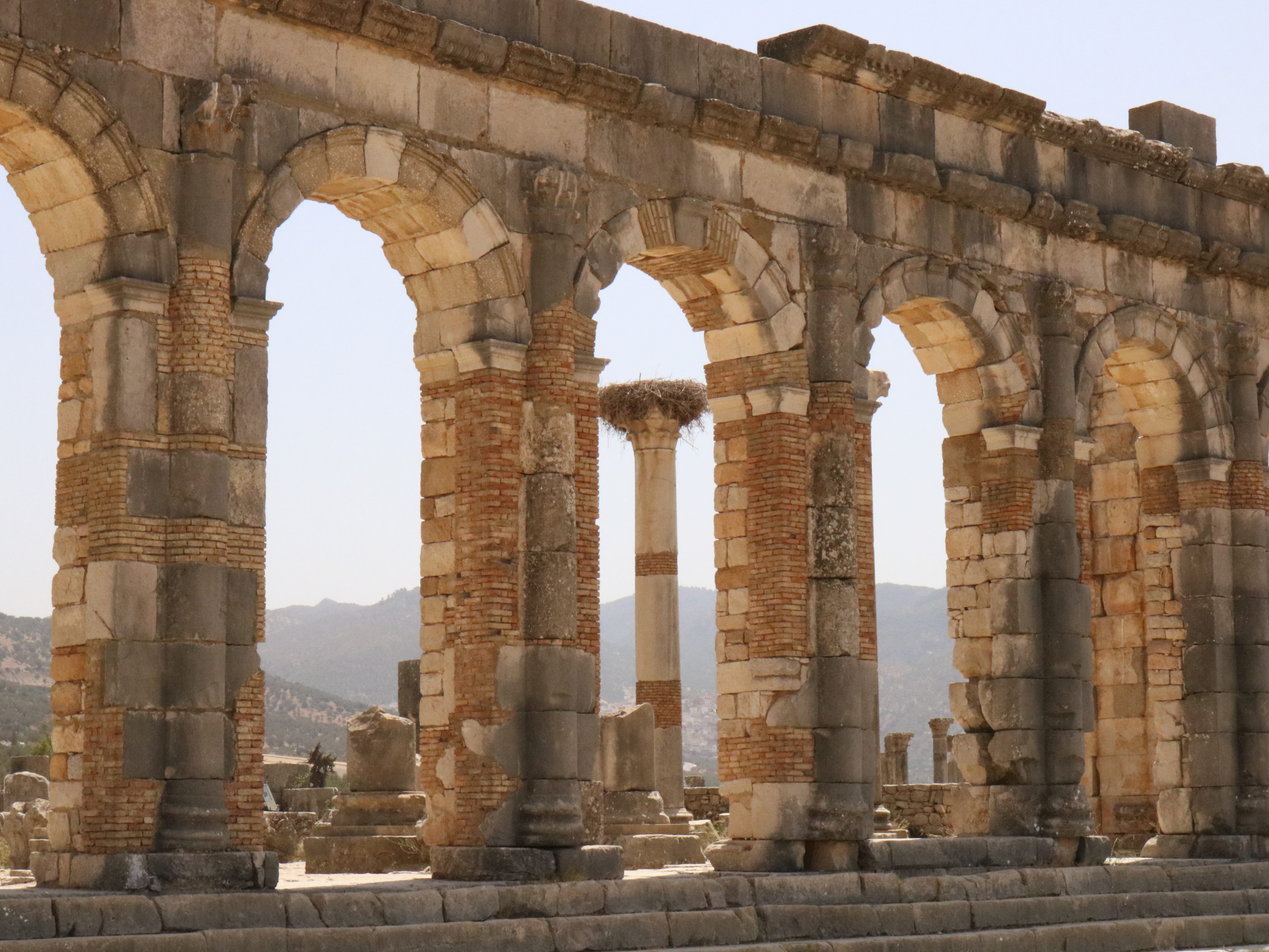
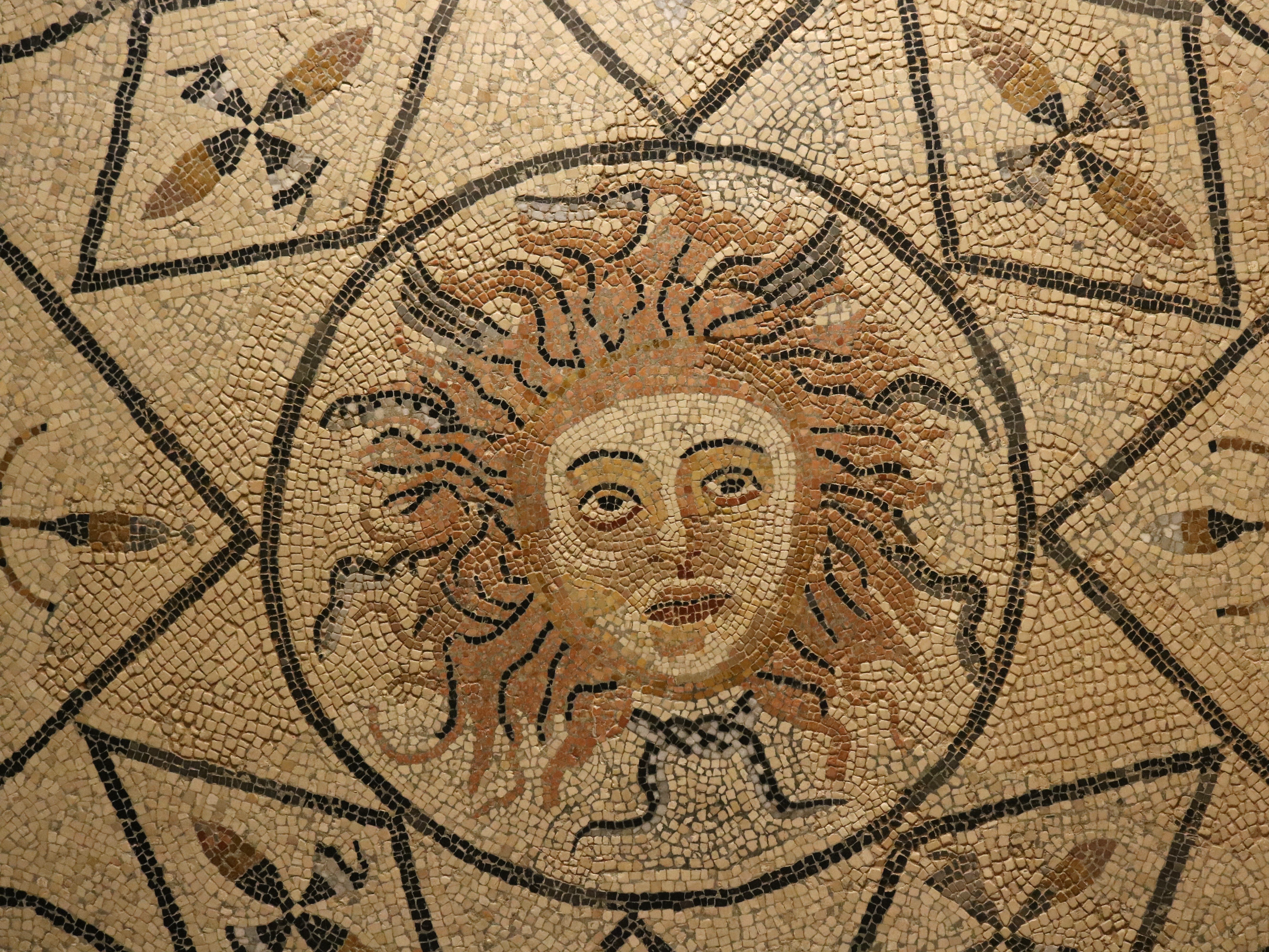
The Berber-Roman city is said to be the finest of its kind in Morocco. Developed from an agricultural settlement to the capital of the Kingdom of Mauretania, the site contains immense archaeological findings that tell its prosperous past – the mosaics on the floor are perhaps the best indicator of this, as well as the many decorated mansions. While it never regained the power it once held, Volubilis remains a remarkable site for its well-preserved structures even after several takeovers, lootings, and a devastating earthquake in the 18th century.
After almost an hour of baking under the sun, Leonardo and I hopped on the taxi again to nearby Meknes. The snaking road had the taxi drive past the town of Moulay Idriss Zerhoun, home to the tomb of the first ruler of the Idrisid dynasty who gave the place its name. Because of its holy status and as an important pilgrimage center, the town was off-limits to non-Muslims until a little over a century ago. While we didn’t get to visit it, seeing its sprawl over the hills from the road was nonetheless an impressive sight.
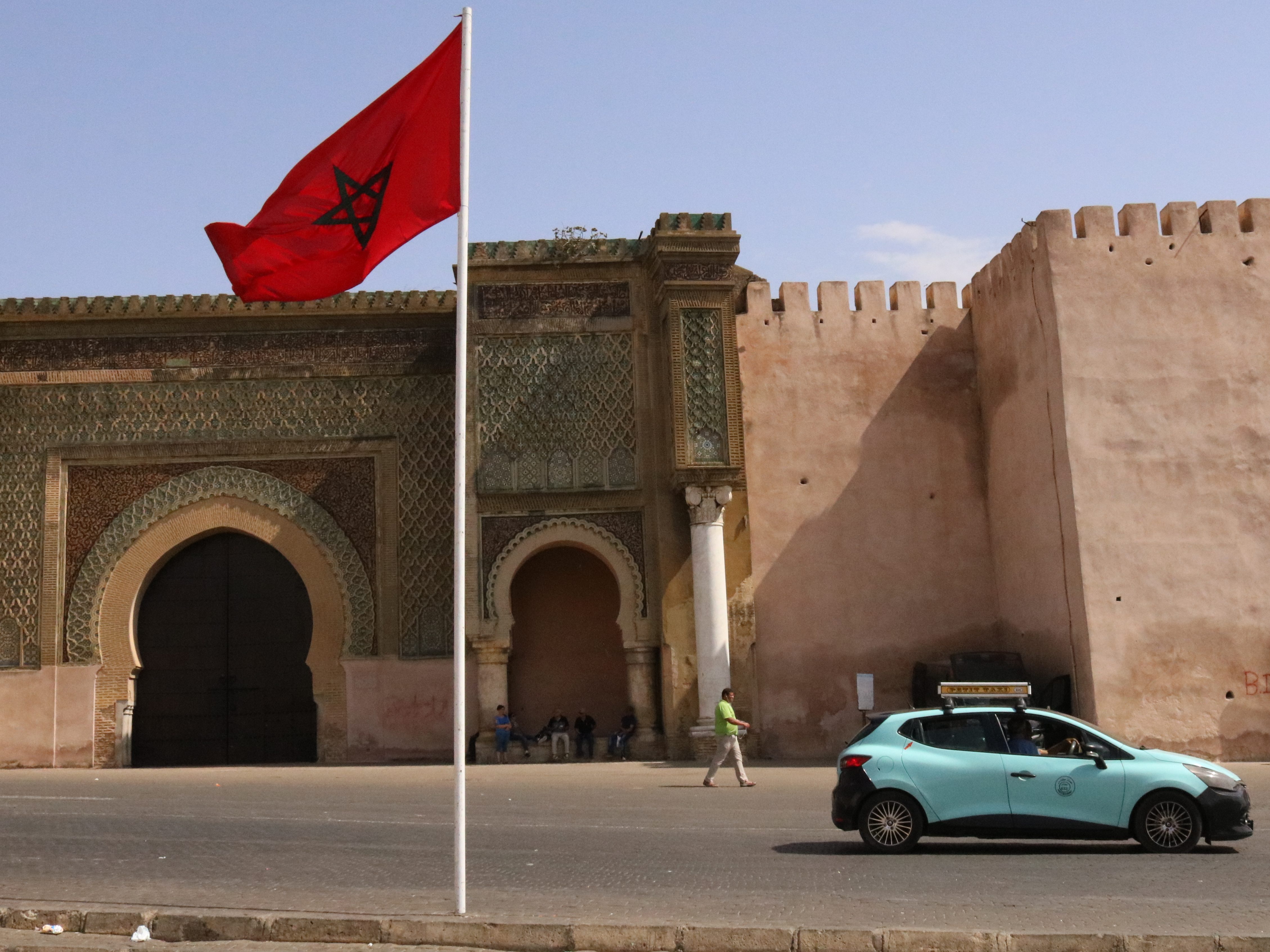
Meknes was perhaps the hottest place I had visited in Morocco, with a record-breaking temperature of 40’C! We stopped at a restaurant for a typical lunch of tajine and couscous before setting off in the city center, except it was too scorching for us to do any sightseeing. So we stayed in the car and only stepped out for a few seconds at Al-Hadeem Square to see the ornate facade of Bab Mansour, the original gateway to the city’s royal citadel.
And with that, we were back in Fez in the middle of the afternoon. Walking back to my riad, familiarizing the twisting alleyways to it once more, I spent the remainder of the day in my insulated room before climbing up to the rooftop. The evening skies transformed the medina into shades of purple, and in an instant, the minarets around voiced the call to prayer once more before the last light of the horizon disappeared.
Fez had taken control of the steering wheel in me for a few days, almost driving me to the edge of my patience and sanity. But in the end, it was all worth it. And I suggest everyone reading this allow it to do the same too.


Leave a Reply