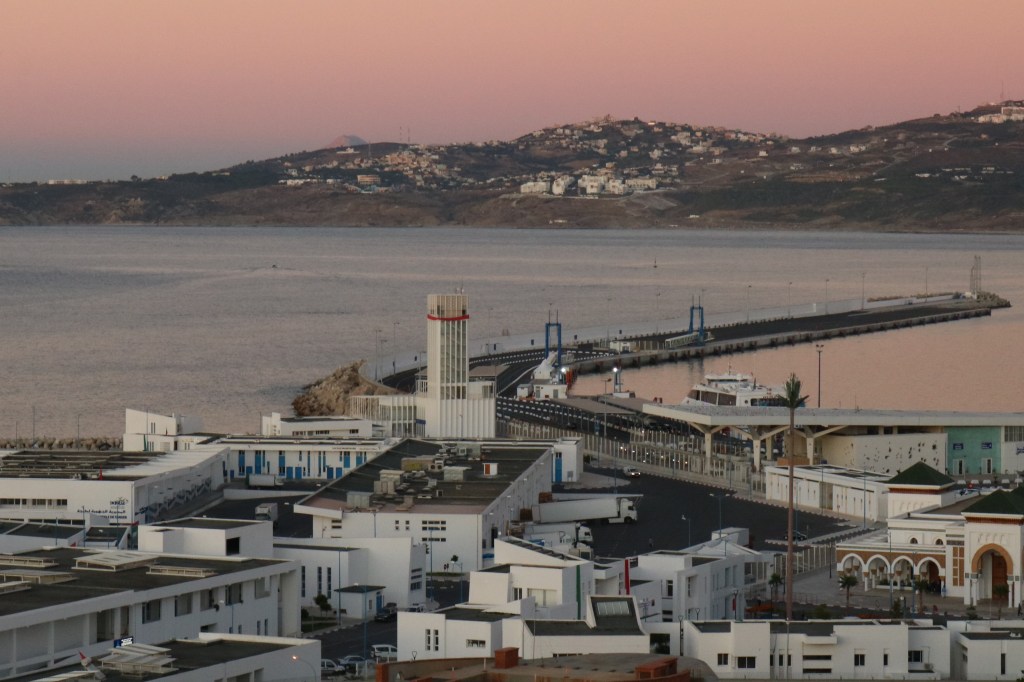
There are not many places in the world that can be so geographically close to a completely different continent. In this post, I am referring to both Europe and Africa. While the two landmasses are divided by a deep strait, ferries run between them so frequently that the division almost feels nonexistent.
After spending a sun-drenched week in Andalusia, it was time to head into newer horizons. A quick bus ride from Cadiz drove me past olive groves and giant windmills before arriving at the southernmost point of the continent. The morning fog lifted, giving way to clear blue skies and rays of the sun. There, my first view of the Strait of Gibraltar, and in the backdrop was none other than the African continent.
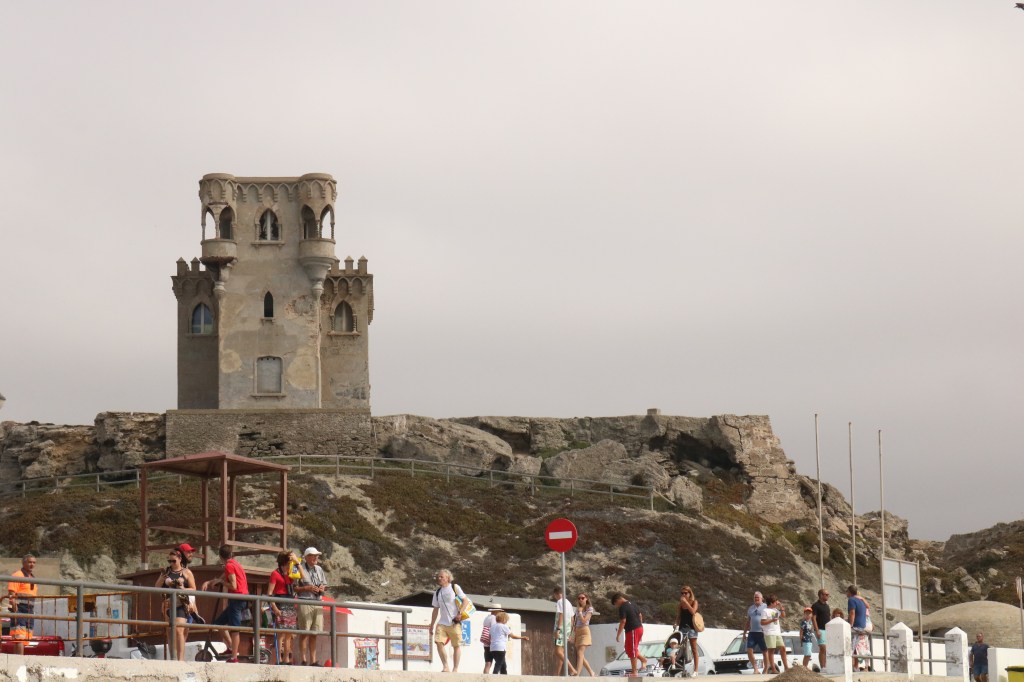
Tarifa is the name of the small yet bustling town in this southern reach of Spain. It has a sizable port filled with fishing boats and catamarans, a harborfront lined with bars and restaurant patios, and, watching all of the action, a historic castle dating back to Umayyad times. The main draw here, however, is the beach. Facing the endless stretch of the Atlantic Ocean, the sands of Playa de Los Lanches are not only for sunbathing, but also the ultimate launching point for kitesurfing. The favorable wind conditions of Tarifa make it a premier destination on the continent for the activity.
But my main objective of being here was to cross over to the other side of the strait. Yet, I had a couple of hours to kill, and I did not put on a vest and let a power kite pull me across the water, but I went to the actual location where the European continent met its end – Isla de Tarifa. Unfortunately, due to renovations, the walkway to the island was closed, so I could only see it from the shore. Still, in a geographical sense, it can be considered that I was standing at the southernmost point of Europe.
Crossing to the Other Side
After the little “side quest”, I made my way back to the harbor and found a ferry company to take me across the strait. It wasn’t too long until everyone was told to walk to the boarding area. A massive ferry with a wide opening on its back pulled into the harbor; a few people checked our tickets and passports before instructing us where to place our luggage. From there, it was just a flight of stairs to the seating zone. Being one of the first to board meant there were empty seats, but I was drawn to the railings on each side of the ferry instead.
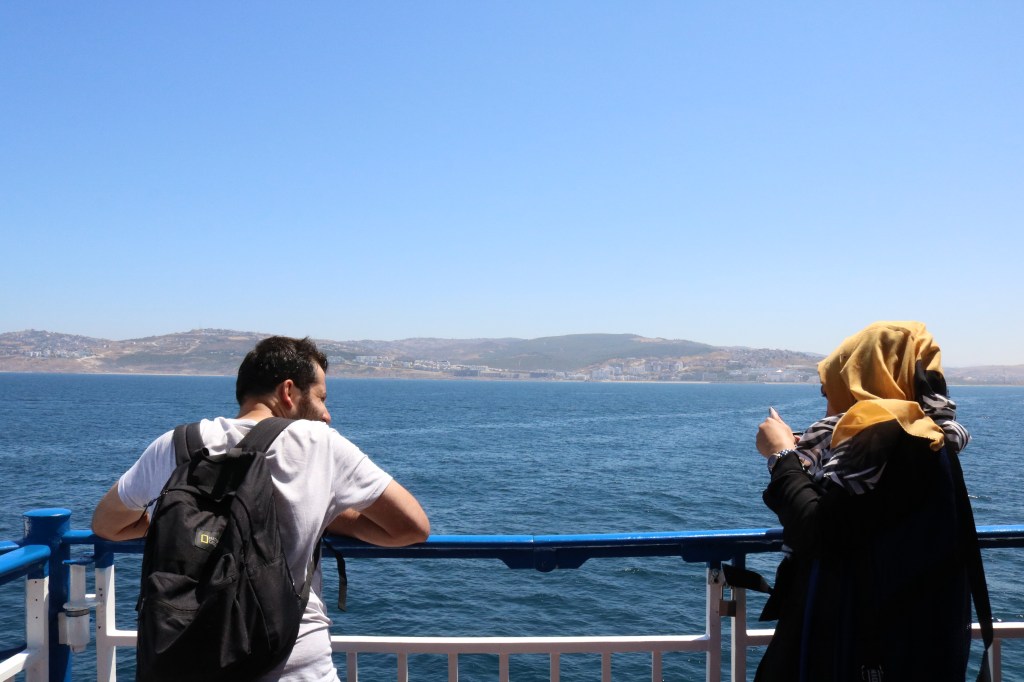
Seeing the ferry pulling away from the harbor, it was the moment when I had a hit of dopamine, as I was on my way to a brand new continent – Africa! But that was also the time when I realized I had to get my passport stamped out of Spain (or more precisely, the Schengen Area). This isn’t done back on shore, but on the ferry where, strangely, there was an immigration office on board. It was a quick procedure before moving to the next counter to get stamped into Morocco.
The ferry from Tarifa is one of the few that sail to the country from continental Spain, and perhaps the most convenient, as it connects straight to Tangier, unlike the one from Algeciras that ends up in a port some 50-plus kilometers away from the city. This makes it easy for many who only visit for a day trip, but that wasn’t the case for me as I was actually staying there much longer.
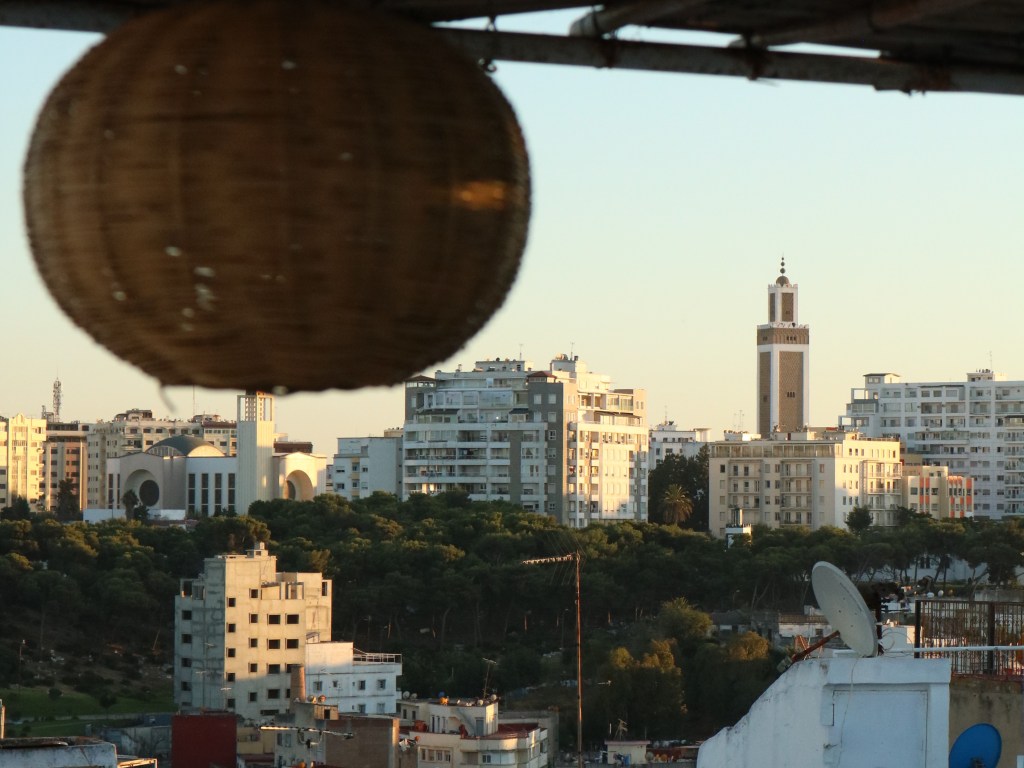
In less than an hour, the ferry approached the city. My imagination of a very busy Tangier did not exist in that moment because, surprisingly, it did not look busy at all! I could hardly tell it apart from any coastal city in Spain with its apartment blocks and palm trees until I saw a minaret peeking in the distance. After disembarking with my bulky backpack, like most people, I was met by hordes of taxi drivers asking me where I was heading. I kindly declined and started walking away in hopes of getting another taxi, since I had this thought that it would probably be cheaper to ride one the further away I was from the port. The constant questions and following of the drivers kept me at bay, however, so as much as I was reluctant, I rode with one to my accommodation.
The winding road up from the harbor was quite an experience in the taxi. Technically, I could walk, but with no internet and offline maps downloaded, having a taxi take me to where I was going was the safest option. But the driver didn’t take me all the way there; he dropped me off in front of a medieval-looking gate as the vehicle could only get this close to it. It was one of the entrances to the kasbah, the fortified citadel that enclosed the historic center of Tangier. I suddenly developed a fear of getting lost, as from my research, it was a maze to navigate. But then I remembered from my research that my accommodation was only two to three streets away from the gate.
With my backpack strapped behind, I walked past the gate with confidence. In just a matter of seconds, a middle-aged man approached me with his best English, asking where I was walking to. My naive self thought he could provide directions, so I told him the location. He then grabbed my hand and asked me to follow him, and not even more than a minute later, we arrived at the place. I thanked him and knocked on the door; little did I know, he was still standing close to me and asked me for tips. This was expected, of course, so I gave him a 20 dirham bill (equivalent to about 2 euros). But he kept asking for more; I kindly said no. That was when he became more persuasive, saying how lucky I was to get his help, and that he needed money to provide for his family. Good timing; the door opened, and one of the staff came out and spoke to him in Arabic before he walked away in anger, muttering something in his language.
An even worse case happened to a girl from China who was also staying at the same place: another man dragged her luggage while she insisted she knew where she was going, before aggressively demanding a lot more than 20 dirhams. The same staff saw the whole thing and chased him away. While I appreciated the help, and tipping was expected after that, it wasn’t pleasant to face whatever happened in the aforementioned scenario, especially when it was the first time of being in the city.
After settling in my room, I went up to the top floor, and there, the spread of Tangier’s whitewashed buildings was right in front of my sight. With the old town on one side and the newer part of the city on another, the views were, without doubt, a great introduction to what’s to come.
Happily Lost in the Medina
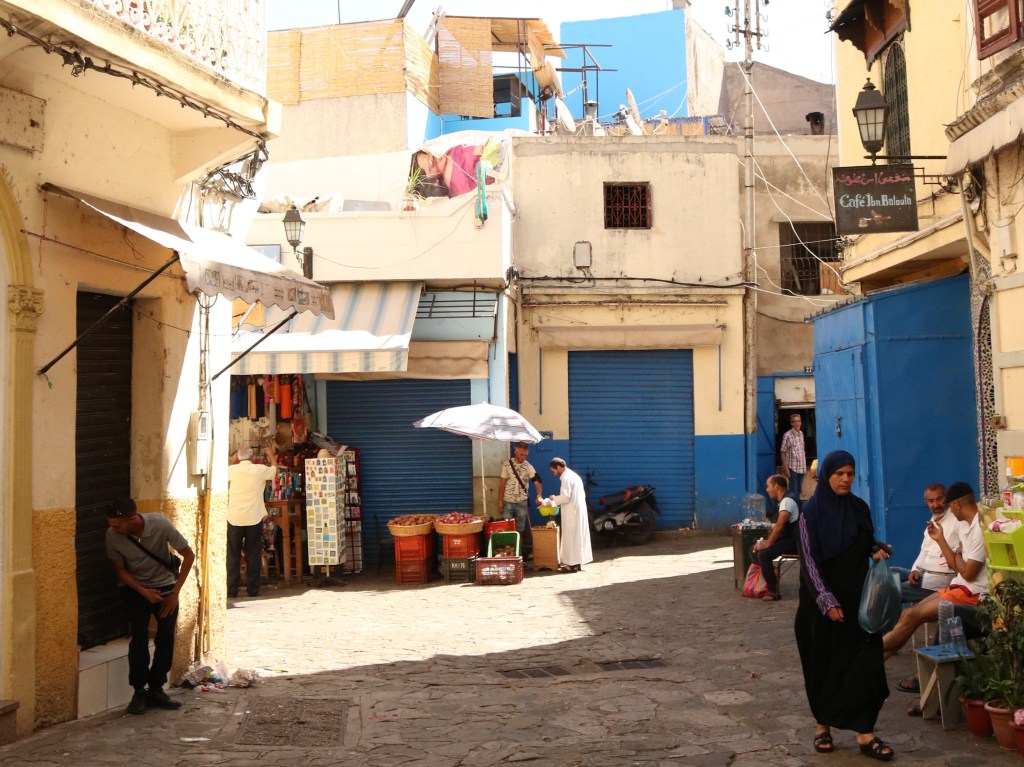
Having learned my lesson from the previous experience, I downloaded some offline maps before setting off into the labyrinth. This time, it was a worry-free walk, with no aim of a destination, just a mind of curiosity.
Staying right in the heart of the old town meant all of what I had to see was right at the doorstep. The old town of Tangier is the medina, a clustered urban landscape of chalk-toned buildings and winding alleyways. Unlike most medinas in Morocco, this has a very distinctive look that resembles many historical quarters of the Iberian Peninsula. As the city was a crossroads of various cultural influences, you will be forgiven if you can’t distinguish some parts of it from any town or city in Spain and Portugal.
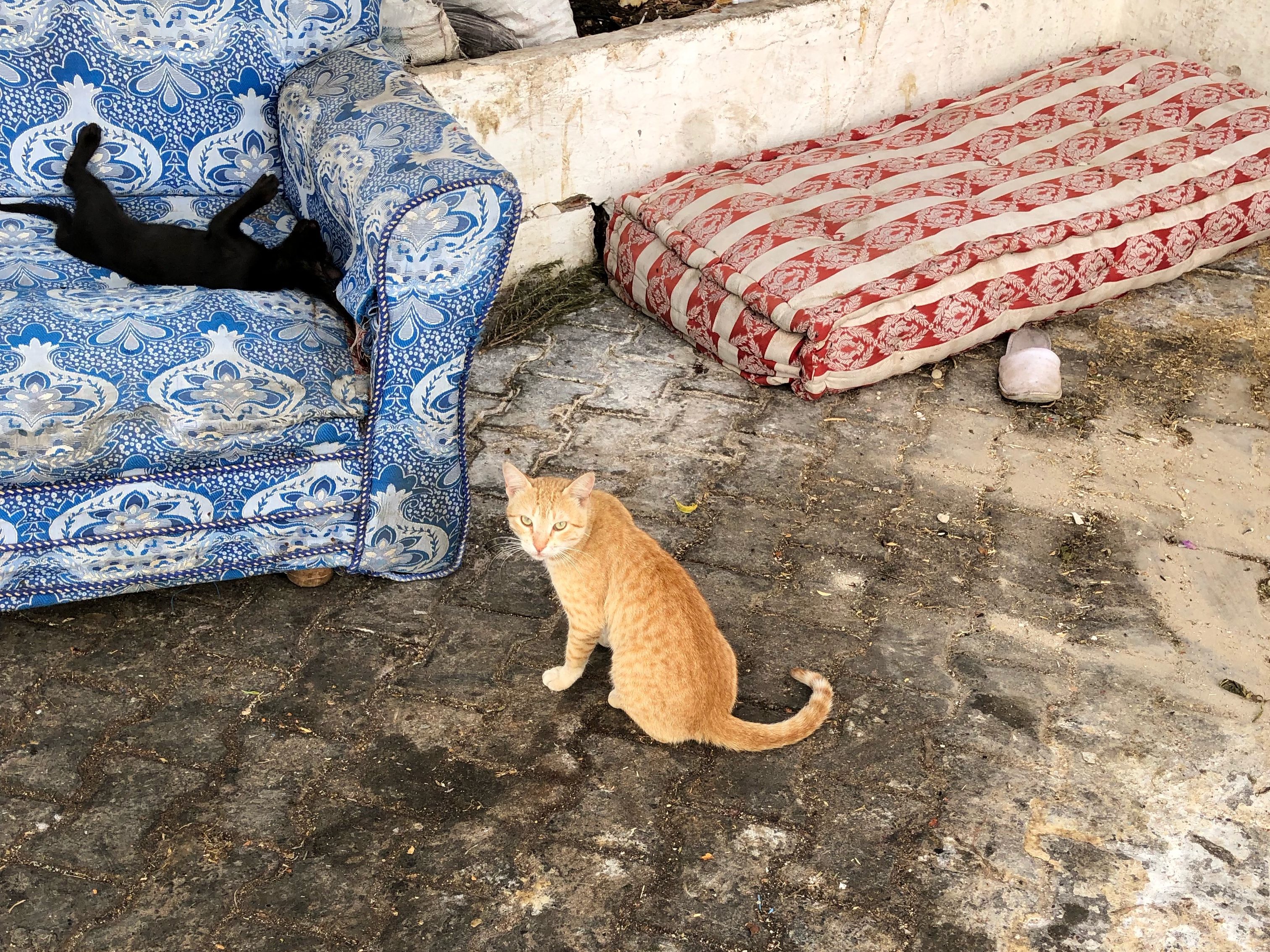
The narrow streets of the medina either led me to more streets or someone’s house, and in all of my attempts to identify exactly where I was on the offline maps, I never figured it out! But that was actually the charm of being in the medina; as a traveler, getting lost here was the experience. Keeping the “no sense of direction” motive going, the streets brought me to some of the most beautiful parts of the medina, while also some funny encounters with plenty of stray cats along the way.
In terms of attractions, the medina has a handful to keep any visitor occupied. The Kasbah Museum is undoubtedly the main sight, filled with antiques from the city and around, housed in a repurposed space of the governor’s palace. Another is the Tangier American Legation Museum, honoring the recognition of the United States independence by Morocco in 1777, the first of any country to do so. The latter is also the only U.S. National Historic Landmark located outside of American soil.
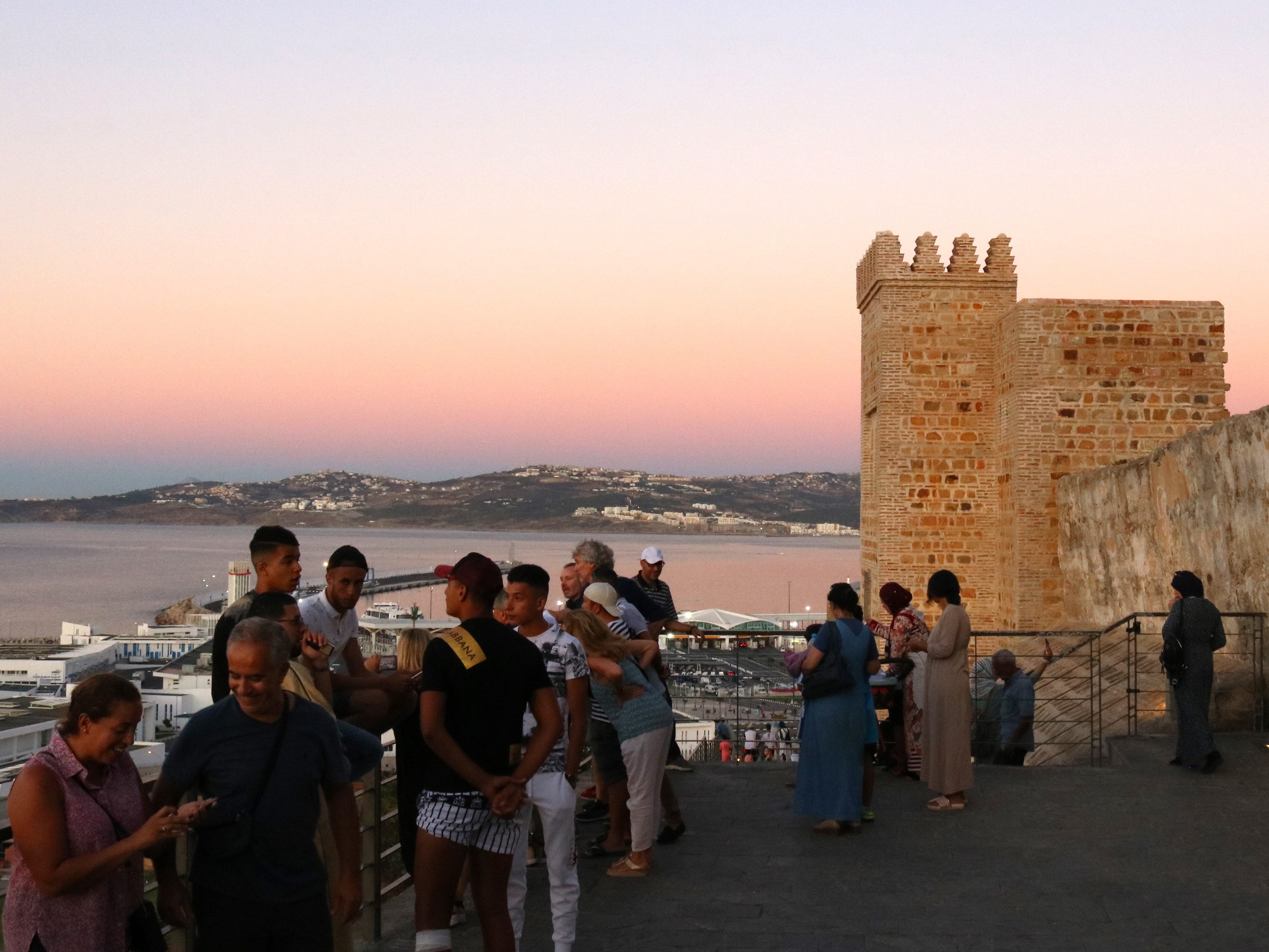
Interestingly enough, I did not visit any of them. Most of my time spent in the medina was just aimlessly wandering its streets. The layout and all the activity associated with them were enough to keep me in for the day or two. But perhaps the most memorable experience was watching the sky turn pink from Bab Al-Bahr, a historic gate that overlooks the action of the harbor and provides views stretching all the way to Europe. This is also a very frequented spot for locals, with families and youngsters alike gathering next to the railings for the same reason.
Time for Tajine
Being in Morocco for the first time, I was more than ready to try its well-regarded cuisine, and one of the best ways to experience it is through the guidance of a local. I joined a cooking class the next day, and I was instructed to meet at Cinéma Rif, an iconic movie theater housed in an Art Deco building right in front of the Place 9 Avril 1947.
There were coffee tables and chairs outside of the theater, sitting with people, either smoking cigarettes or sipping their drinks, watching the world go by. I found a Dutch family of three whose son was the participant. He had a huge passion for culinary arts and wished to be a chef someday, and said his main reason for being in Morocco was to learn about the cuisine, while his mom and stepfather had other plans in mind. We waited, and waited, and waited… until it was more than 30 minutes past the meet-up time. Just when we were about to call the host, he showed up right behind us and apologized for being late.
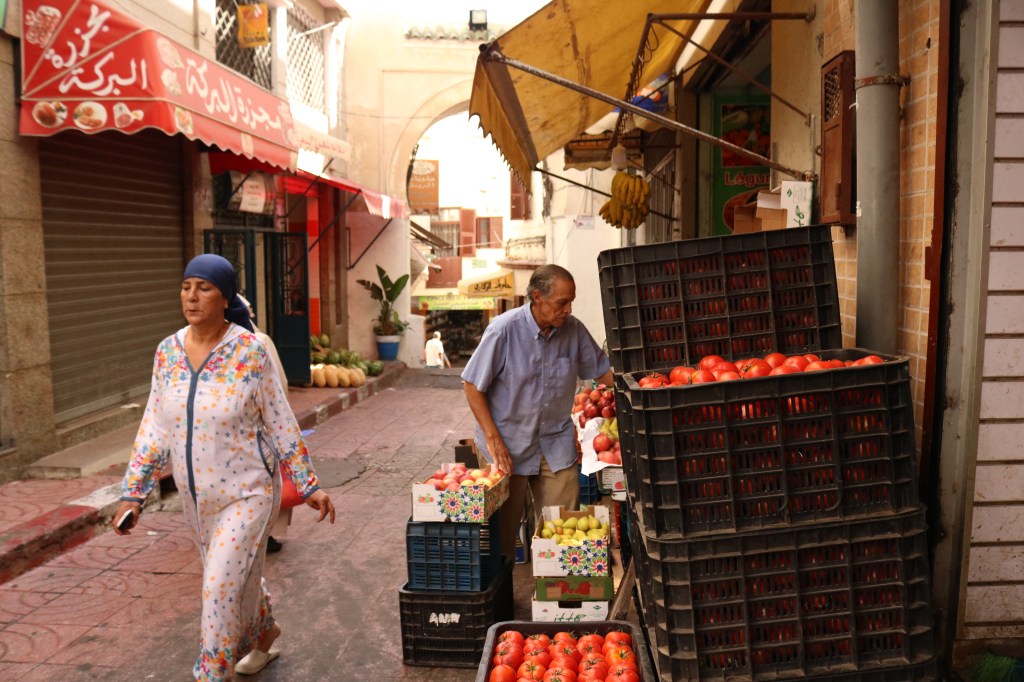
With no time being wasted, he took us to a street that was lined with vendors selling all sorts of fruits and vegetables. We were brought into a store, and he passed us a simple task – select the best eggplants, bell peppers, and tomatoes. Having done this plenty of times in grocery stores back home, I picked the firmest ones before putting them in a plastic bag to weigh on a scale. Issam, the person who hosted the cooking class, paid the vendor before we were taken to a butchery to get chicken and then up to his apartment’s kitchen close by.
Both the Dutch boy and I had no knowledge of making Moroccan food, but with instructions given by Issam, it was somewhat easy to follow. The first dish he taught us was zaalouk, the country’s equivalent of baba ganoush, but instead of tahini, the eggplant dish is made with tomatoes. With the stove on, he grilled the eggplants and bell peppers until their skin became really charred, while the rest of us helped with chopping the tomatoes. He then peeled the vegetables before chopping them as well, until they became a fine mash; that was when he drizzled olive oil and lemon juice, and sprinkled some salt for the final touch.
The main dish was next, and it was none other than tajine. The staple dish of Morocco is served in a glazed pot with a distinctive cone-shaped cover. This design traps the steam, which then becomes moisture for the food, and when the liquid disappears, the pot essentially turns into an oven. Making a tajine was surprisingly easy; all we had to do was add our chopped ingredients along with the chicken, as well as all the spices and seasonings that flavor the famous dish, before letting the stove do its magic. Lifting the conical lid with a damp cloth, the fragrance of the tajine came straight onto our noses. That was straight up heavenly!
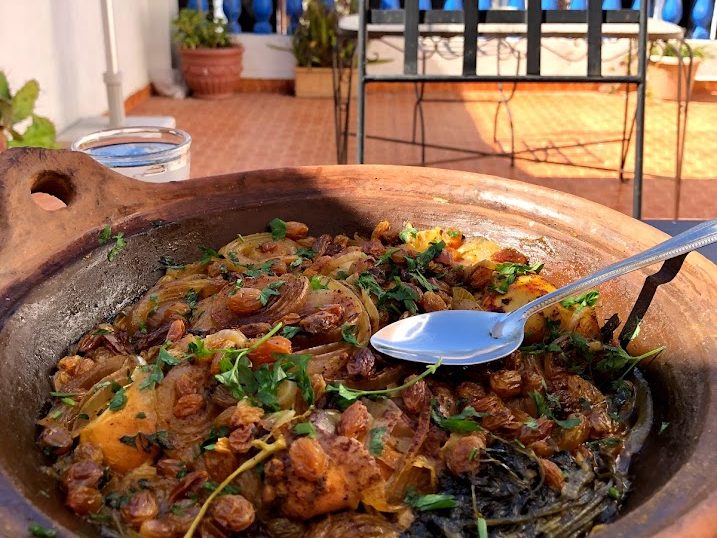
The three-hour-plus cooking lesson with Issam was a sensory delight to my taste buds. There, we sat at the table with our mouthwatering creations, on a rooftop in the middle of Tangier, sharing what we love about the country. But our mouths were munching more than talking. The meal was too delicious to put anything into words!
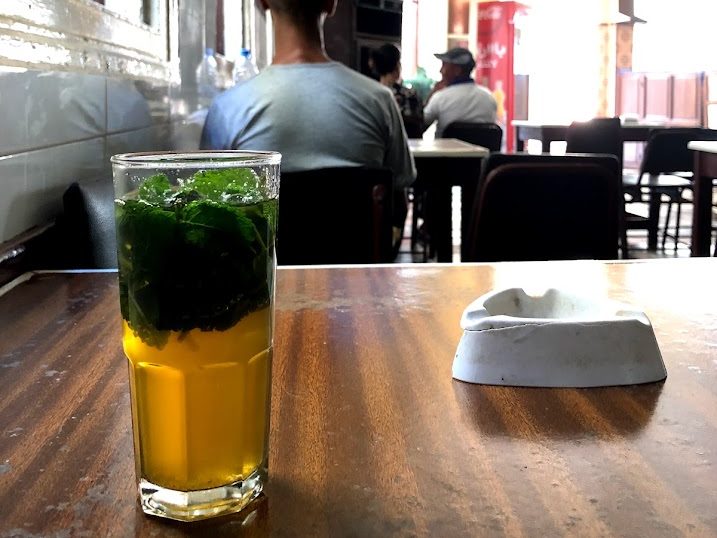
Back in the streets, I went for a haircut that cost less than 30 dirhams, before finding a place to enjoy the all-time Moroccan classic – mint tea. Atay, as the locals call it, is a refreshing drink made of gunpowder green tea, spearmint leaves, and a good amount of sugar. Almost everywhere in the country serves it, and it didn’t take me long to find a salon de thé nearby to sit down and sip it while watching the local news that I had no clue what it said.
Despite serving it at a boiling temperature, and drinking it in a place with only a slow-spinning fan, the tea helped to wash down the brewing heat in my body. It was also not long after in the evening when I found another spot in the medina for the same thing. The next day, and the following day after it, and every single day I was in Morocco, the mint tea was the automatic item on the menu to order.
Lasting Impressions of Tangier
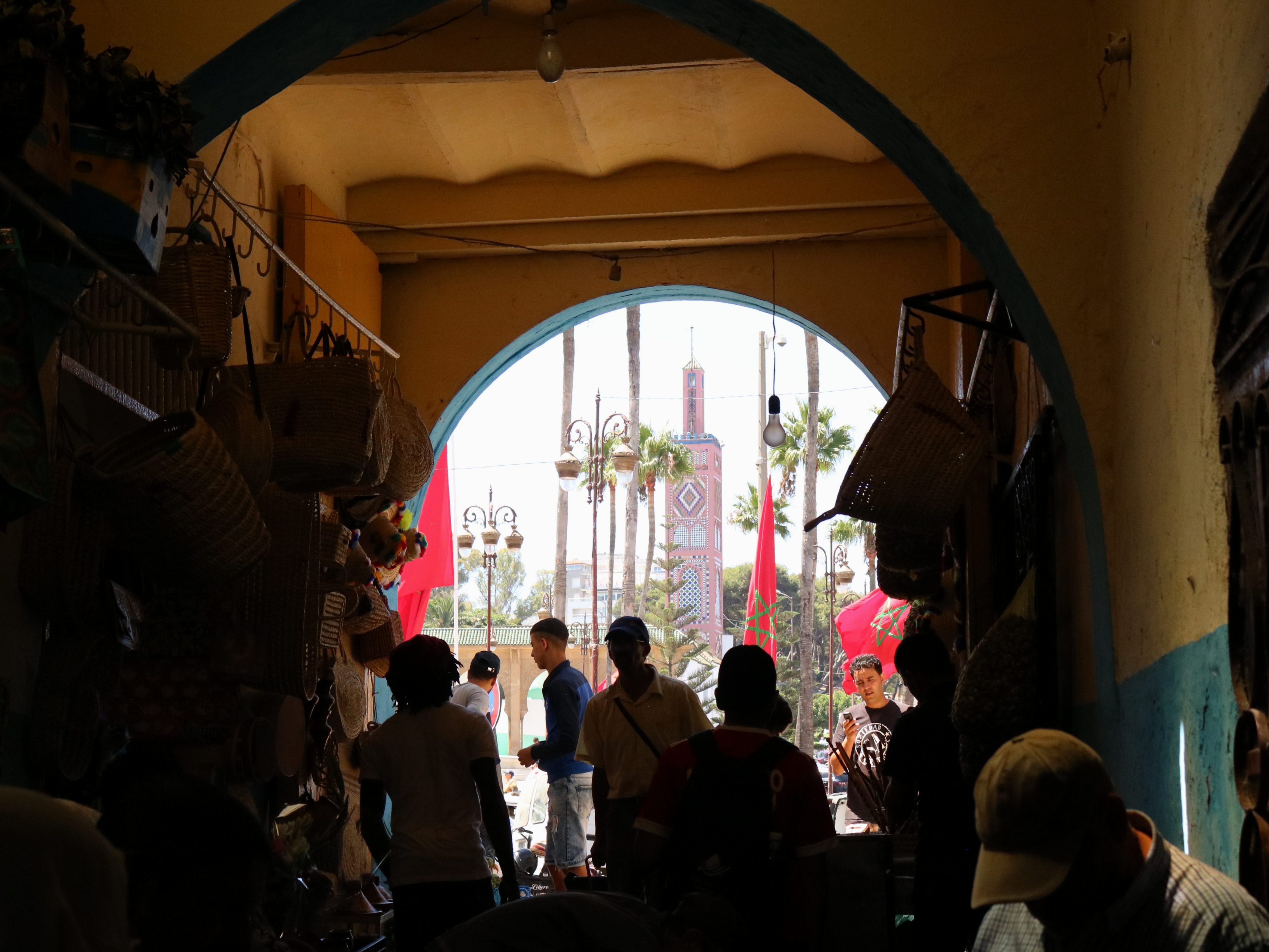
This city was quite the introduction to Morocco that I had never expected in the first place. Being at the northernmost tip of the country where it faces the strait that divides it from the European mainland, Tangier is a collision of cultures from near and far, but has retained much of its roots in the architecture, traditions, and food. For many visitors, the city is the gateway not only to Africa, but also to the country, as it has been for centuries.
Boarding the shared carriage of a train, my final moments in Tangier were bittersweet. With the city shrinking into the horizon as the train sped southwards, I bid my last goodbye and looked forward to my next stop, as Tangier was just the surface of what I had experienced in the country.


Leave a Reply