Miniscule but mighty, this lesser-known country at the cultural crossroads of Europe has a magnitude of things to see and do. Wedged between four countries, with its toe touching the Adriatic Sea, few people know where or what Slovenia is. But ever since I learned about its existence, the country has continued to captivate me with its landscapes and culture. And during my three-month backpacking trip across the continent, I finally had the chance to visit.
A Flixbus drove me from Venice to the easternmost border of Italy, where passengers fueled up with snacks and drinks at a gas station before crossing the invisible frontier. The scenery became brighter with the summer sun; the grass glowed in the most vivid green, and there scattered houses that only made sense in children’s storybooks. That was the beautiful introduction Slovenia gave me.
Pronounce It Right: The Name of the Capital
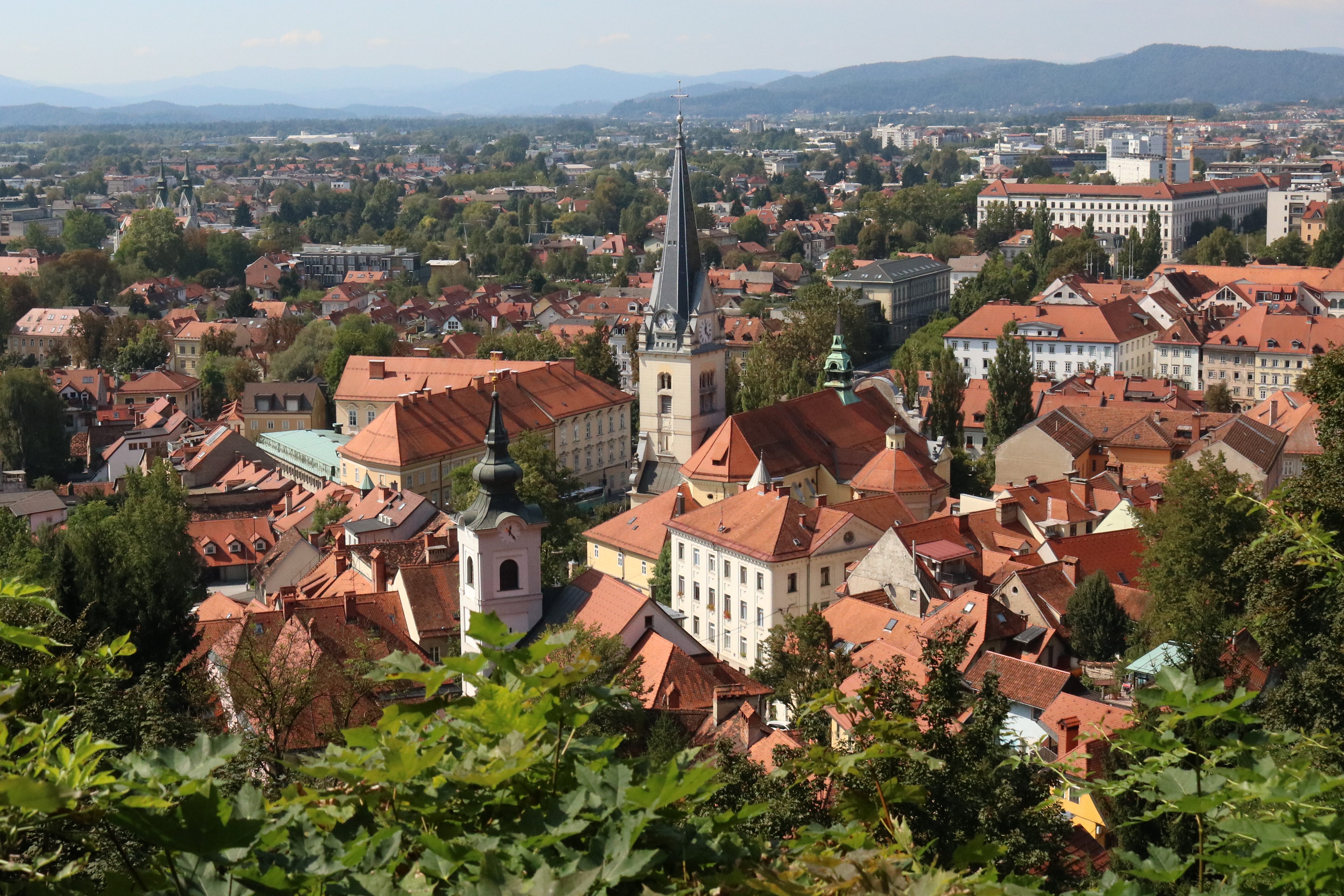
Ljubljana (LOOP-YANA), the capital city, served as the base of my visit to the country. With a population of just over half a million, the whole place felt more like a town than an actual city – leafy trees lined the riverbanks, pastel-toned buildings not higher than three stories, and a surprisingly lack of cars even in the center. In just the first hour of being there, I was already in love with the city.
Designed with livability in mind, Ljubljana was incredibly walkable, but even more so with two wheels. Perhaps the locals’ most preferred mode of transport, getting around with a bicycle in the city was a breezy experience, whether it was on the cobblestone streets of the compact historical center or actual bike lanes on wider boulevards.
When I was there, renting one only required downloading the BicikeLJ app and paying a one-week subscription of just €1 (free for the first hour, before another €1 for the second, and doubling in the next), before scanning the QR code of a bicycle in any BicikeLJ station. Other than getting to the city center from the bus station on the day of arrival, I did not use any public transit during my time in Ljubljana at all!
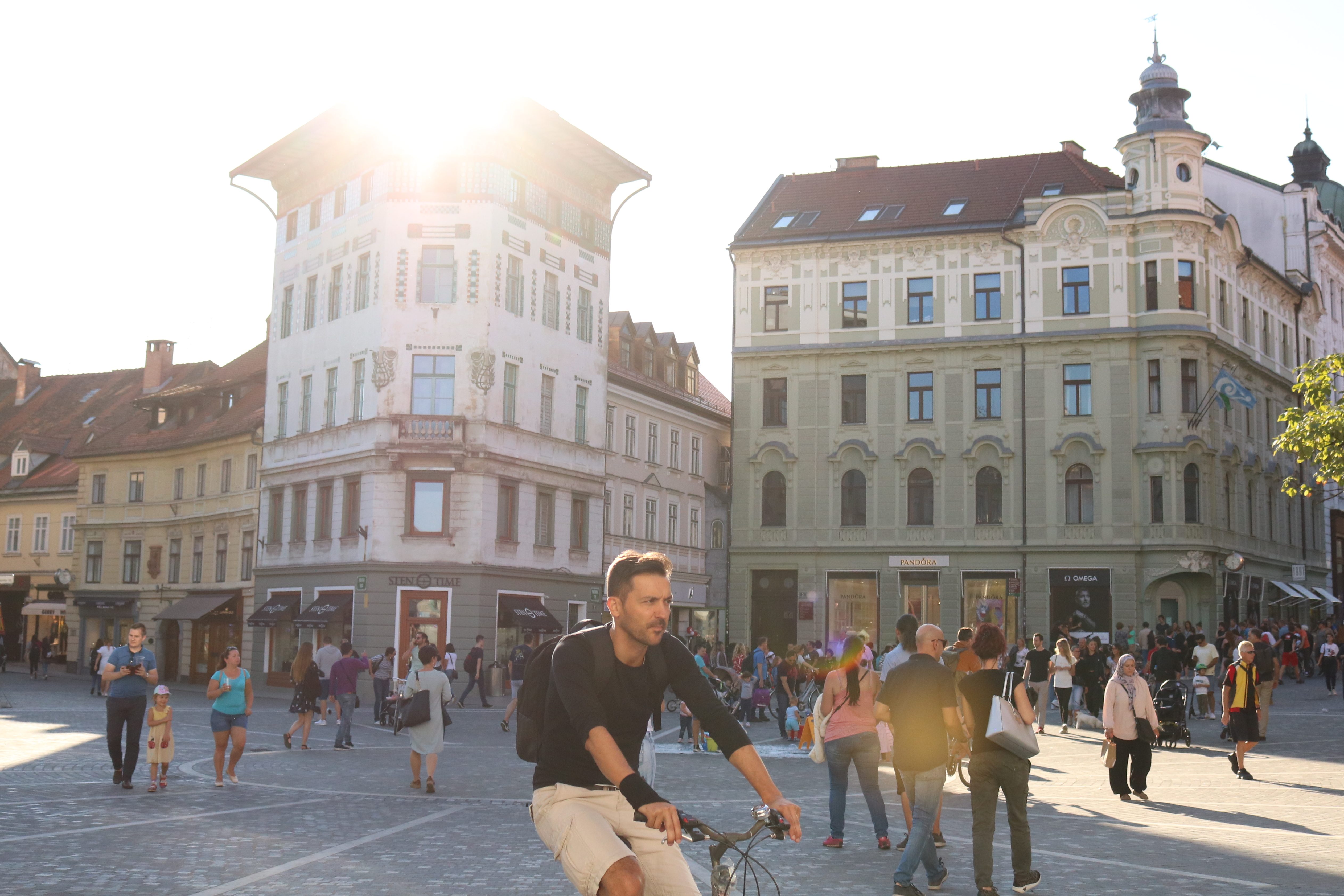
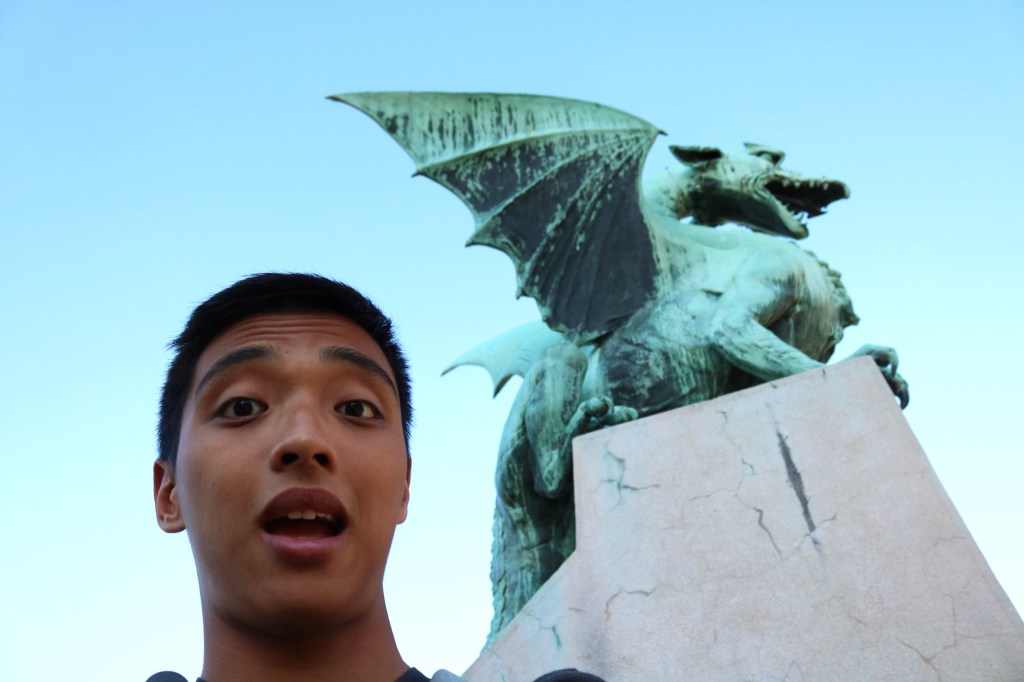
Now let’s talk about what makes Ljubljana an incredible destination. I have visited many European capitals, and this was still the one where I felt the calmest and most peaceful. The small but photogenic historical center is cut into two by the Ljubljanica River, connected by several noteworthy bridges such as the Triple Bridge (Tromostovje), one of the many works of Jože Plečnik, the country’s proudest architect. Not too far, the one that catches the eye of tourists is Zmajski most, or the Dragon Bridge, with four oxidized statues of the mythical creature linking to the city’s founding history.
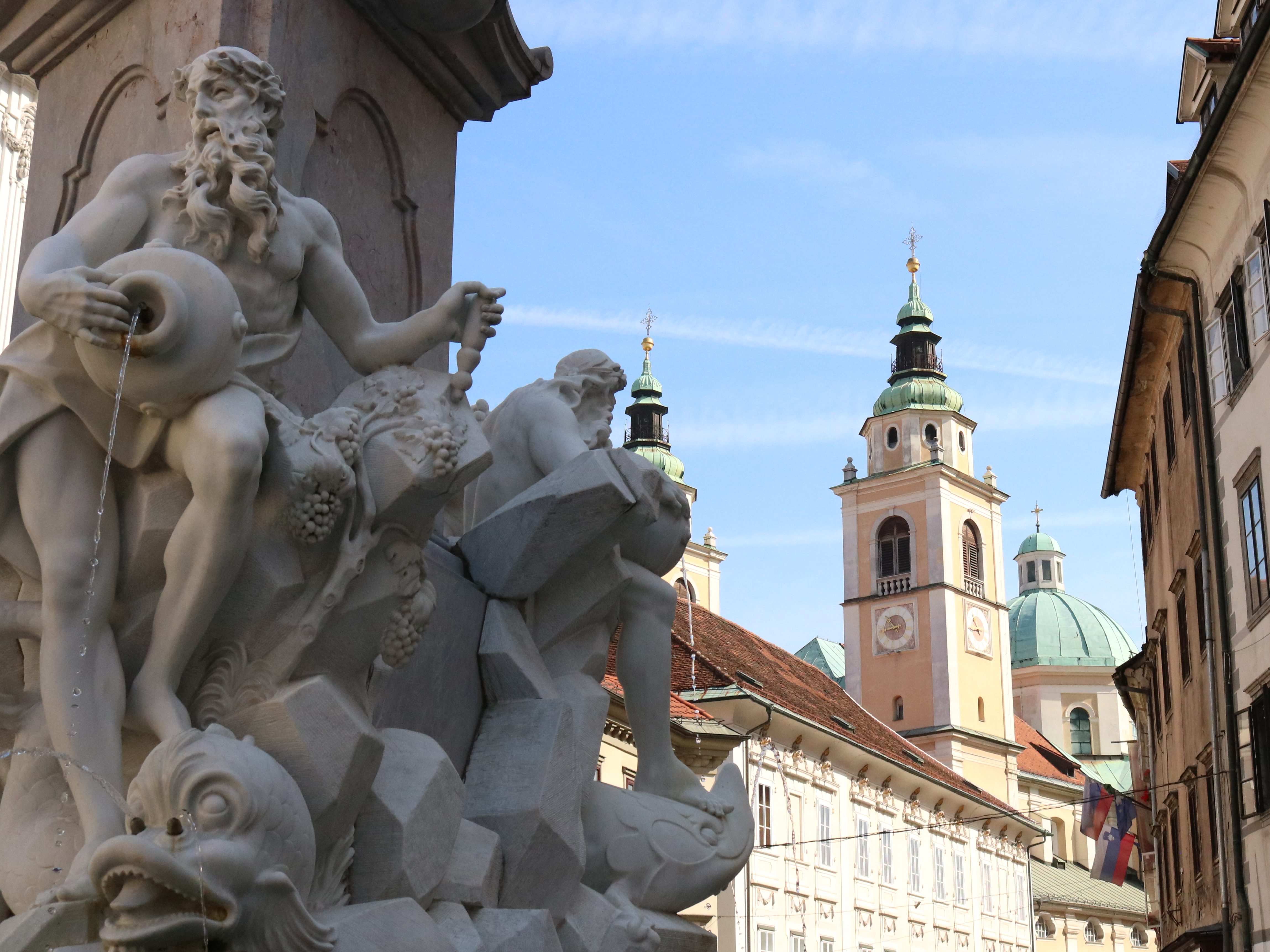
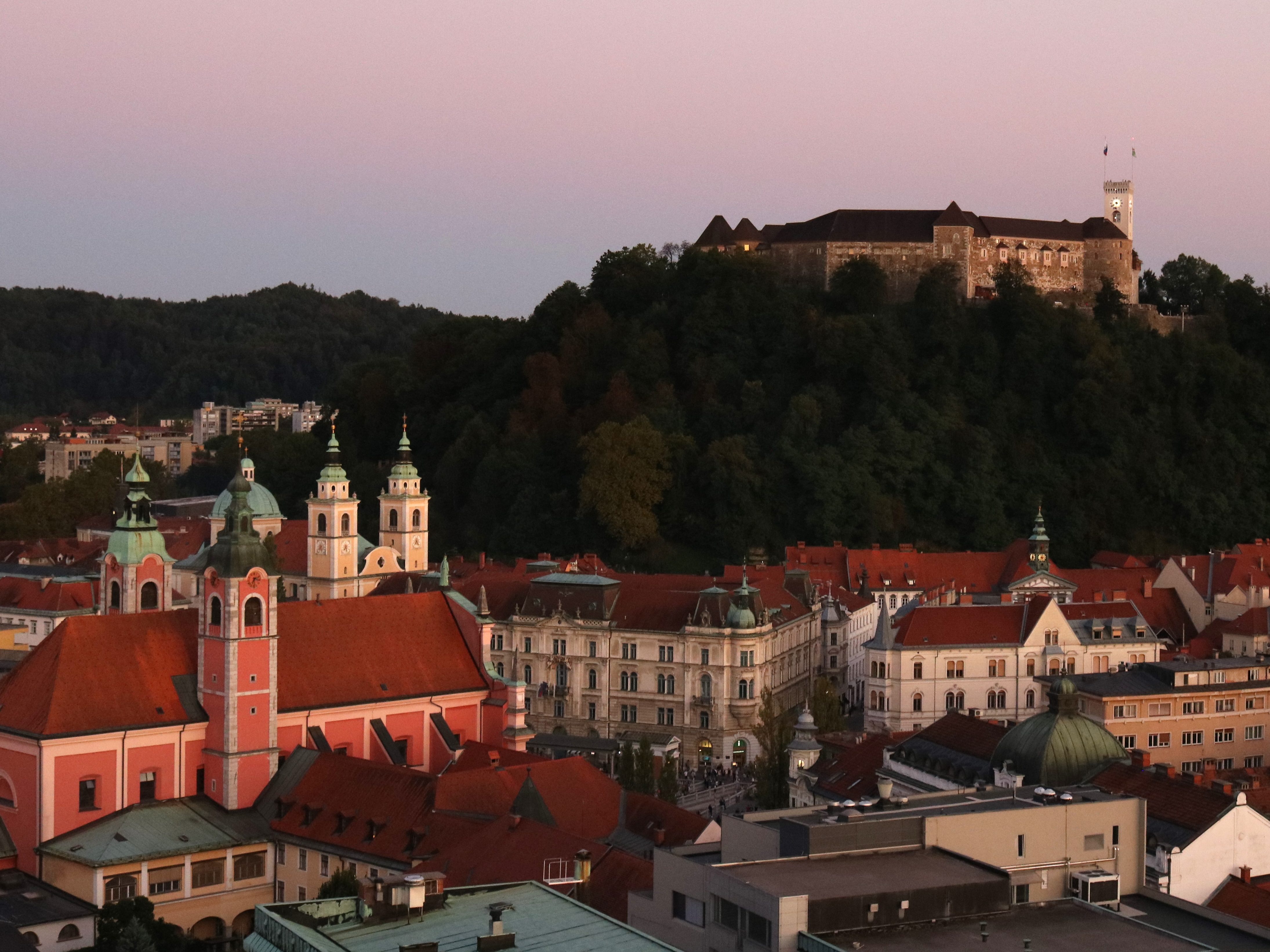
One half has the most action, while the other has the quintessential charm of a Central European old town. The latter, with its cathedral spires, Baroque architecture, and unlimited number of shops and restaurants, is towered by the Ljubljana Castle. The medieval landmark, accessible via the funicular or ascending a forested trail, grants uninterrupted views of the city and even the mountains beyond from the summit.
Head back to the other side for even a better view. Especially during sunset, the bar at the tippy top of Nebotičnik draws the few that know it to toast the panoramic view of the old town with a cold beer, which I did. Na zdravje!
Lakes and Mountains
Ljubljana could keep me in for the rest of my time in the country, but it would be a huge shame to not venture into the countryside. The northwestern corner of Slovenia especially is made for postcards and desktop wallpapers. The forests, the lakes, and the mountains, all in one setting. And there is no better place for that than at the spa resort town of Bled, the country’s best-known tourist spot.
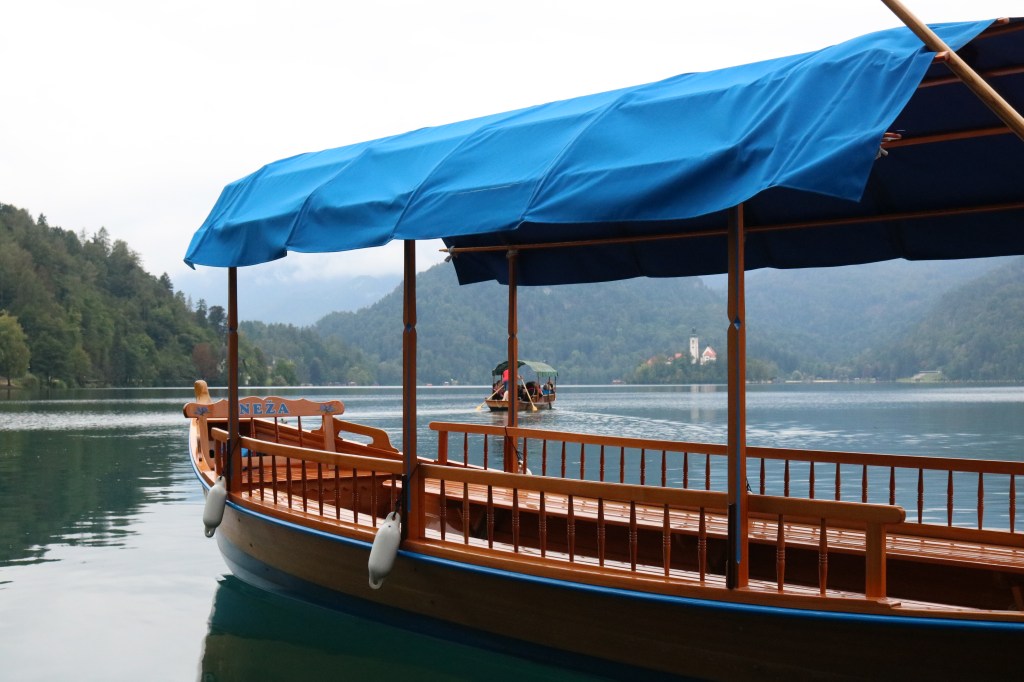
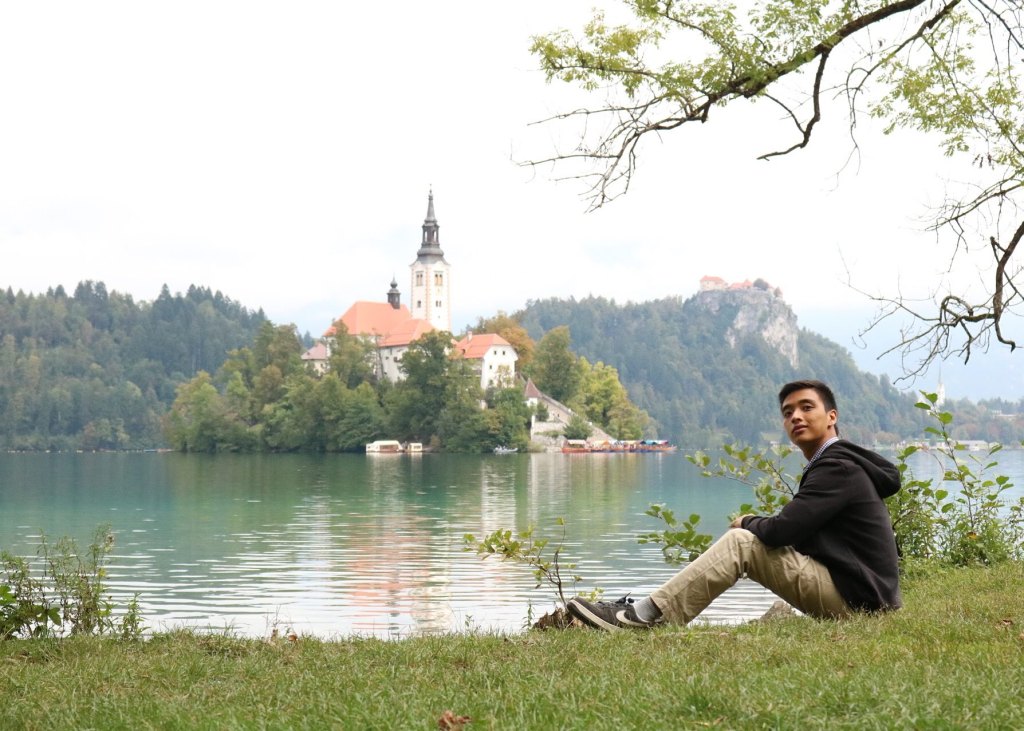
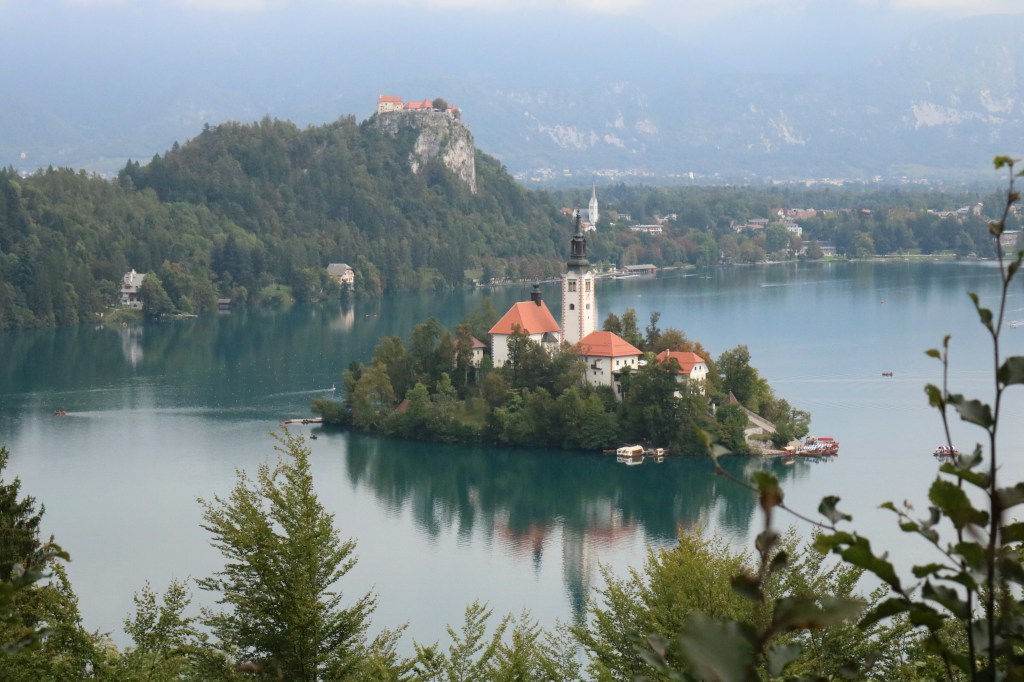
I took a morning bus from the capital to get there. When the crowds were thin, I walked along the lakefront and caught a glimpse of the castle before spotting the famous church island in the far distance. To get a better view of it, I followed the shoreline west, and after more than half an hour of walking (with several stops because it was too scenic), I made it to the trailhead of Mala Osojnica, the hill closest to the island.
Now you may wonder why I walked this much to get here. The hill is unassuming from near and far, but it is the summit that makes the journey absolutely worthwhile. A bit of caution, though, that it is not an easy climb. The trail is steep in most parts, and even more so at the end, where you will meet a staircase with only a metal railing on one side to hold on to. But the reward – the entirety of Lake Bled right in front of your eyes. Sit on the bench and take it in!
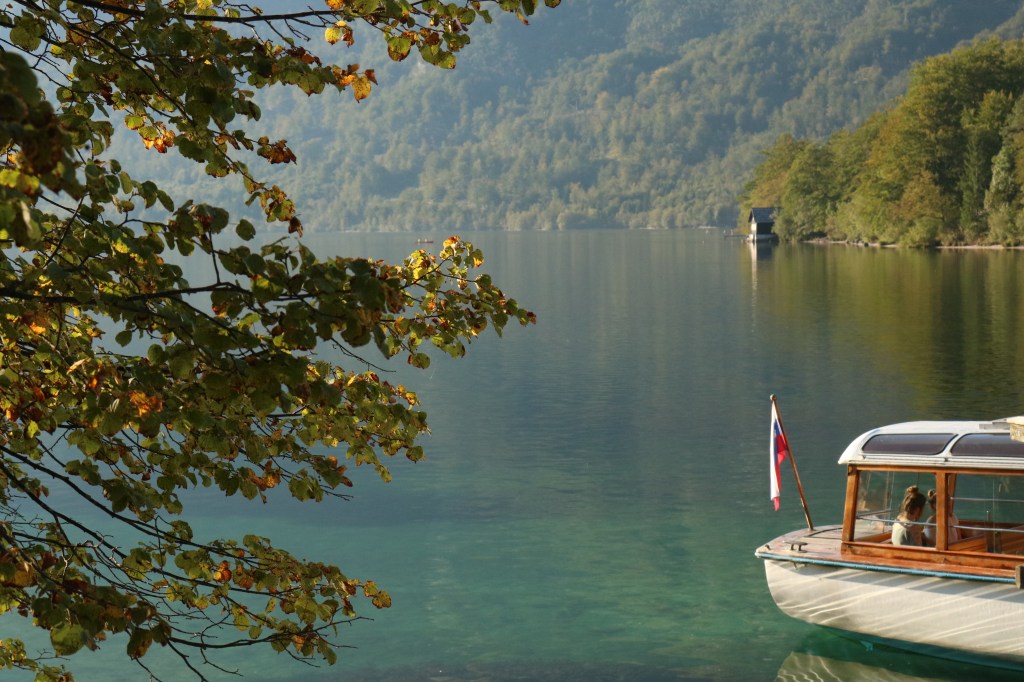
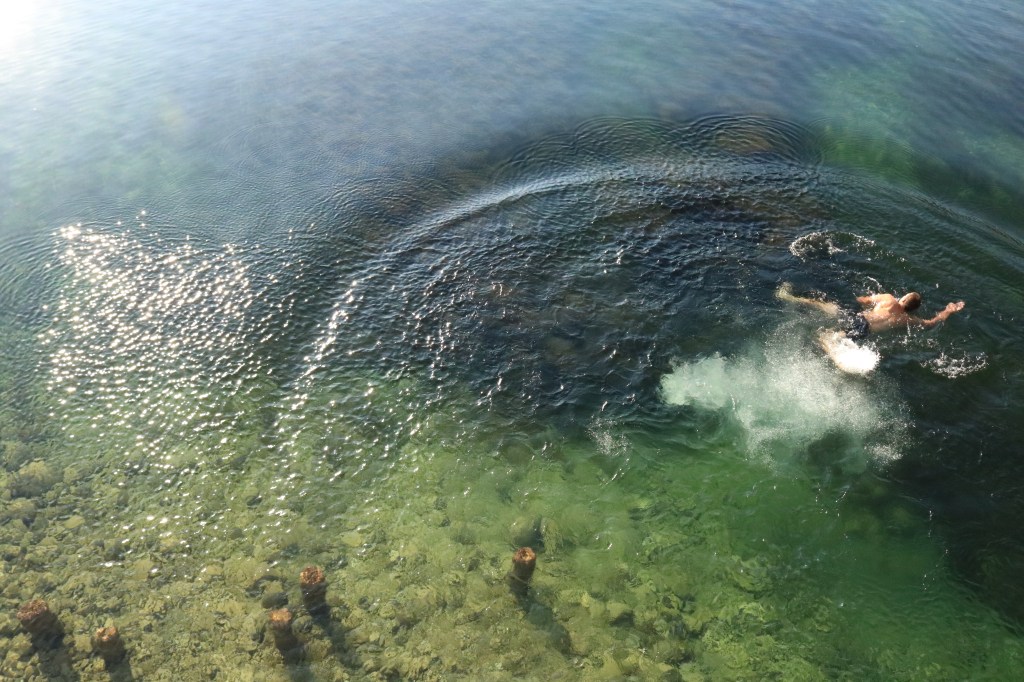
Another lake worth visiting is Bohinjsko jezero, reachable from Bled by a local bus. Far less popular with tourists, the lake is the largest of its kind in the country and sits right below the Julian Alps. The clarity of the lake was superb, and as I was there in summer, people were seen swimming and kayaking on the glacial waters. With the addition of the 700-year-old church and snowcapped mountains peeking in the distance, the whole place was just magical.
A Subterranean Wonder
Another of the country’s natural spectacles lies underneath the ground. The area between the capital and the coast is a geological heaven of karst, a land formation of dissolved limestone and other types of bedrock. The result of this is especially evident underground, in massive cave systems and sinkholes.
Less than an hour south of the city, one can experience such creation in the caves of Postojna. Measuring more than 24km long, the karst cave system is the second-longest in the country, and perhaps the most accessible. Visitors simply buy a ticket on-site and board the “cave train” as it snakes through the tunnels like being on a rollercoaster.
A tour guide will be on the train with everyone, who will also lead the way after disembarking. The cave system is vast, cold, and dark in most parts; by following the tour guide, one can take in the incredible dripstone formations of the cave without fearing getting lost.
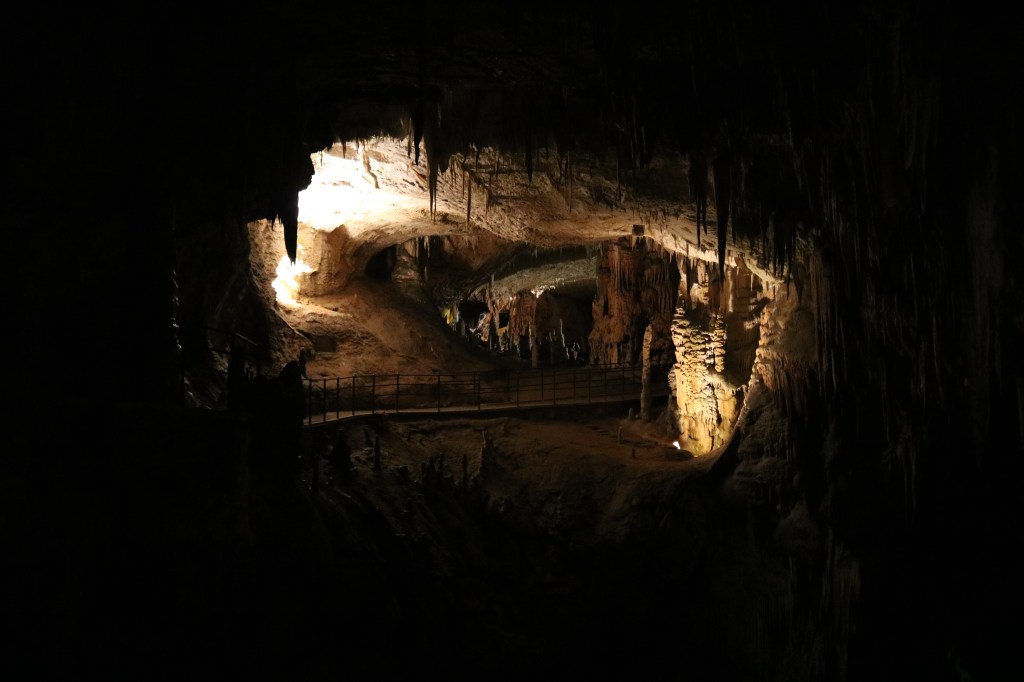
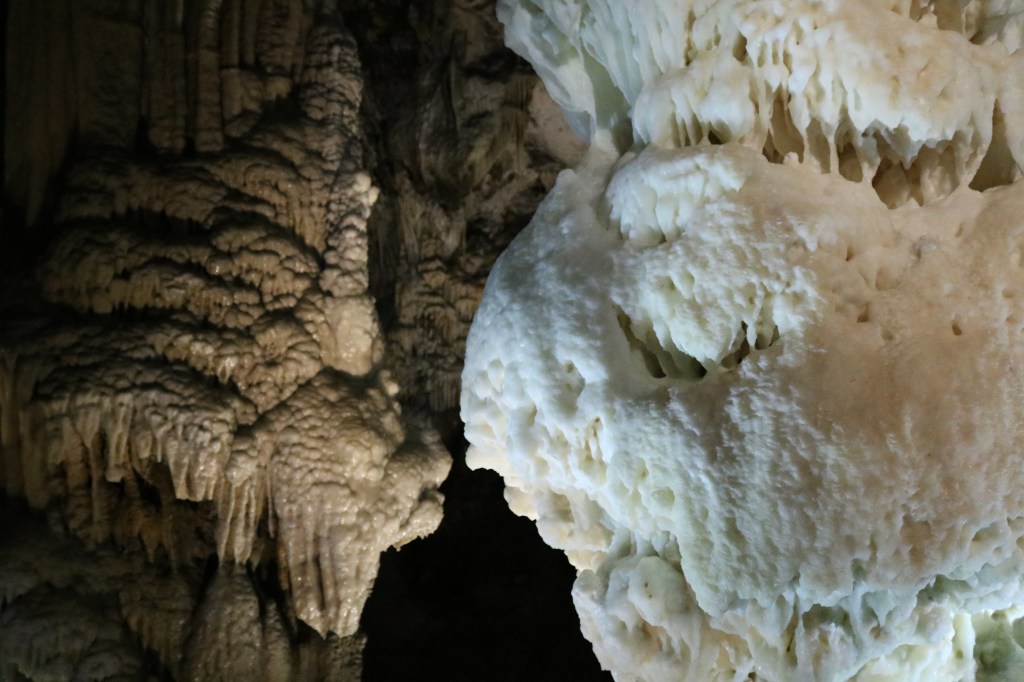
Even after seeing many other caves in the world, the ones in Postojna were still a sight to behold. The large concentration of stalactites and stalagmites, each with various shades of white, brown, and gray, had me examining the details as if they were hand-sculpted, except the formations were all natural.
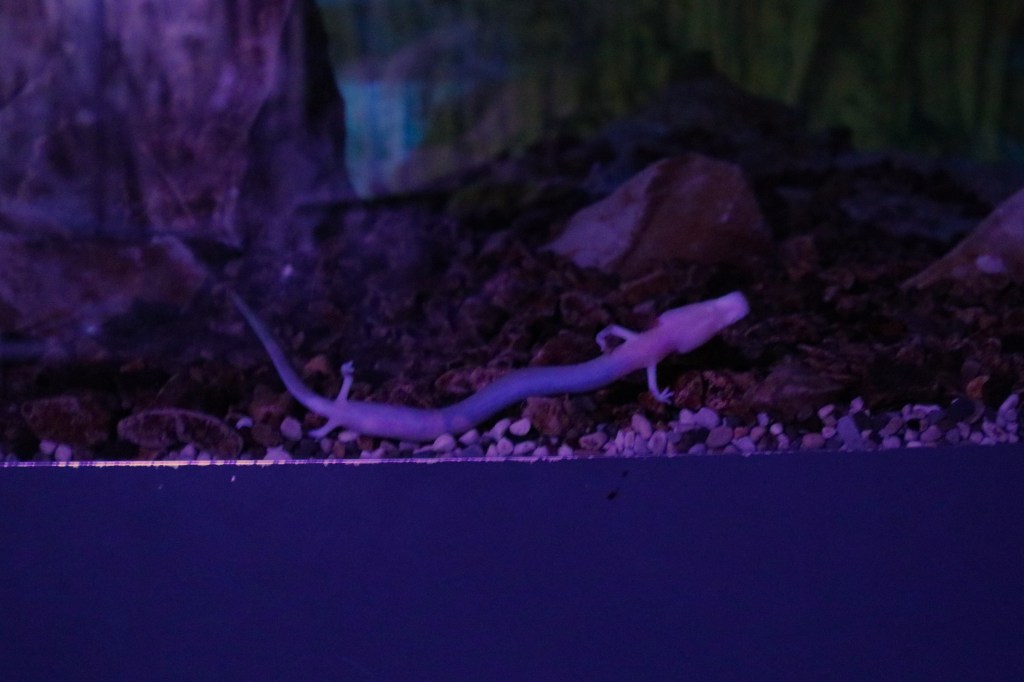
The pitch-black and moist environment not only allows the limestone structures to grow, but it also harbors a rare species of salamander- the olm. The creature, unique to this part of the continent, lives only in the water bodies of the subterranean world. And because its habitat is almost always in complete darkness, the olm has no eyes, meaning it is fully blind. While it is impossible for visitors to observe it in the wild, there is a display section at the end of the caves where the creature is seen in aquarium tanks.
While I missed visiting it, not too far from the caves, the Predjama Castle, a medieval landmark built into a cliffside, is worth the photo stop as well.
Short but Sweet
I had four days in Slovenia, which lasted well but didn’t feel long enough. If I could add a few more days, places such as Bovec and the wilderness of Triglav National Park would be a fine addition to my itinerary. Or even the small but glistening Adriatic coastline, the UNESCO World Heritage-listed mines of Idrija, and the Lipizzaner horses of Lipica… so many ideas, so little time!
Well, I guess I have to return someday.
Have I convinced you to visit this Central European country yet?
 dtnctravel
Leave a comment