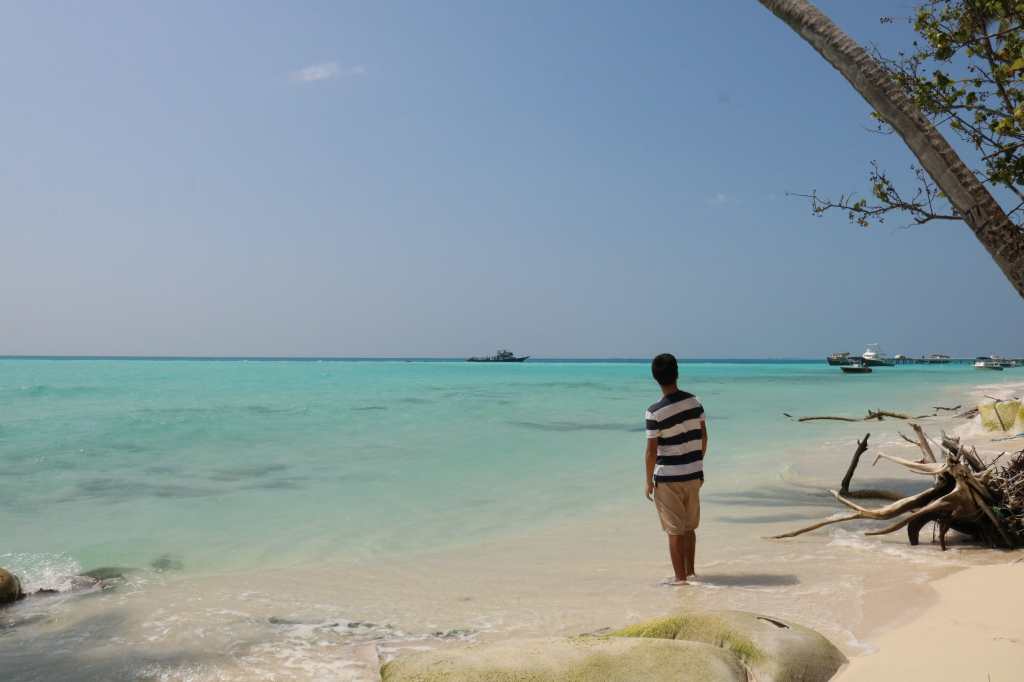
When the name of the country is mentioned, everyone’s mind immediately sprouts thoughts of white sand beaches, swaying coconut palms, and that irresistible crystal-clear water they have seen on Instagram a million times. But this destination is also synonymous with a hefty price tag, where the rich fly in on floatplanes and spend their honeymoons in overwater bungalows, the ones that cost more than an arm or a leg for even just a night.
The Maldives had been on my bucket list for the longest time ever since I came across a CD that showed clips of the island nation’s idyllic beaches, paired with the most relaxing music that sounded like spa and rejuvenation. And I was less than 10 years old! A decade later, a couple of months before COVID-19 hit the world of travel, I found a reasonable flight to Malé on the most random of days while I was on my laptop.
I didn’t even hesitate, of course.
Choosing Where to Spend the Vacation of A Lifetime
As previously mentioned, when it comes to resorts, the Maldives is one of the world’s best-known for the luxurious kind. Those overwater villas are the dream for many. Imagine waking up above the water and having your private pool facing the endless stretch of the turquoise sea… But not everyone can afford to stay in them for even just a single night (that’s me 😢).
However, the Maldives is not just limited to the wealthy. The string of 1,200 islands in the Indian Ocean has options for even the most budget-conscious of travelers. Do note that it is still a fairly expensive country compared to its closest neighbors, but by skipping the fancy resort islands and sticking to the local way of life, anyone can afford to visit this highly sought vacation paradise.
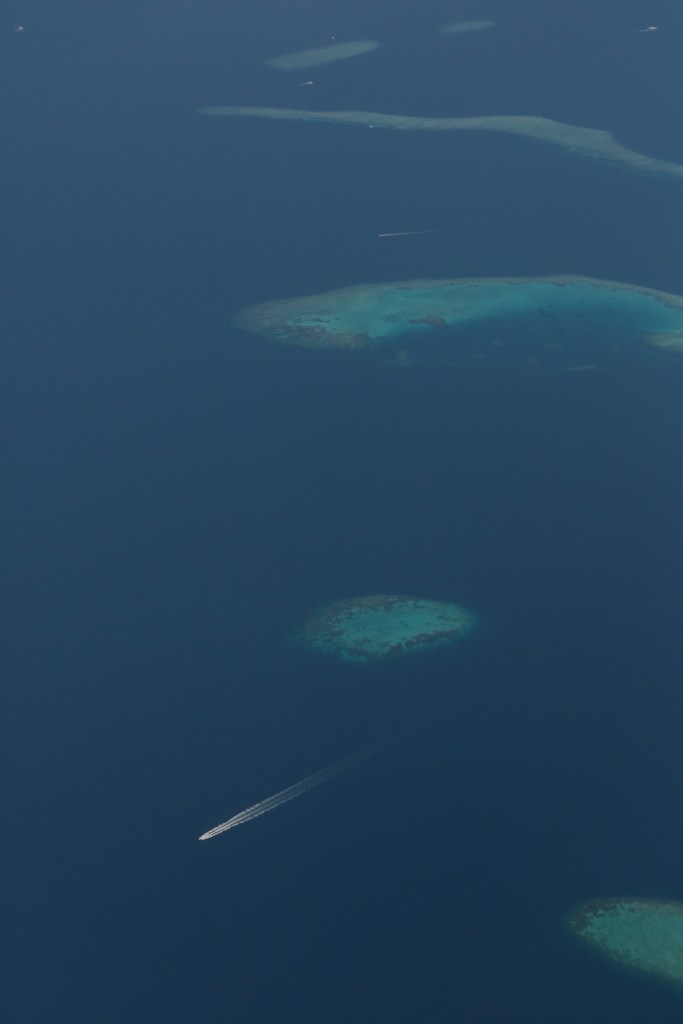
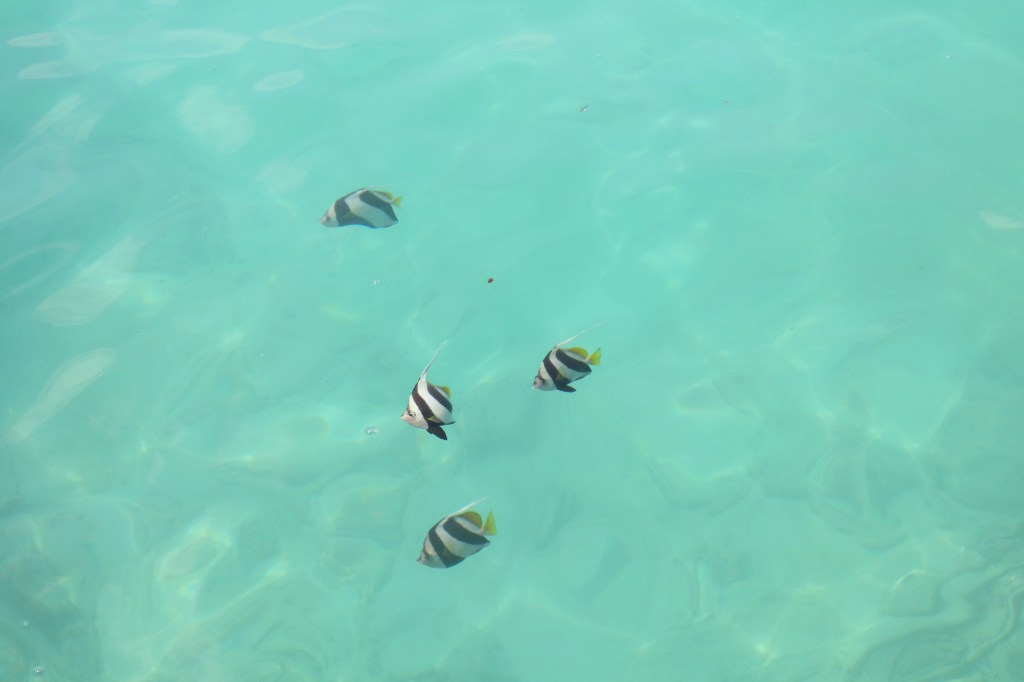
Sticking to the local way of life, as written above, was how I was able to have a wonderful week-long trip in the Maldives. After landing at Velana International Airport on the island of Hulhulé, I spent a solid three hours waiting for the fastboat ferry to where I would be staying for the next six nights. The airport area had a good amount of shops and restaurants to keep anyone busy while waiting for their mode of transport to arrive. As a Malaysian, I was immediately drawn to Secret Recipe for lunch. With about an hour more to kill, I walked around the docks and had my first encounter with the crystal clear water the country is famous for. I even came across a school of bannerfish!
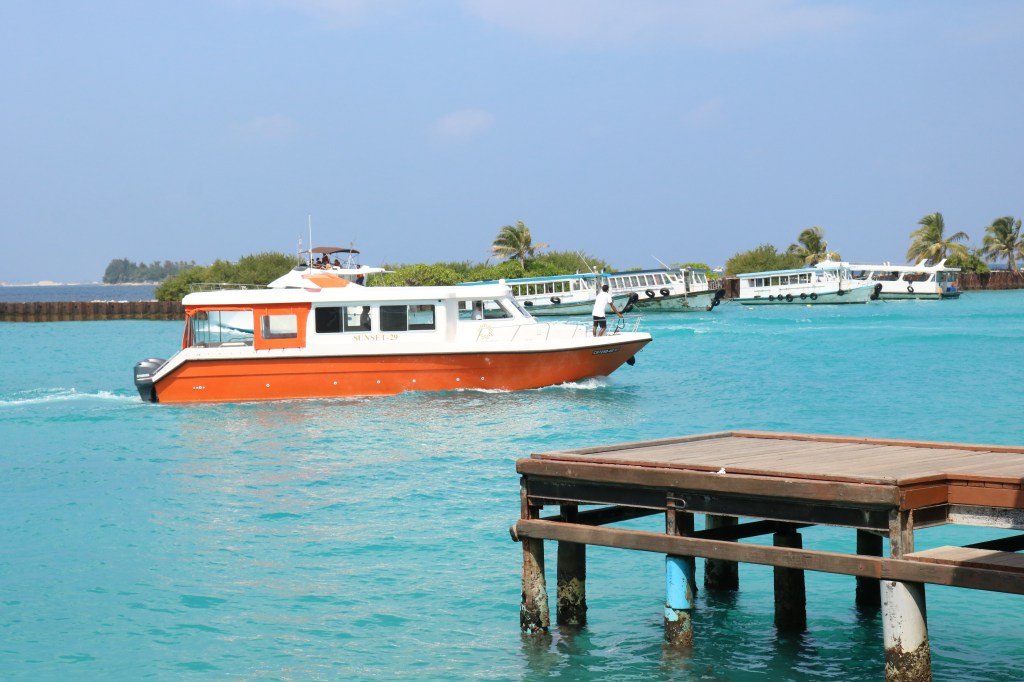
A bearded Maldivian man screamed my name out of nowhere. It was my fastboat ferry. Already seated were many other locals and about four Caucasians in flower-print shirts. The man took my hand-carry and stored it behind a tiny metal door at the front of the boat. Before I knew it, I was bracing myself for massive splashes and “speed bumps” of the ocean for more than two hours. With my sunglasses on, I just sat there and closed my eyes, as I was on the verge of throwing up. I get seasick so easily, ugh!
Slowly, the horizon presented palm-covered islands, some with towering broadcast antennas, on both sides of the boat. We were already in Vaavu Atoll. Not too long later, the ferry pulled close to a deteriorated wooden pier, and there stood several people and children, waving to us passengers. After receiving my luggage from the crew, I minded my step on the uneven pier and made it on shore. An elderly man with a hand-pulled cart asked if I was the one to stay at the place he worked at. I said yes, and followed him through the trees. His name was Ahmed, and with his limited English, welcomed me to the island.
Fulidhoo was the island I spent most of my time in the Maldives. It is one of the handful of non-resort islands that are open to visitors. Unlike the resorts, islands like this are inhabited by local Maldivians, with a handful of guesthouses and small hotels operating as a secondary economy other than fishing. While lacking the luxury of the overwater bungalows most people envision of the Maldives, the same aquamarine water and white sand are also found on the local islands, minus the price tag of a few thousand dollars.
Lazy Days on the Beach
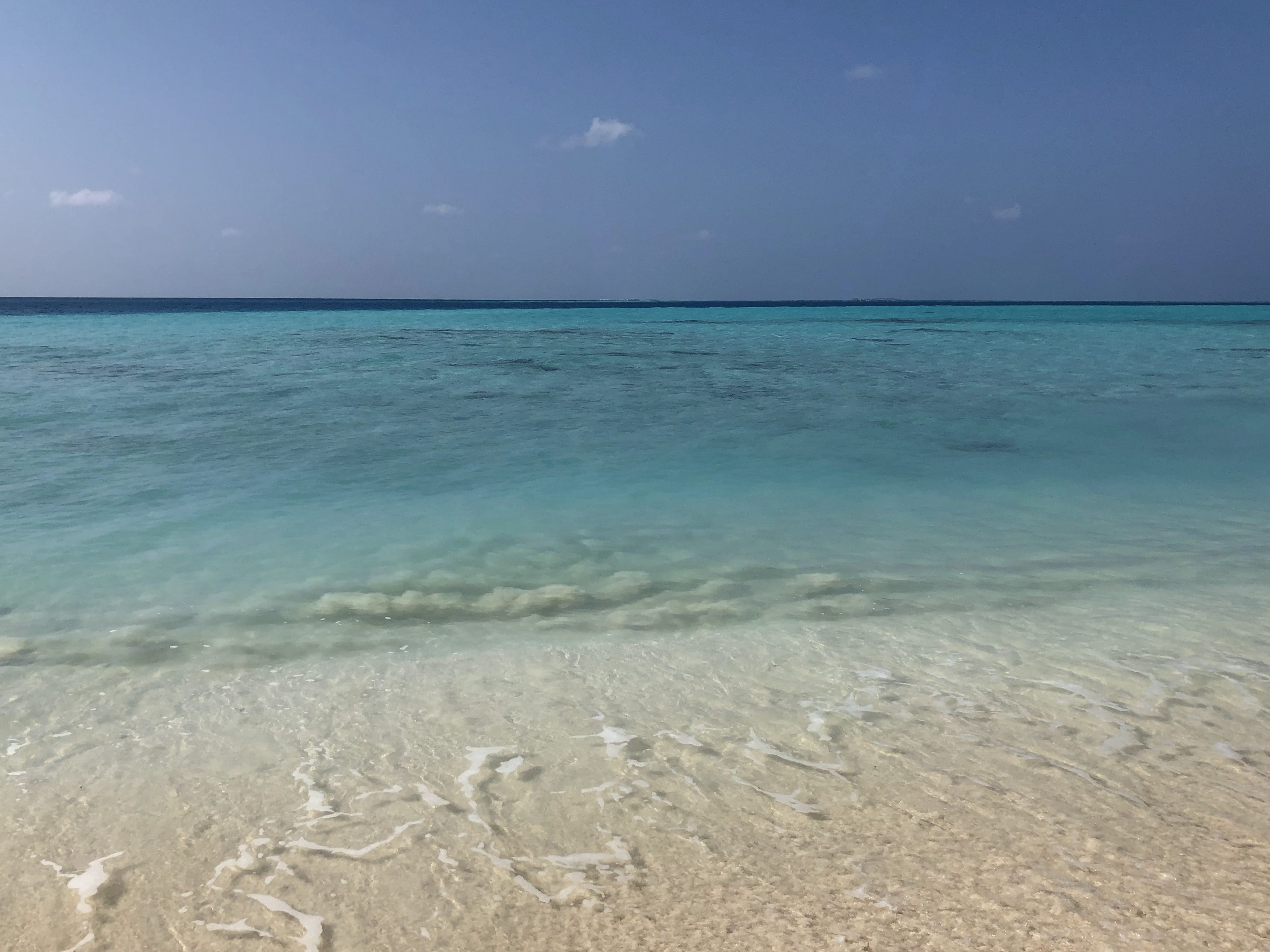
It was impossible to ignore the turquoise hues of the water wherever I walked on the island. The colors were unreal. The clarity was the best I had ever seen (even today). The temperature, well, was just the perfect degree to swim!
Honestly, when in the Maldives, do not expect to do much. The beach is all you need. The fine white sand that circled a majority of the island’s perimeter was always so inviting. And with enough shade from the fringing coconut trees, it was easy to spend the whole afternoon on the beach without doing anything.
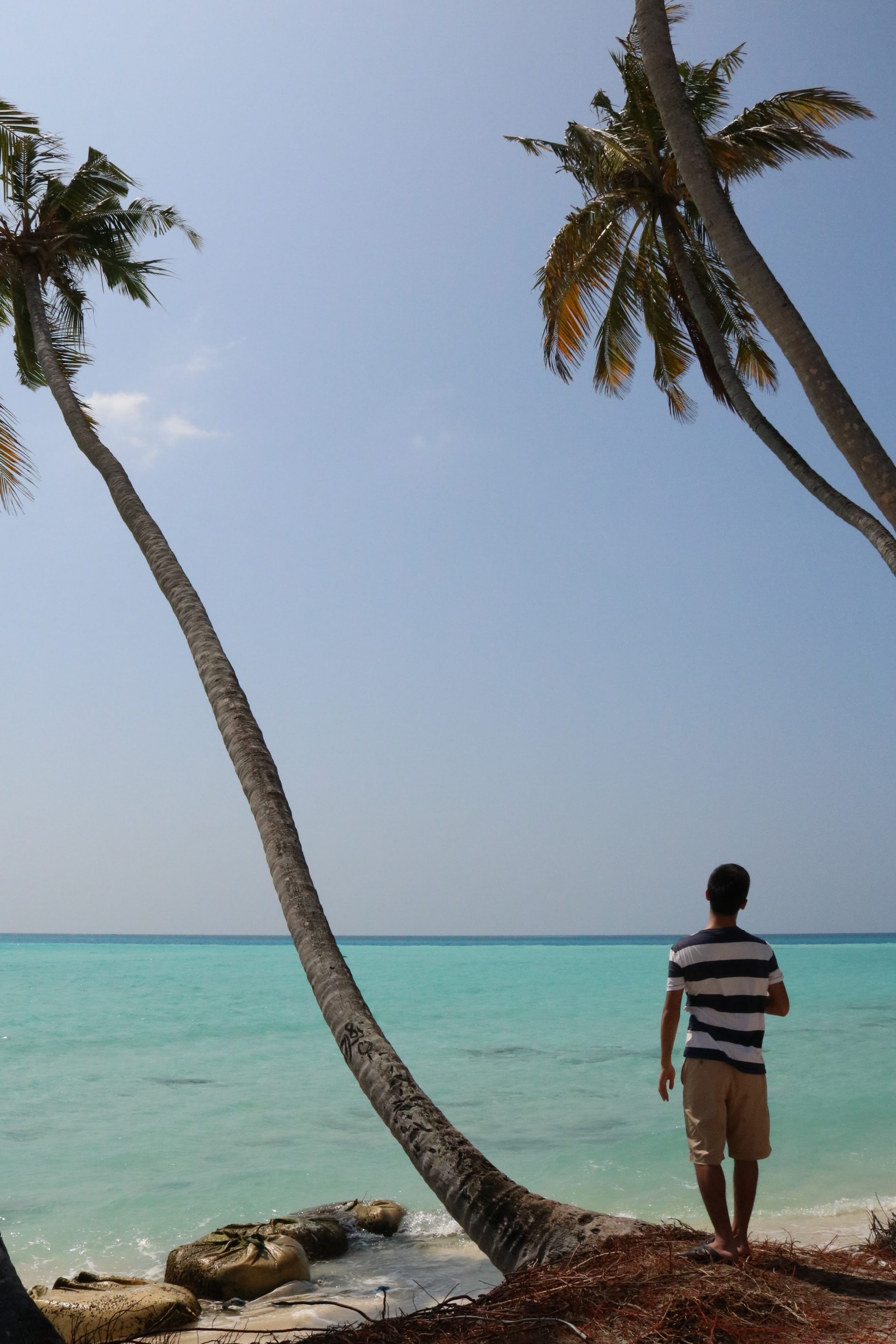
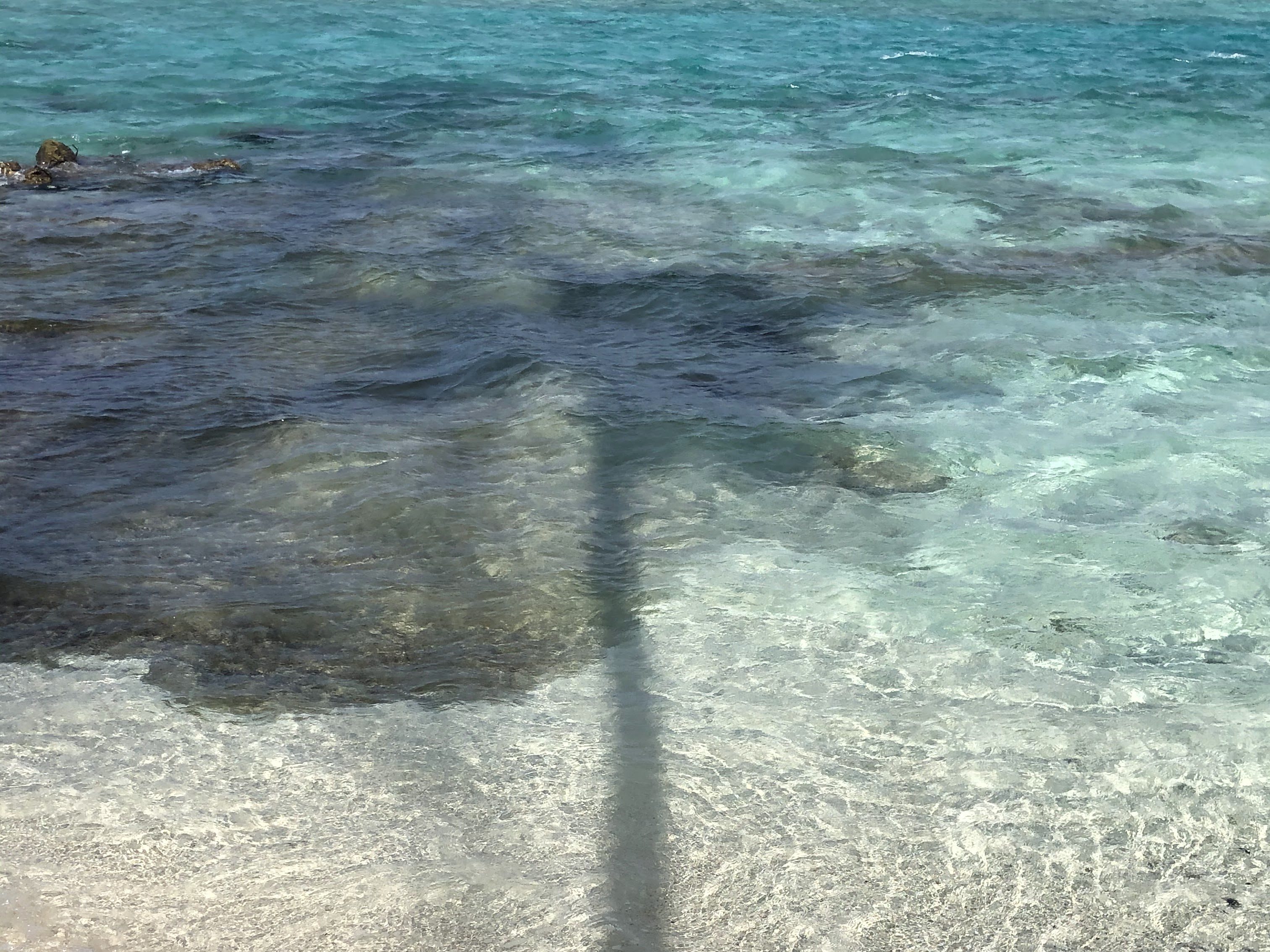
While the beaches are the main draw of any island in the Maldives, local islands like Fulidhoo have restrictions on where visitors can do certain acts like sunbathing and swimming in bikinis. As it is an Islamic country (almost 99% of the population), females, especially, have to be fully clothed when swimming off public beaches. This doesn’t apply when doing so on designated “tourist” beaches, however, of which the island of Fulidhoo has two, and they are quite far away from the local residential areas.
Observing the Local Life
If the sun gets too much on your bare skin, wear your shirt again and put on a hat as well, and explore the side of the Maldives many don’t get to see. Staying on a local island like Fulidhoo opens a window for visitors to the livelihood of the people who call it home – women doing chores outside of their adobe, children playing football, fishing boats pulling onto shore at sundown with fresh catches of the day. It was simple but beautiful.
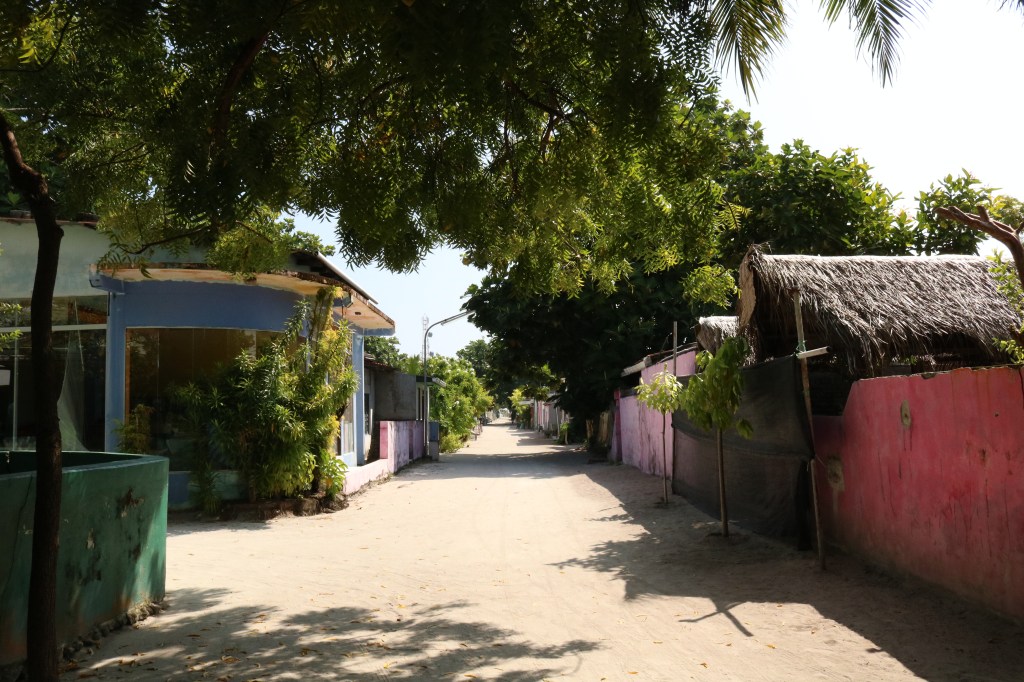
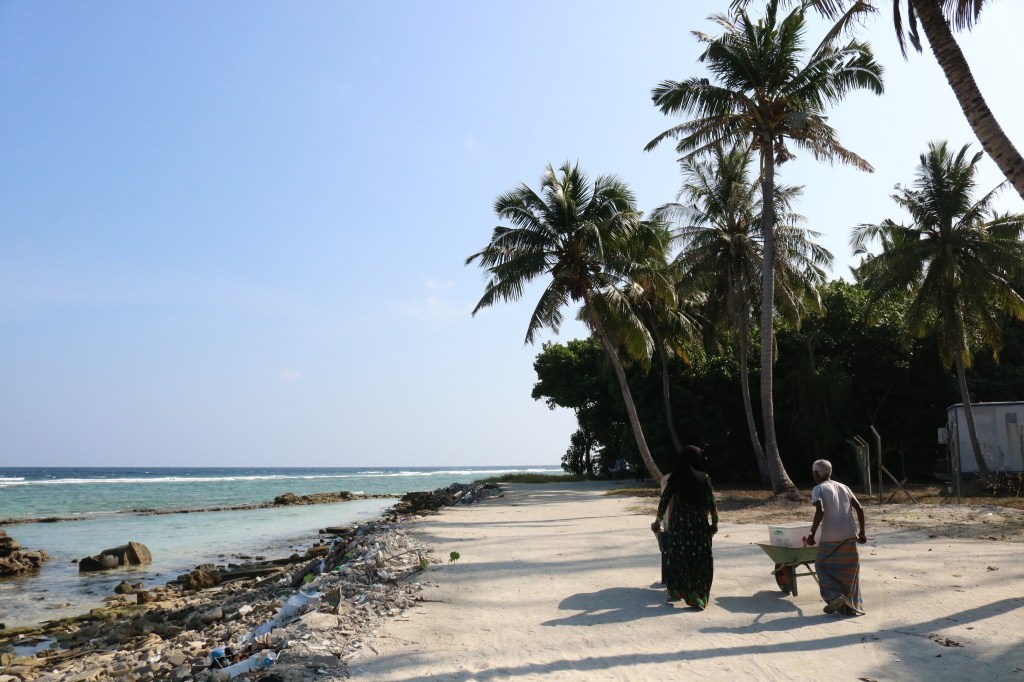
On one of the days before the sun reached the top of the sky, I happened to stumble upon a woman and an old man pushing their wheeled cart along a sandy path by the rocky shore. Curious, I followed them at a distance, which slowly led me to a jungle. It was there that I noticed black smoke pluming into the air, and that was when I realized they were heading to a dumping ground.
Waste management on local islands like this may just be limited to open burning. It is almost impossible for the locals to get rid of their trash other than setting it on fire. Another harsh truth I encountered was the amount of plastic bottles and bags on the shoreline, which was quite a sad sight, especially when, in my mind, the beaches of the Maldives were consistently perfect.
Perhaps that widened my view and knowledge of the country a bit; issues like this exist no matter how impeccable a place is promoted to many. I headed back to my guesthouse and chowed down a plate of mashuni Ahmed prepared for me. From there, it became my favorite thing I ate in the country.
Underwater and Above the Surface
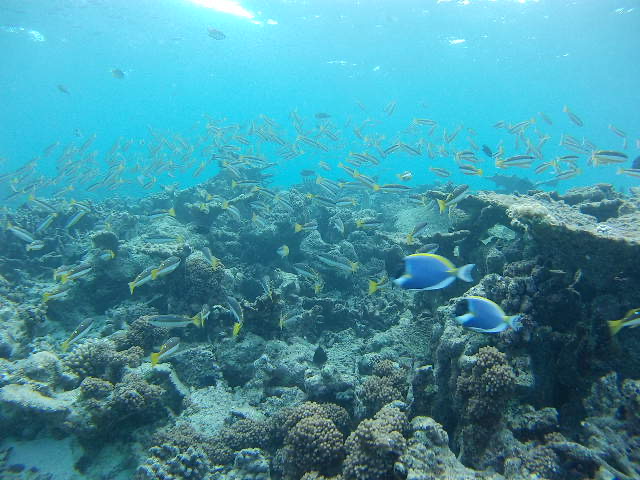
As much as what Fulidhoo’s beaches could offer, the underwater world was the triumph of it all. With a snorkel mask I rented from my guesthouse, I walked off the shore and began exploring. I didn’t even have to swim far to find marine life – surgeonfish, damsels, wrasses, you name it- were seen in the coral reefs in the most eye-catching colors. There was also one time when I found a moray eel with its saw-toothed mouth wide open in the shallows!
To see more of the ocean, I opted for a boat trip to several dive sites nearby. As I wasn’t certified for scuba diving, I could only snorkel to see what’s beneath the surface. Putting my snorkel mask on, all ready to jump into the water, the operator then told me I would be swimming with sharks.
SHARKS!?
I mean, I didn’t expect the sharks to be great whites. But still, swimming with the same kind of creature- that was definitely alarming. The operator assured me I would be fine, as they would not bite. We waited for a few minutes before the shadows of the intimidating fish appeared in the deep. Of course, I wasn’t the first to jump in. Sure enough, it was safe, as they were nurse sharks.
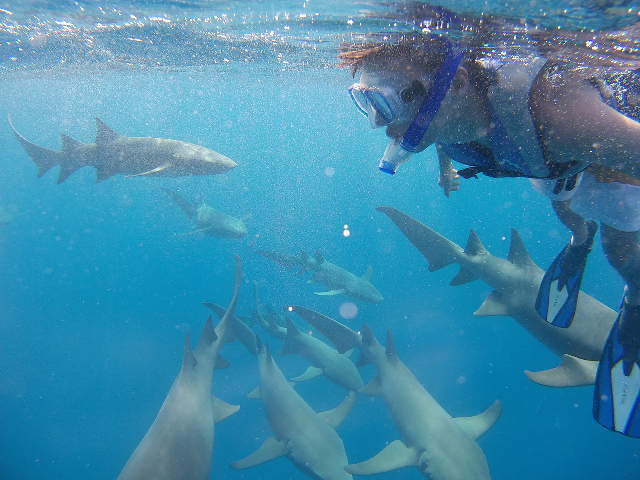
Scary at first, but the sharks were surprisingly gentle. The 10-plus minutes of being surrounded by the creatures in the open water were arguably the highlight of my time in the Maldives. Especially when we were the only ones.
Two other sites followed shortly after – both were coral gardens with some of the richest amounts of tropical fish I’ve seen in one sitting. Due to my poor diving skills, the operator offered to take a picture of a clownfish family in a blooming anemone with my waterproof camera for me.
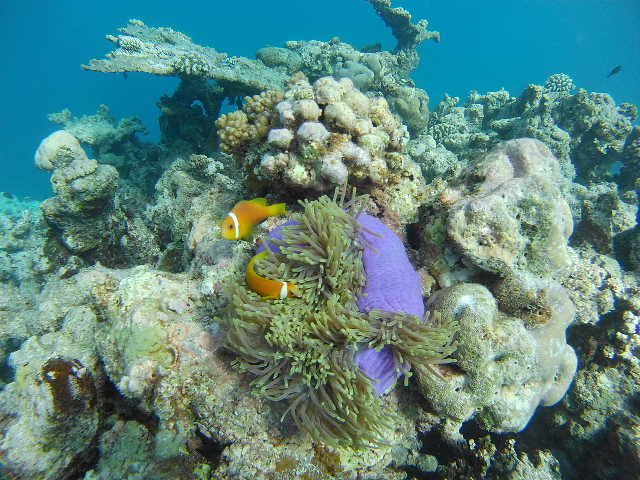
We also encountered several rays and a green sea turtle in the distance.
The next day, I decided to try kayaking. While I had done the water sport beforehand in lakes where the surface was much calmer, doing so in the ocean was new to me. I went with the same company, which sent an instructor on the same kayak with me to help me refresh my memory of using the paddle. A quick demonstration later, I was left alone in the surreal blue waters offshore.
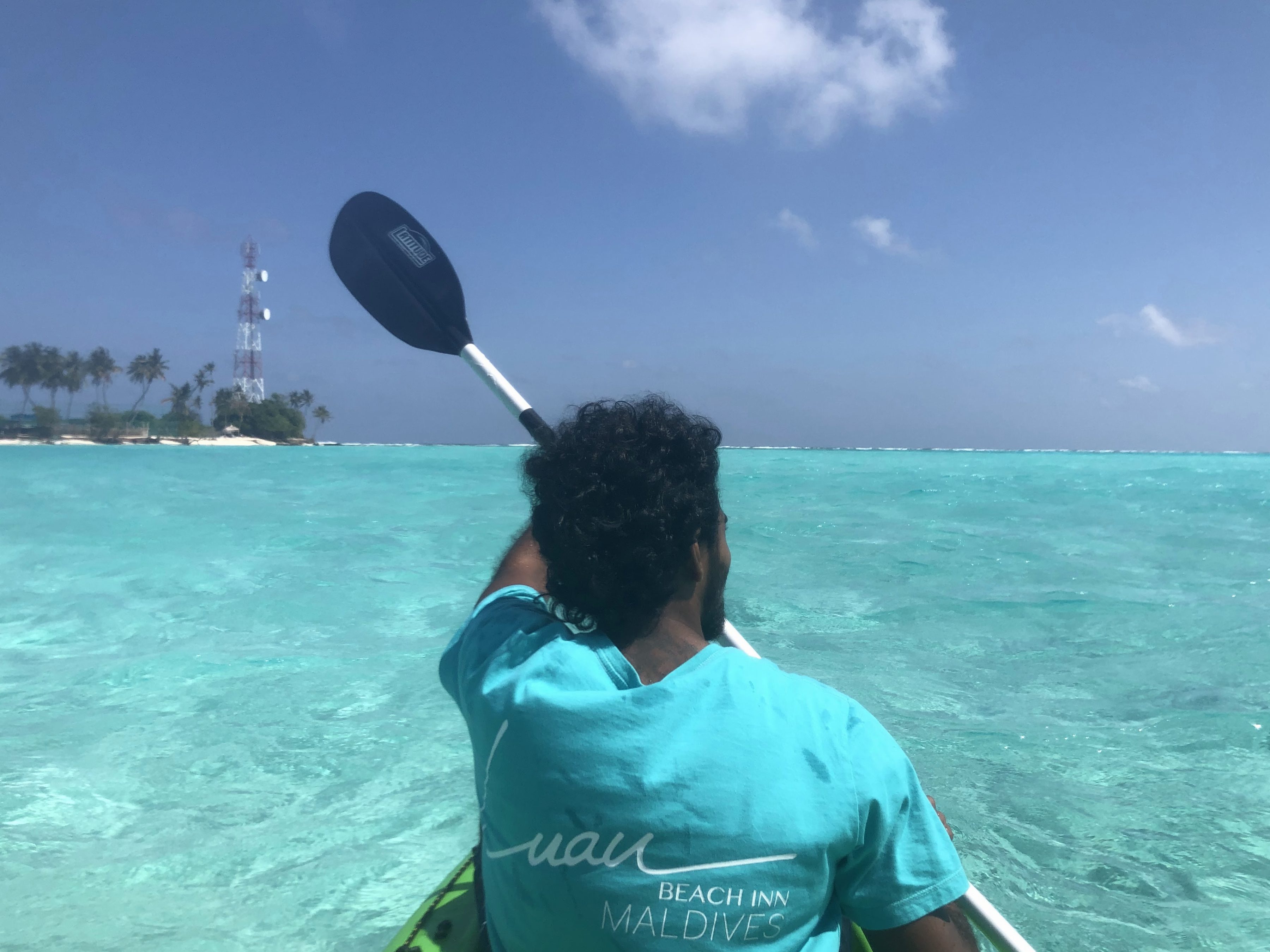
Despite the scorching heat, it was an experience like no other, as if I was actually in a computer screensaver. The bright turquoise sea all around, the swaying coconut trees on shore… I had to pinch myself to see if I was dreaming.
Well, I didn’t have to because the tour operator from the day before screamed my name, saying I was drifting too far from shore. I didn’t realize the currents brought me to the darker shade of the water so quickly. Without hesitation, I paddled back to the shallows before getting lectured by the operator that I should always pay attention, as the currents could be unpredictable.
Learned my lesson!
Time for the Capital
A week in paradise later, I bid goodbye to Ahmed and the owner of the guesthouse, and boarded the fastboat ferry to the capital. The same endurance of splashing waves and even bigger “speed bumps” across the ocean, before buildings of concrete and glass appeared in front of the boat, sights that don’t go hand in hand with the popular imagination of the Maldives.
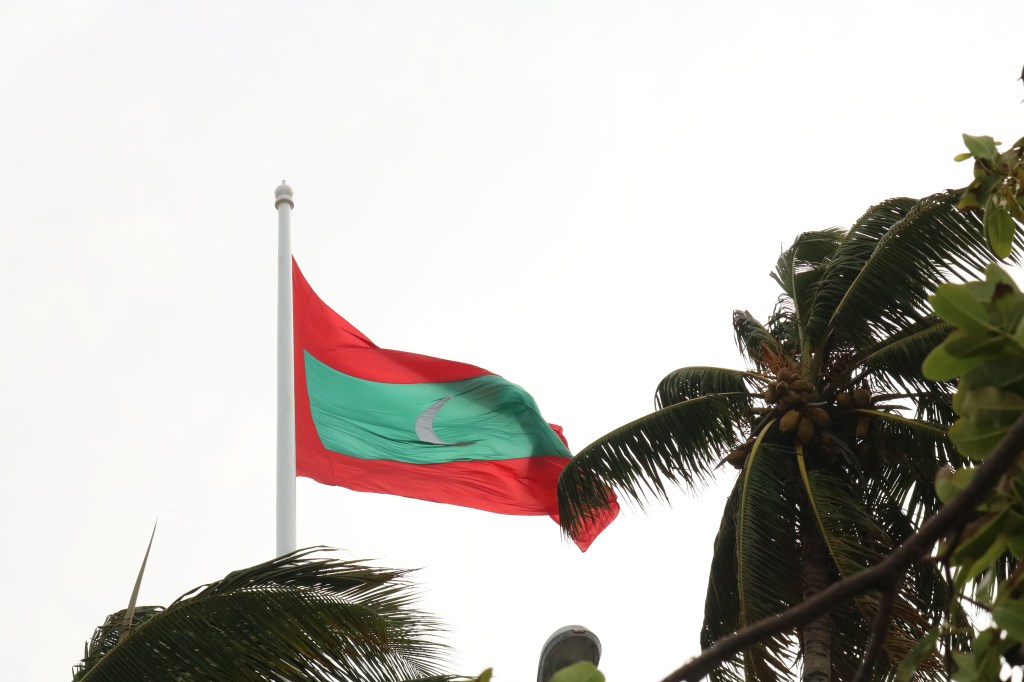
Checked into a modest hotel tucked in a narrow alleyway near the center of the city; it was a blessing that my room had air-conditioning, as the humidity was unbearable. Malé is an oddity in the archipelago, a thumbprint-like urban hub so dense with storied apartments, traffic, and people. It is not a destination many would look forward to when visiting the country, but it definitely is an interesting addition to any itinerary.
A few blocks away led me to the Republic Square, where the tallest flagpole of the islands stood with the ocean breeze. Following the promenade west, the scent of fish intensified – it was the city’s market zone. Loads of seafood were seen being transported straight from mooring boats to the dock, where fishmongers quickly took action by gutting skipjack tunas and removing heads of big-eyed snappers.
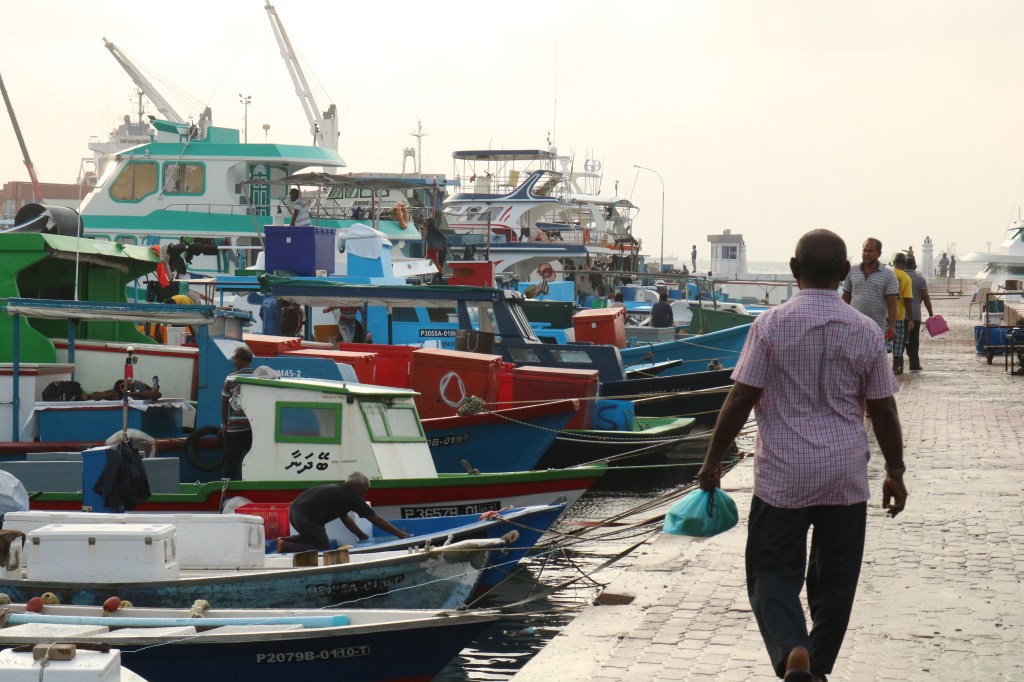
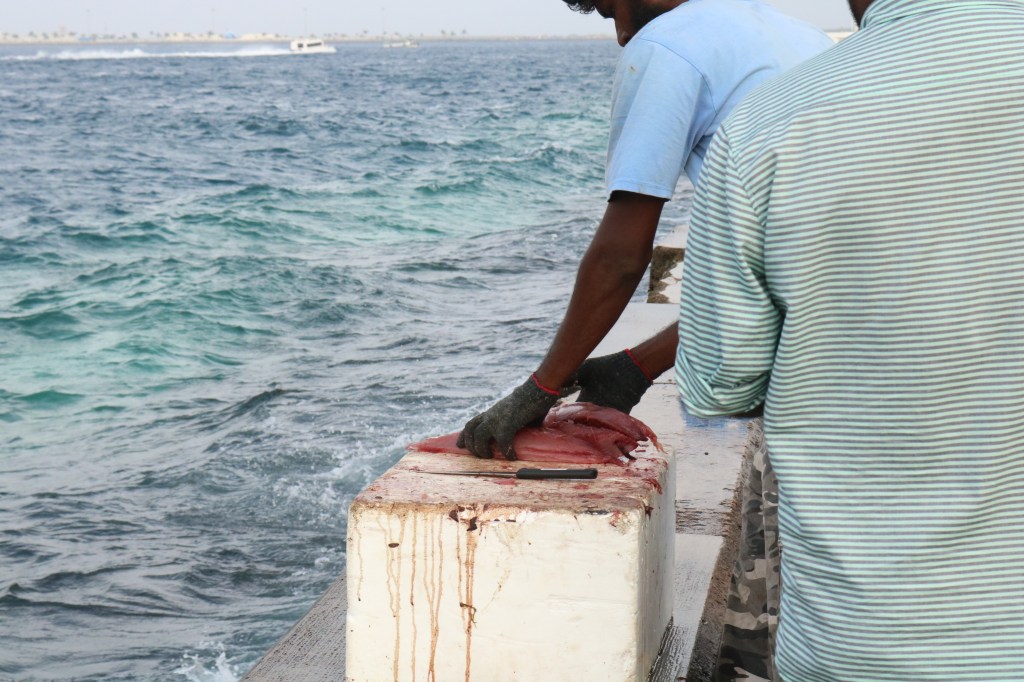
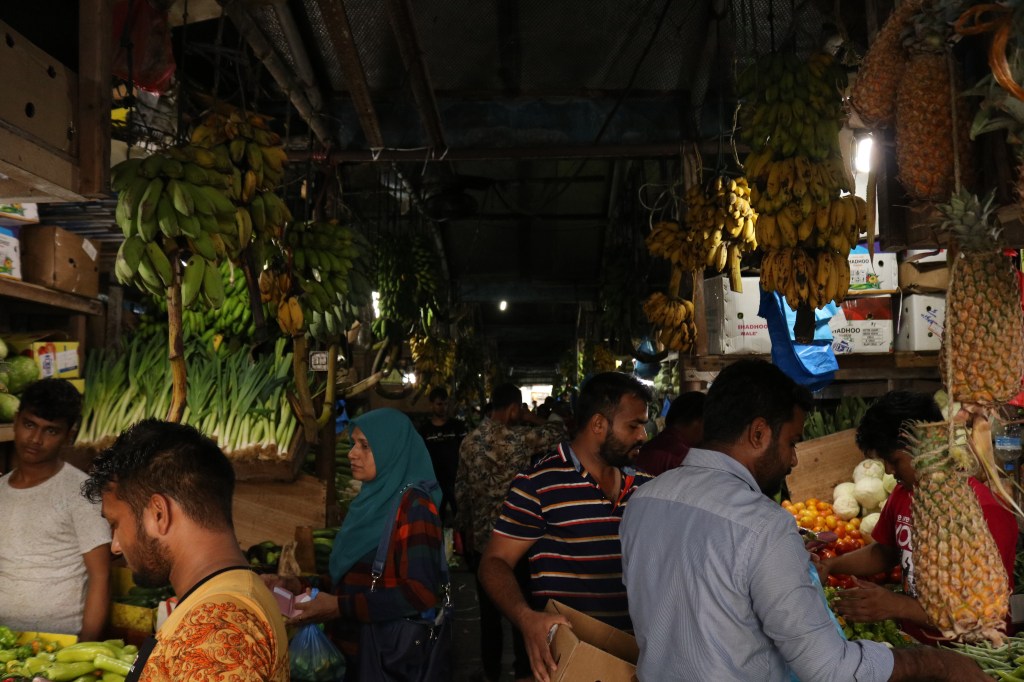
The inside of the market building was just as interesting, with vendors selling fresh produce from bananas to breadfruit, alongside merchants of local cooking ingredients ranging from the spiced to the pungent. To me, exploring markets like this is one of the best ways to immerse yourself in the local life of a place, and the market truly delivered the experience.
I bought a few packs of dried fish chips from one of the vendors before spending the evening in a restaurant near my hotel. The dark fell quickly with the gloomy skies, which led to a huge thunderstorm overnight.
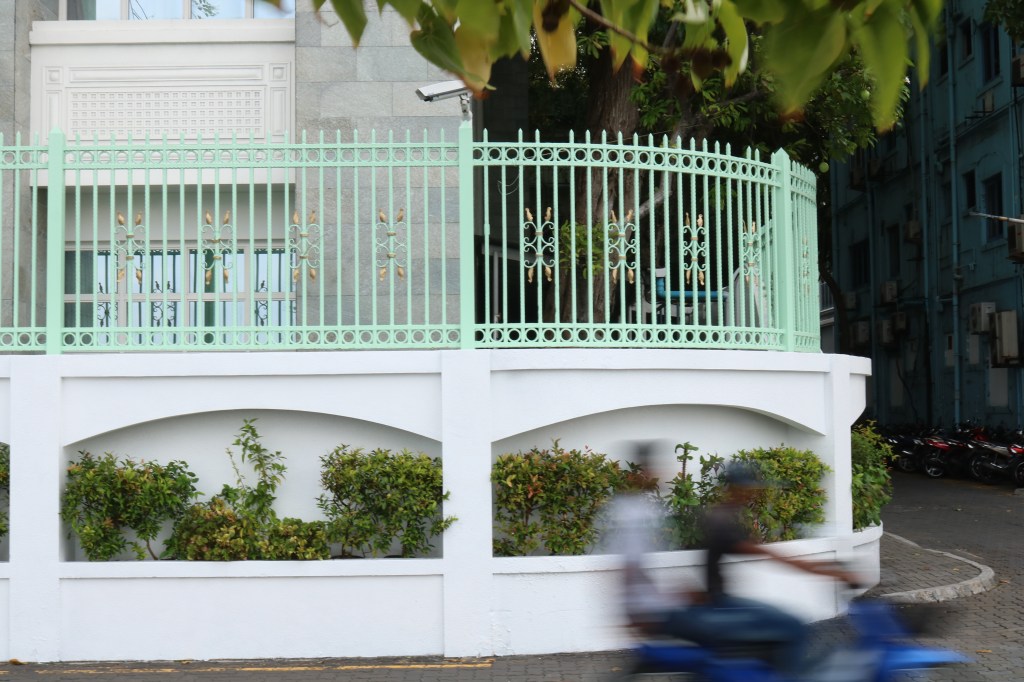
While it was rather a quick dip into the capital, Malé was a huge contrast to the calm and uninterrupted pace found in the rest of the island nation, but the visit was well-deserved. There were a few other spots I missed in the city, such as the Tsunami Monument and the oldest mosque in the country that was almost entirely made of coral (crazy how I missed that when it was so close to where I was most of the time!). Maybe I will get the chance to return someday.
In Conclusion…
The misconception that the Maldives is only for the rich should be removed; its doors are open to every kind of budget. You don’t have to spend a fortune to have a trip of a lifetime here; the white sand beaches and crystal clear waters are just as accessible, and staying on a local island not only cuts the cost, but also takes you to the actual and authentic side of the country. And I’m glad that I’ve experienced it that way.
The breakdown
As this trip was made over six years ago, I don’t necessarily have the actual list of how much everything cost. But the guesthouse for a week’s stay was less than US$400. Activities, which I only did two (other than snorkeling on my own, which was free), were US$150 total. Breakfast was included in both the guesthouse and the hotel in Malé, so I allocated US$30 or less each day for meals. The ferry each way to and from the island was US$40. And the only souvenirs I got were magnets and postcards.
Excluding flights, with all the costs above, the grand total of the trip was *drumroll*:
US$840 + souvenirs
That was way less than a one-night stay in one of those overwater bungalows, and that was a one-week trip. A ONE-WEEK TRIP!
With more and more guesthouses and independent hotels opening across the Maldives, budget travel can finally take place in a destination once deemed expensive and inaccessible for the ordinary. There is no better time to check this country off the bucket list than ever before!


Leave a Reply