
The Italian capital is world-renowned for many things. But when it comes to food, its inhabitants are reluctant to tell everyone about it. Instead of sharing, they walk into the narrow alleyways, navigating through arches and zigzag turns of crumbling walls, and eventually find whatever their instincts feel right about. And they probably expect everyone to do the same.
It was a bright sunny day when I arrived at Fiumicino from the French Riviera. Hassles of people from the most decently dressed to the ones in brightly-colored Hawaiian shirts waited for their turn to purchase a ticket to leave the airport train station. With their bulky luggage, everyone boarded the red-white-and-green train and headed to Termini, the main railway station of central Rome.
It wasn’t a pleasant experience at all, as the weather had me sweltering while I was carrying my gigantic red backpack and searching for the exit. An aroma pulled my steps back while I was near the exit doors, and as I turned my sight left, heaps of people were crowding a few stores behind a huge glass wall. They were buying packets of food, and some were already eating them. It was the Mercato Centrale, a bustling food market that transforms the basics of Italian dishes into something a little artisan and different. My gluttonous self couldn’t resist all that glory ahead of me, but still with that weight of clothes on my back, I had to leave for my hostel that was two to three blocks away.
After slamming my backpack next to my dorm bed and meeting a few travelers in the same room, I went back to the food market for some good cravings. The sky turned incredibly dark and gloomy, with thick clouds enveloping the fading sunlight, and thundering sounds began to rumble. I quickly ran to the market before it started to pour. Once I pushed in the doors, the aroma of food came back to my senses.
Freshly oven-baked pizzas, cheese-coated pastas, crispy-looking supplis… these were some of the variety of food I found within the minute I walked in. The atmosphere felt like I was in a trendy pub more than a food market, as it should be. The closer I was to the stalls, the more engaging the vendors were, trying their best to persuade my stubborn mind to order something from them. It was not just Italian food, however; the food market also housed international menus from tapas to udon noodles. As it was my first day in Rome, I really had to dig in to sample something local; I mean, Italy does have the best cuisine in the whole world. Who would fight that?
Long story short, after browsing through every food stall, I finally sat down and decided what to eat for my early dinner (or incredibly late lunch) – cacio e pepe. A dish with a simple and funny name, it is basically spaghetti seasoned with black pepper and spun in a huge pecorino cheese wheel. Cacio e pepe is perhaps one of the staple dishes of Roman cuisine, as it originates from around the area (in Lazio). It really wasn’t my favorite type of pasta, but I sure did enjoy the good coverage of thick and creamy cheese on the cluster of noodles.
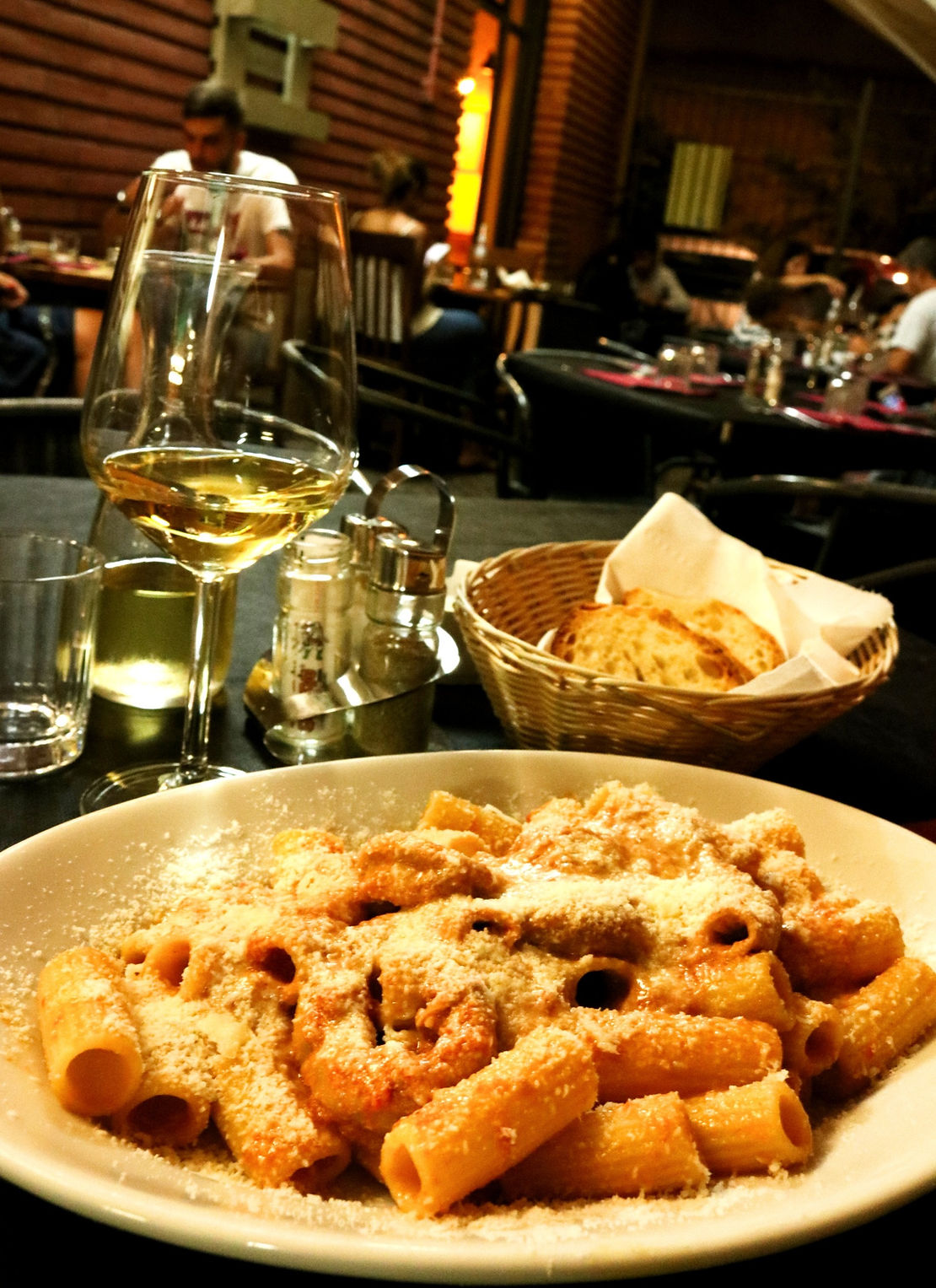
I have to admit, I ate more pasta than anything else in Rome. It was not because I didn’t know what else to eat, but it was because I wanted to try as many kinds of them as possible. There are 350 types of pasta in Italy, and probably zillions of ways to cook them. It was hard to not order pasta when I was in a restaurant, because it was the first thing that came into my mind and I had to find out what variety they have all the time. It sounds weird, but believe me, once you have tried one, you just want to try more; it is a bait!
How did I find where to eat
For starters, Rome is just like any other major European city; I mean the ones that are filled with iconic landmarks like Paris and Barcelona. Within the tourist hotspots are tourist traps that trick the most oblivious foreigners. You probably don’t want to be that person to get scammed for a simple dinner that costs more than 25 euros in a restaurant just right next to the hopelessly crowded Fontana di Trevi, or the guy who still feels very confused about the servizio that he was charged on the bill even though he read online about something like it.
Before you read any further, here are the few things you need to know about the charges of dining in the restaurants of Rome:
1) The coperto, or cover charge, is found throughout Italy EXCEPT in Rome and the entire Lazio region. It can range from one to five euros depending on the location of the restaurant and several factors that you probably will never figure.
2) The servizio, as mentioned briefly above, is a service charge. Again, you won’t find this in Rome or the Lazio region as it is illegal UNLESS it is noted on the menu. Strange, isn’t it?
To avoid getting charged without your notice, always look carefully on the menu or signboards outside any restaurant. They usually appear in the most microscopic writing and on the bottom of the page/board. If you are unsure, ask the waiter before taking the leap.
Back to the story. Rome is the largest city in Italy, and being such a massive nucleus on the map, you definitely have to look at the map to really understand it. Divide the areas into “touristy” and the “I have never heard of this place, must be somewhere residential”. Quite often, the areas on the western bank of the Tiber River are the areas that only a few foreign travelers would choose to explore. Lonely Planet describes a specific part of it as “one of Rome’s most vivacious and Roman neighborhoods”. Trastevere, which translates to “across the Tiber,” feels more like a typical Italian village than a part of the capital city. It felt so much calmer than the historical center, and cars were less frequent on the road compared to the other side of the river. The neighborhood used to be a working-class area, but now its remarkably pastel-colored buildings have been revamped to contemporary art studios, mini markets, and stylish restaurants. The people there were mostly locals, but as it is starting to become one of the most attractive parts of Rome to go to, the tourist traffic is also growing greater than ever before.
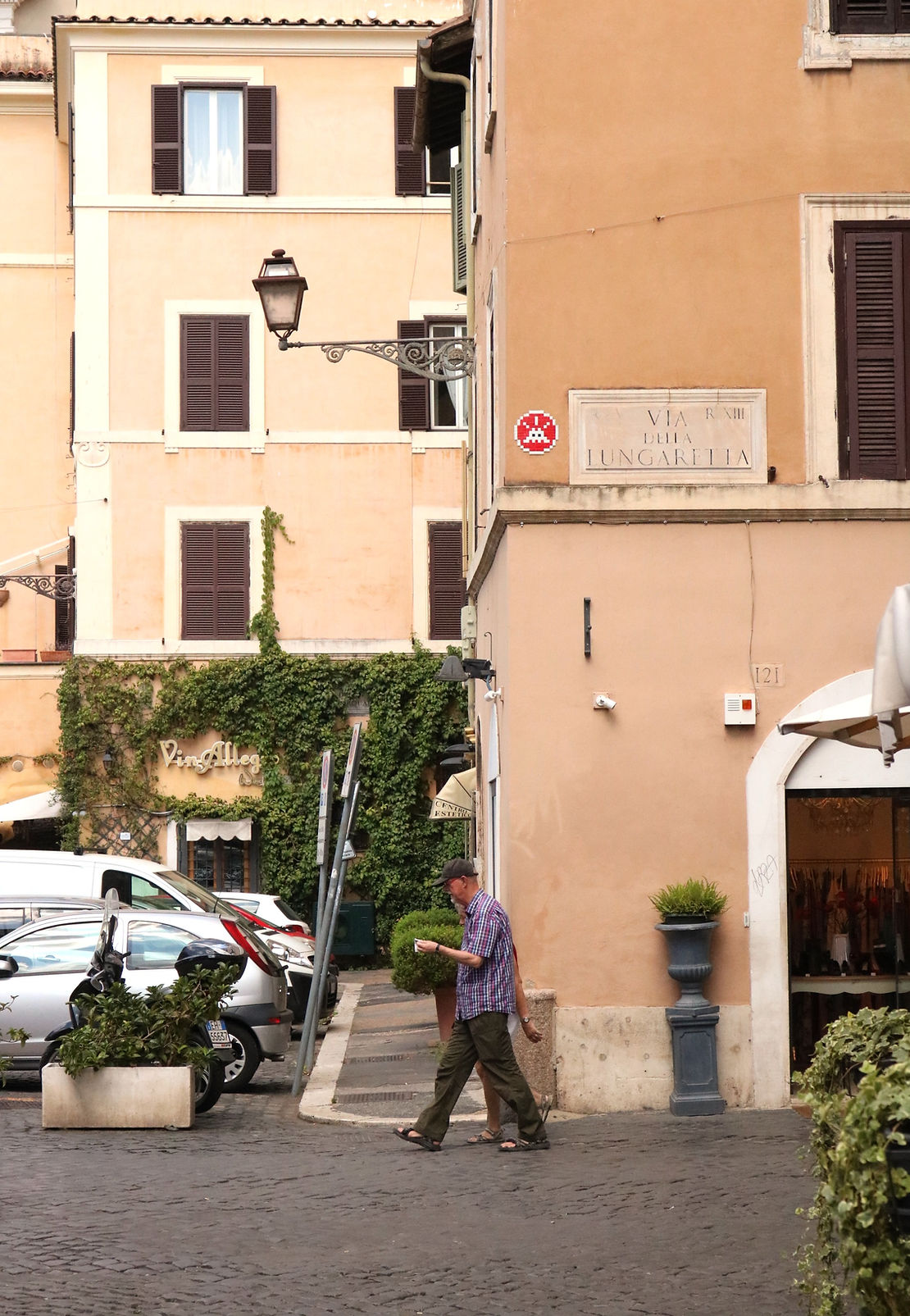
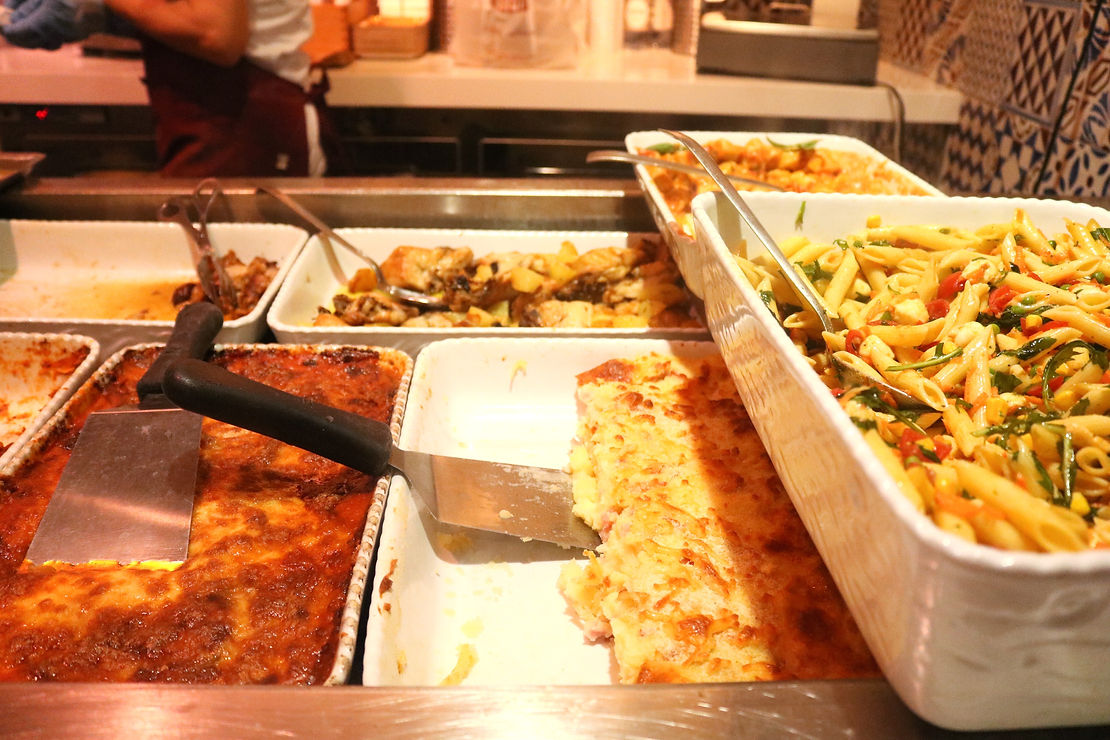
Trastevere was also the place that I discovered the best way to eat Italian food, on the cheap! Yes, it is entirely possible to eat on a budget when in Rome. You just need to know where to go. Research is important, but losing yourself and following where the locals go feels more important and fun than it.
A forno is an eatery that serves oven-made food. You may think it is unpleasant and not authentic, but the truth hurts, in a good way – I saw seniors, in fluent Italian, wait patiently for their turn to pick whatever they were feeling to have on their plate, in the same line as businessmen, mothers, and teenagers. I was quite possibly the odd one in the scene, with my Canon hanging around my neck and sunglasses on my head, Asian looking, trying to blend in with everyone else. When it was my turn, the server looked at me with the most blunt expression on her face and spoke in English, “What do you want to eat?” I giggled a bit and asked her to recommend a few, and then my food-filled plate was directed to the cashier, who weighed it and displayed the price to me.
Zucchini chips, mixed vegetables on the side, a big scoop of pasta, and two slices of pizza, for just 11.50 euros!? That was so much cheaper than the pasta I had the night before!
I sat with local grandmothers and grandfathers on a shared table, and they were genuinely very nice to me; even without saying anything, they shifted their belongings and made space for me to eat. Is there a more local way of eating in Rome than this, I wonder?
Gelato Guiltiness
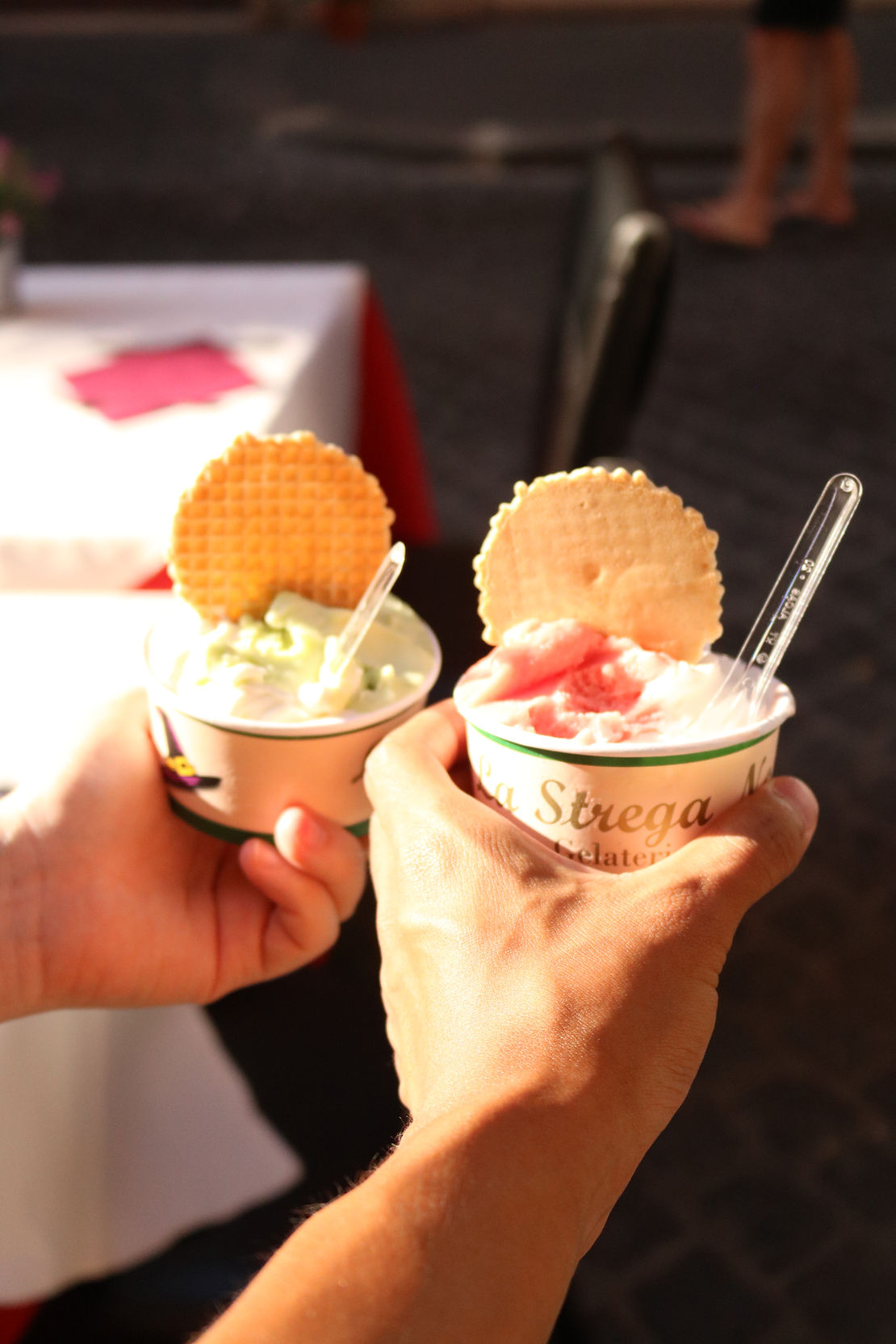
For most of my time in Rome, I was walking under the blazing summer sun with my camera swinging on my neck, side by side, and it was tiring. Sightseeing in Rome really drained my excitement and energy of wanting to explore more, but by God’s grace, the city is filled with little to big stores selling the best remedy for dehydration and desperation for something cool and flavorful for the taste buds – gelato.
It is no surprise that Rome can be extremely hot during the summer months, and it was also probably why Roman Emperor Nero had ice brought down from the mountains to make chilled delicacies similar to the concept of modern-day ice cream during the A.D. Even the ancients couldn’t take the heat, and thankfully this has passed down throughout centuries to the present. Nowadays it is extremely easy to get the cold, tasty treat without needing to transport ice from the higher elevations, although it can be quite an unusually long wait for one in certain stores (especially the ones near major tourist attractions).
I am not ashamed of saying this, and I definitely will continue to say this as long as I can remember in my lifetime – Italy has the best gelato ever. It is obvious that “gelato” is an Italian word; everyone knows this, even babies do too (I think). Gelato comes from Italy, and the world owes chef Francesco Procopio dei Coltelli for making the first of the kind in his Parisian cafe, ironically. The frozen dessert is even a subject to be taken pretty seriously, as the country is the only place where artisanal gelato has a higher market share compared to mass-produced ones, at 55%. There are more than 5000 stores in Italy selling gelato, employing over 15,000 people. (If you are wondering where I get all this information from… wiki that is where) I like how the Italians actually make this such a big BIG deal.
Beginners, here is what you need to know about getting a gelato. It is not just like a simple meeting of an ice cream man at his bicycle stall and telling him the flavors you would like to order, just like back in your hometown. Well, there are a few similarities, but hey, listen! A place where gelato is sold is called a gelateria, and you can find dozens in one street in some of the city’s most popular areas. But to find the best ones, keep an eye on the words fatto en casa, which means homemade, and artigianale (artisanal). You don’t want to miss this!
Once you have found your preferred parlor, it is time to open your eyes as wide as possible. There will be a variety of flavors, and like a kaleidoscope, bursting with colors! Based on my experiences, it always took me such a long time to choose the flavors that I wanted, but fear not; you can taste before you make such a daunting confirmation. Depending on the season you are in, I highly recommend choosing the seasonal flavors – in the summer, fruits like lemon (limone) and strawberry (fragola) are in better and more fruitful harvests. Or just go with the local favorites like nocciola (hazelnut) and the iconic pistacchio. There are also some odd ones to try – basilico (basil), lavanda e miele (lavender and honey), and quite possibly the best in the world – mascarpone (I only found this godly flavor in Bologna, a city some 370 kilometers north of Rome, but you might just be lucky here). Do try the chocolate ones as well.
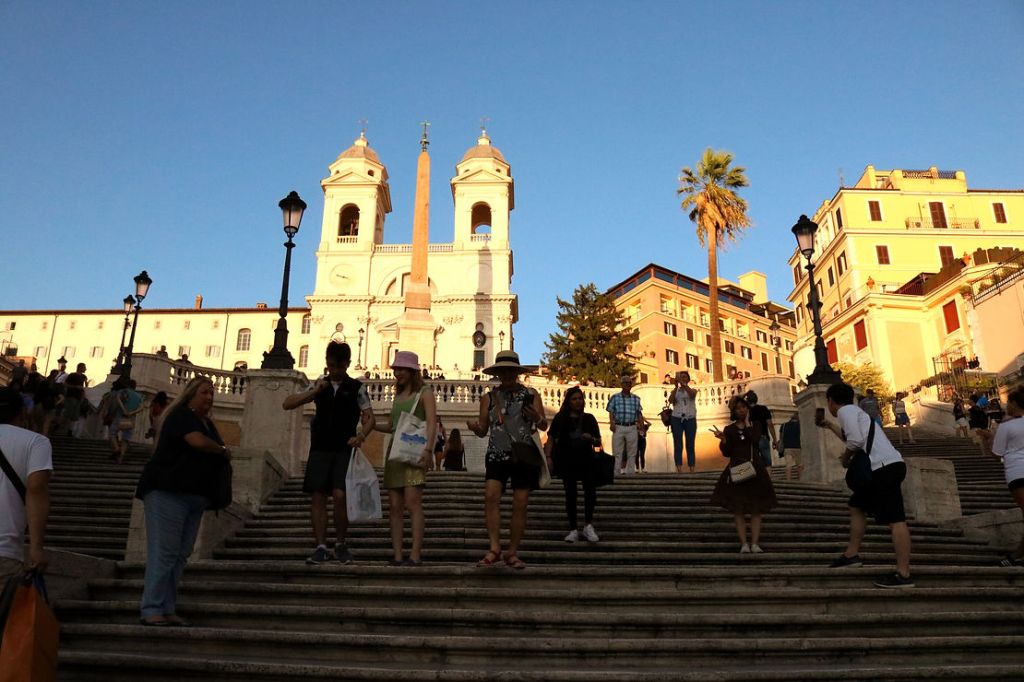
In the end, it all comes down to a cone of gelato as you sit in one of the many piazzas in the city and people-watch (DON’T do this in the Piazza di Spagna, I am saving you from a €400 fine!). Like in those romantic holiday films about Rome, lounging on a stone-hard staircase just screams la dolce vita. Maybe it doesn’t feel that way anymore these days, because the charm has diminished by every single tourist that wants to do the VERY same thing. Such a cliché unfortunately, but don’t let that stop you from ordering one; believe me, you will want it more and more.
They say Rome doesn’t build in one day, and that is very true. Aside from its majesty of crumbling ruins and shiny Vespas, contributing to the already congested traffic of the city, the food seems to be the best reason why Rome still exists and is very much loved by those who treasure Italian gastronomy at its finest state.
Written in May 2020


Leave a Reply