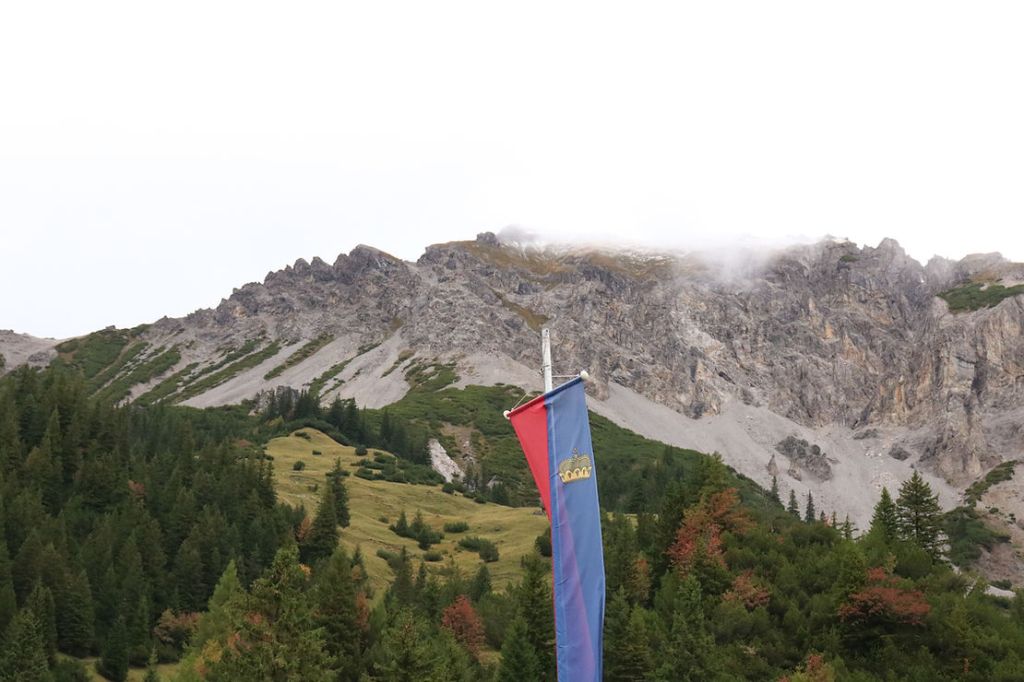
I always have a fascination with countries that are somehow undefined by their sizes. I am talking about the teeny tiny ones, the ones that you can hardly see on world maps. In Europe, there are a number of them, and there is one that few have ever heard of.
Rich yet microscopic in size, Liechtenstein clips in between the clashing borders of Switzerland and Austria; in the high Alps, its existence seems almost unrealistic.
But not a lot of people actually know that it has held its position on the map since 1719, and then separated from the German Confederation in 1866. Liechtenstein declared itself a neutral state soon after and abolished its standing military in the same year, and the reason, well, because it was too costly…
Regardless, it is under the safe hands of Austria and Switzerland (the latter fired off shells during an exercise in the 1980s and mistakenly burned a patch of forest inside Liechtenstein. The incident was said to have been resolved “over a case of white wine”). Its citizens live a wealthy and high-quality life; crime is something only to be seen in television news and movies. They only need to worry about their goats and cows from escaping the fences!
I mean yeah, they probably have other things to worry about in their lives, just like everyone else in the world.
How did I get there?
I knew I wanted to visit this tiny nation once I started to plan my European backpacking trip. So after some drunken days (and nights) of Oktoberfest in Munich, I escaped the mess of it by taking a train to Feldkirch. As of writing, there is no direct train service to the Austrian town from Bavaria’s largest city. So I switched trains in Kufstein, and sat for 2 hours and 30 minutes until I arrived at the border town.
Feldkirch is the closest town in Austria to the principality, and once you arrive, there are numerous bus services outside of the station to it, depending on where you wish to go in Liechtenstein.
I took bus number 11 from the station to Schaan, the most populous part of the country. This is where my hostel was located, the Youthhostel Schaan-Vaduz (as of writing, I found out they are closed for renovation; I mean it was spacious and perfect to me, maybe they are making it better?).
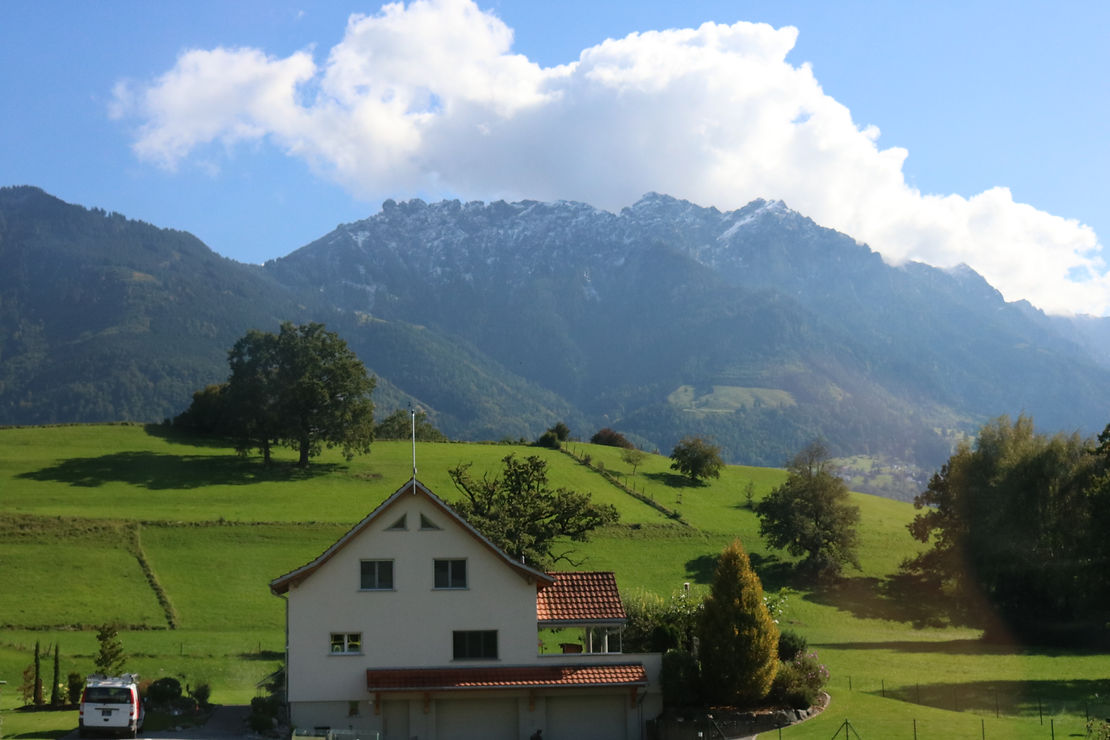
Once I boarded the bus and got a ticket from the driver, I was more than ready to go. Placing my face so close to the window on the left side, I watched the bus cross the invisible border, with a sign saying “Liechtenstein” appearing like magic. I took my camera out and captured the cute and stylish houses that were popping out on the sides of the road, and soon after, the mountains began to rise behind them. I could see Switzerland to my right, and that kept me pumped with joy as my mind told me, “You did it Daniel, you are finally here!”
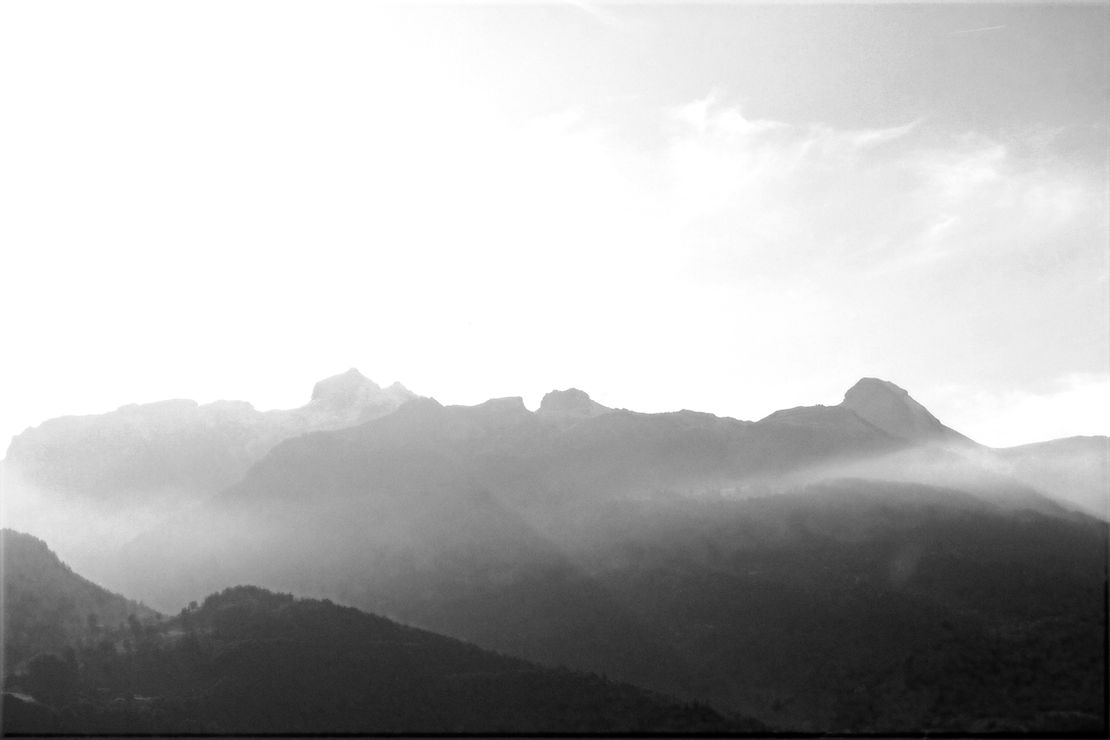
Upon arrival, I took a few selfies with my heavy backpack on my crumbling shoulders to celebrate the achievement of coming here. Did you know that Liechtenstein is perhaps the hardest country to visit in Europe in terms of geography? There are no airports in it, and it is pretty far from any major cities, plus it is one of the only two countries in the world that is doubly landlocked! So I definitely deserved to have that moment :)))
Walking through the quiet streets of Schaan, crossing an intersection and passing through some tree-shaded alleyways, I arrived at my hostel, only to discover that there was nobody in there. The reception booth had a paper stating the check-in time was after 5pm, and it was 3pm by the time I got there. So I explored the empty building, alone, without knowing that the owner came back with his sedan parked next to the entrance doors. He saw me and called. With my awkward looks, I met him at the lobby, as he allowed me to check in right away!
“Dinner is at 6pm and costs 18 francs,” he said, so I nodded and went into my room. It was only me, and I felt so happy to be the only one in the room, let alone to stay at the hostel.
I saw the sun was shining so brightly and the fields were so green in color. I dropped my things in the room and went out to experience the phenomenon.
There was a Swiss family of five strolling along the gravel path of the crop fields, with their youngest son playing all alone at the mini playground. I set my tripod and took a few candid pictures, he was curious about what I was doing and stared at my camera for quite a while.
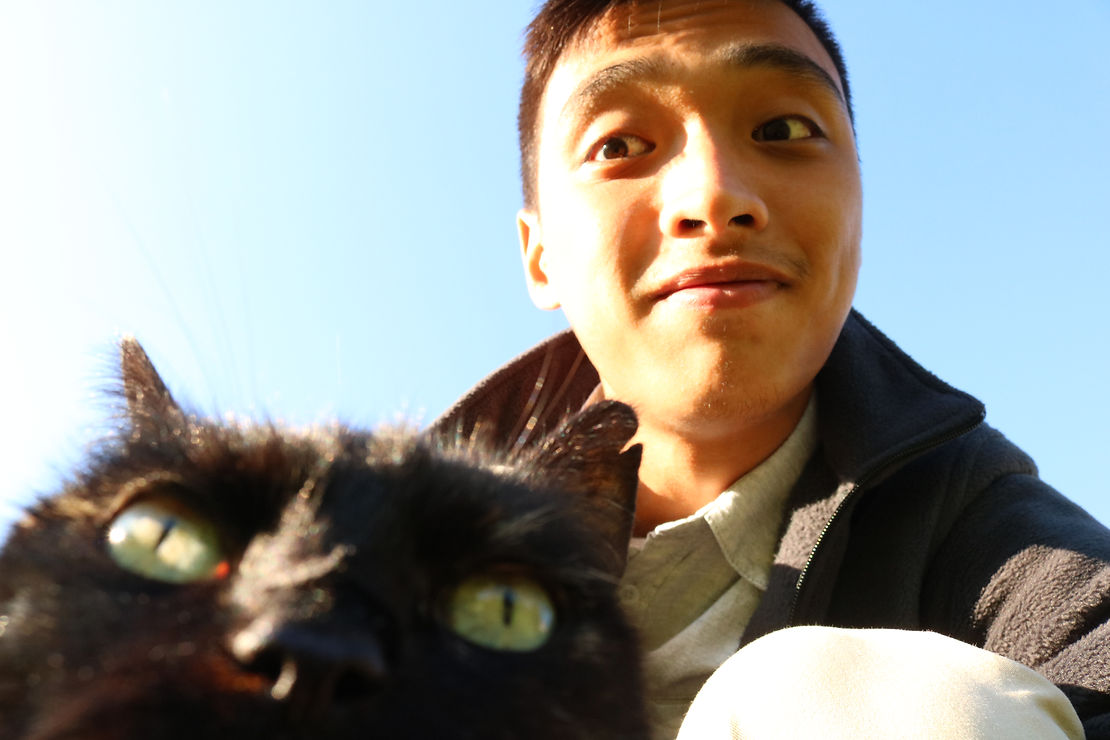
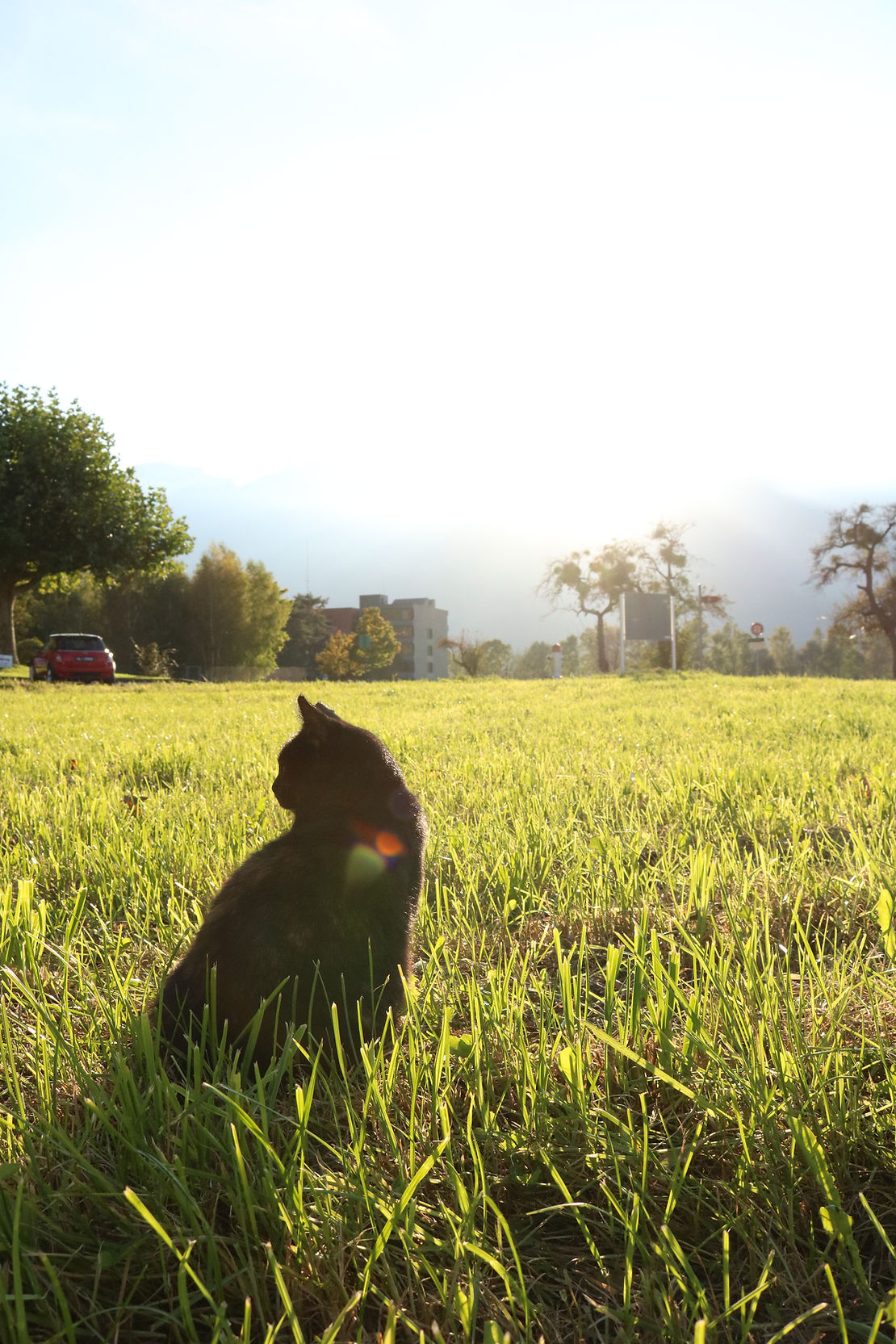
A black furry creature suddenly appeared in a patch of grass like a Pokémon. There, there’s Steiner, the friendliest and most welcoming cat I have ever come across. His big green eyes looked at me with affection, and my heart melted in an instant! I am a person who is normally allergic to cats, but this one, I did not feel anything uncomfortable after petting it for hours!
Soon, he met two couples who were strolling on the gravel path and went to them. I left that patch of grass with a big smile and wandered a farm of beetroots and lettuces nearby. With the sun setting down behind the curtain of mountains, it got very cold suddenly, but the sky turned pink, and the trees soon became silhouettes, creating a scene that made me thank the Lord for bringing me here.
And I went back to the hostel for that pricey dinner…
Vaduz, the Miniature Capital City
Unlike the day before when the sun shone in radiance, it was drizzling when I got out of bed. Thick blankets of fog covered the peaks of the horizon as I went for breakfast, holding a mug of hot tea, jotting down the plans I had in my mind for the whole day in Vaduz.
A bus dropped me somewhere near the post office of the capital city. I was then making my way to the tourism board office to have my passport stamped for 2 francs, and was then fascinated by everything they sold in there. From tiny music boxes to portable charging stations, slippers to some locally-produced wine and honey, everything was just magnetic to both of my eyes, but not my wallet. In the end, I only got two stickers and a magnet 🙂
Vaduz in comparison to other European capital cities, is very, very, VERY small. It only has an area of 17.3 square kilometers, yet don’t be fooled by its size. It can be hard to walk on as it is built on several hills, and if you are making your way to see the Vaduz Castle, you will have to hike quite a bit.
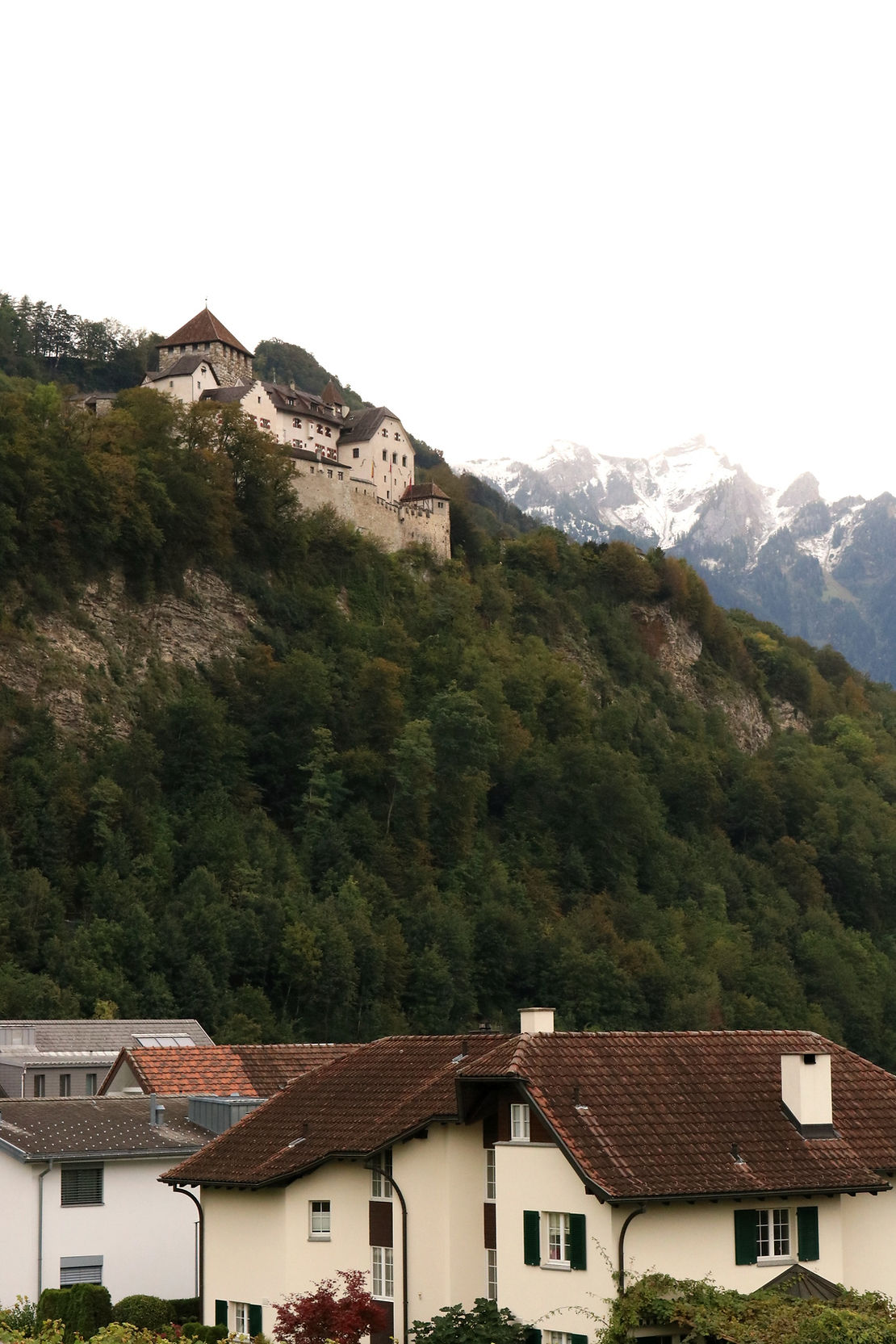
The castle is the official residence of the Princely Family of Liechtenstein, as it has been for more than 300 years. And according to Wikipedia, it gave its name to the capital city!
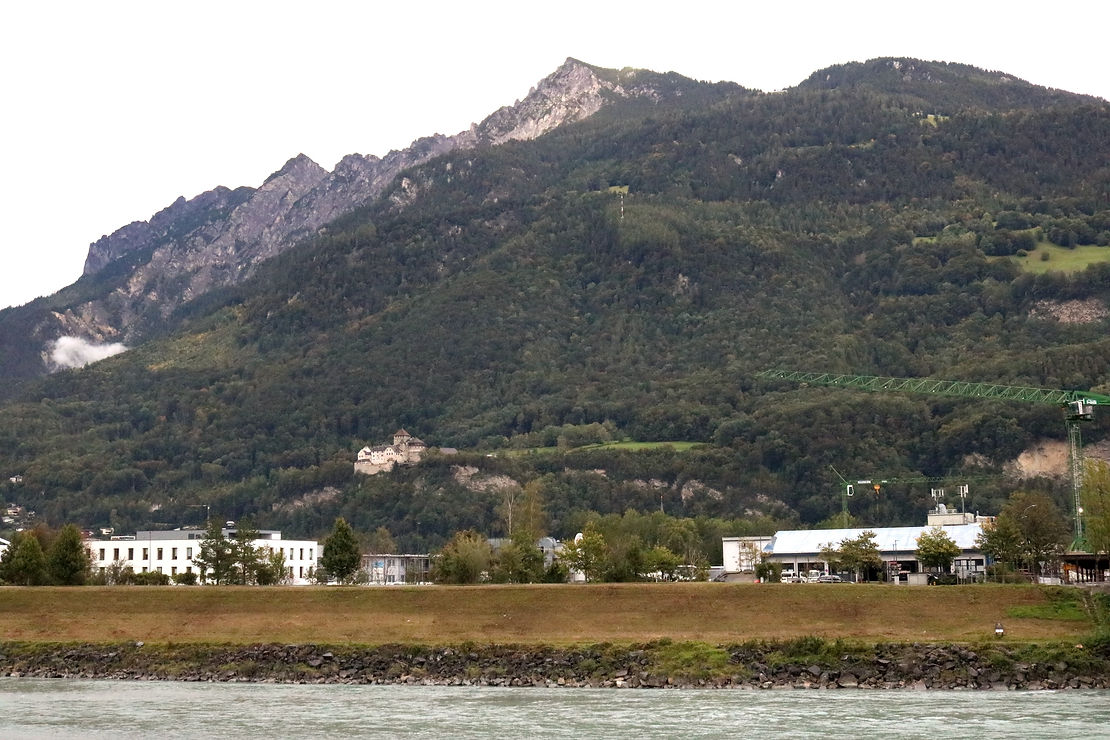
You can see the castle from almost anywhere in the city, including the vineyards, where I unknowingly entered and got welcomed by the owners in one of them. It is a sight to see, especially when you can find an angle to see it with the snowy peaks as its spectacular backdrop. Attempting a hike to it can be rewarding, with some viewpoints along the way that present scenic views of the city. Once you reach the top, where the road winds its way to the castle and bends up behind its back, there is a path that offers a great side view of it. Do note, though, it is closed to the public to enter.
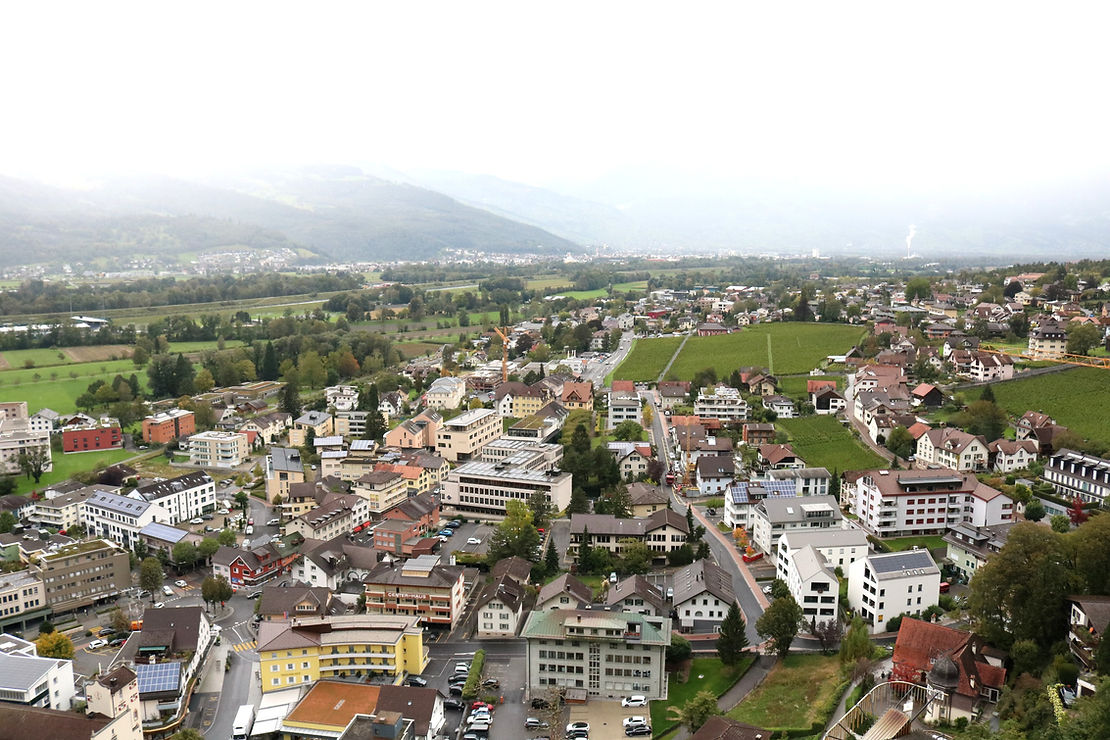
The city doesn’t just limit itself to the castle when it comes to sightseeing. Visitors can also discover the history and the variety of issued stamps in the Postmuseum. Nearby, Kunstmuseum displays modern and contemporary artworks from all around the world.
If you look at Liechtenstein on a map, you could see that most of its populated areas are closer to the border of Switzerland than to Austria. That is because the side closer to Austria is mountainous, while the one to the Swiss border is mostly flat and is next to the Rhine.
And there is that one wooden bridge that connects the country with Switzerland, where people could walk on and cross both sides with no border controls. I really, really admire how peaceful European countries do their border controls.
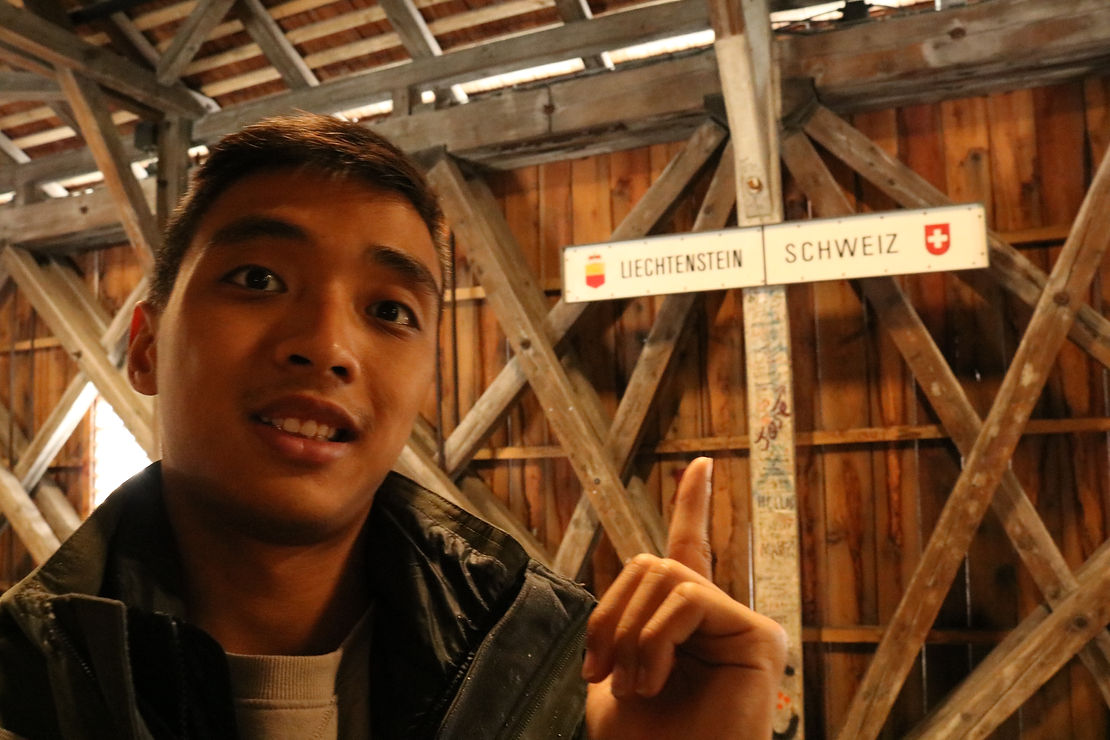
Once you have walked across the bridge, there is nothing to see on the Swiss side. But you get an amazing view of the whole of Liechtenstein, with Vaduz Castle pinpointing where the capital city is.
Into the Mountains I Headed
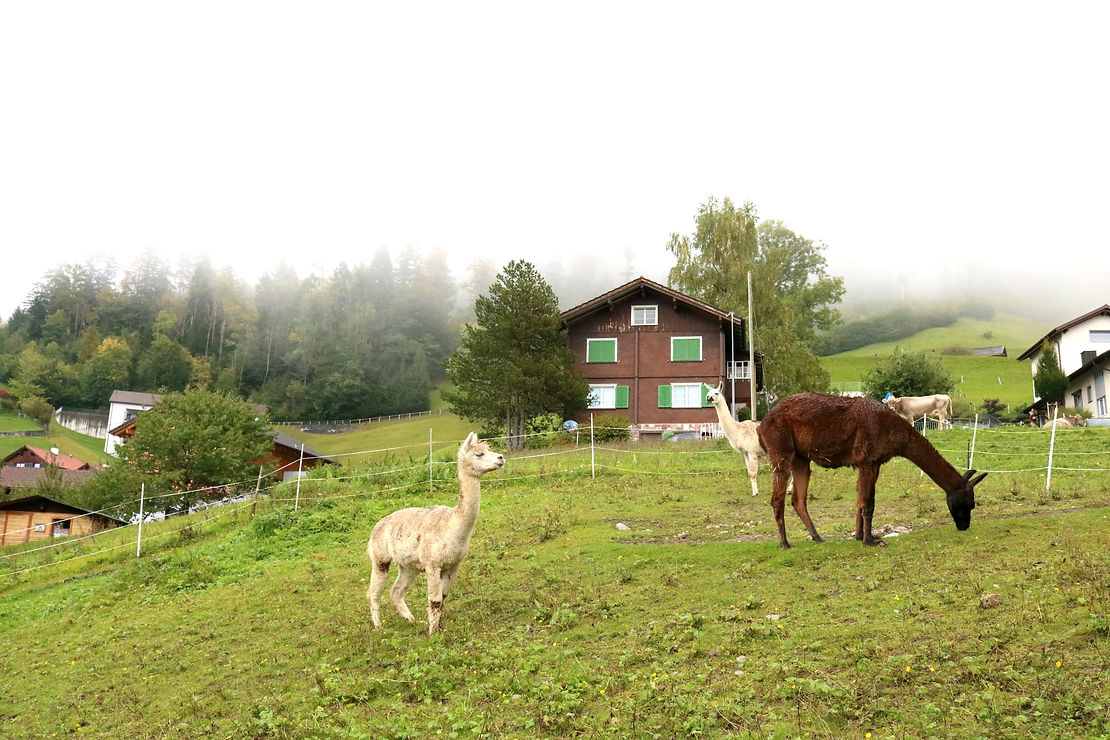
I had heard of a llama farm located somewhere in the mountains of Liechtenstein. Yes, llamas. They exist, unexpectedly, in this speck of a country.
So I boarded a bus up to Triesenberg, a municipality located above on the hills, close to the sky-reaching peaks of the nation. It was quiet and small, and I didn’t actually explore the little town. Following the directions Google Maps gave me, I walked for about 20 minutes, passing wooden shacks and luxurious two-storied houses while admiring the mountain views along the way.
The farm was tucked in between two wooden huts, and there was a muddy path that led me to it. As it was raining, I went into a small booth that happened to be a self-service store. There were goat cheeses, fresh farm eggs, sealed meats, wool clothes, and some fragrant candles, among others for sale, and basically to buy something in there you just leave your money at the cashier table, with honesty on expectation by whoever owns it! Seriously, I have never been to a place that really has full trust in anyone.
Going back to the said farm, there were only three llamas; I thought there were plenty! Still, I was not disappointed, but happy! The llamas were so funny to look at, I wanted to touch them, but you know, they spit. Plus they didn’t really give a hoot about my existence…
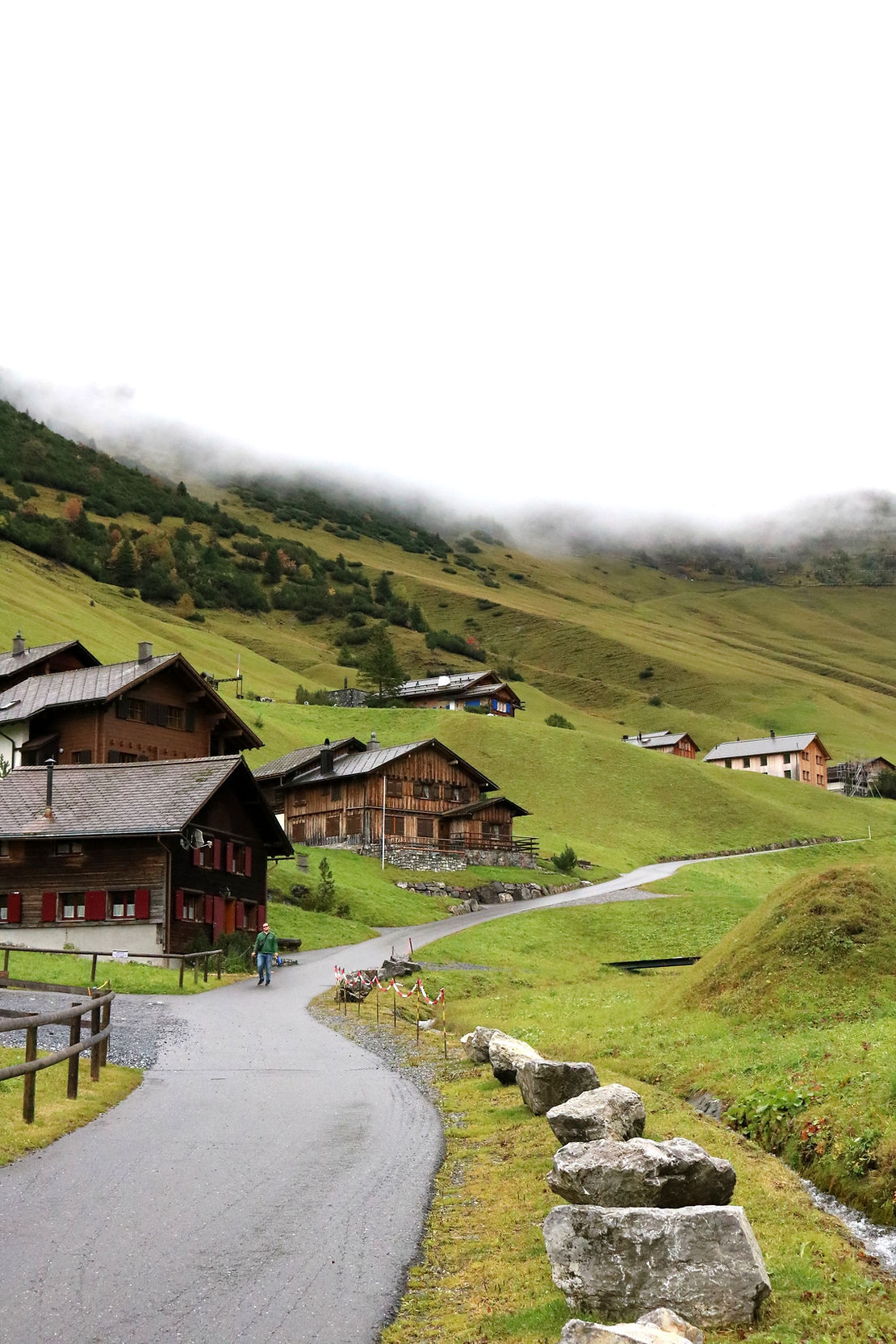
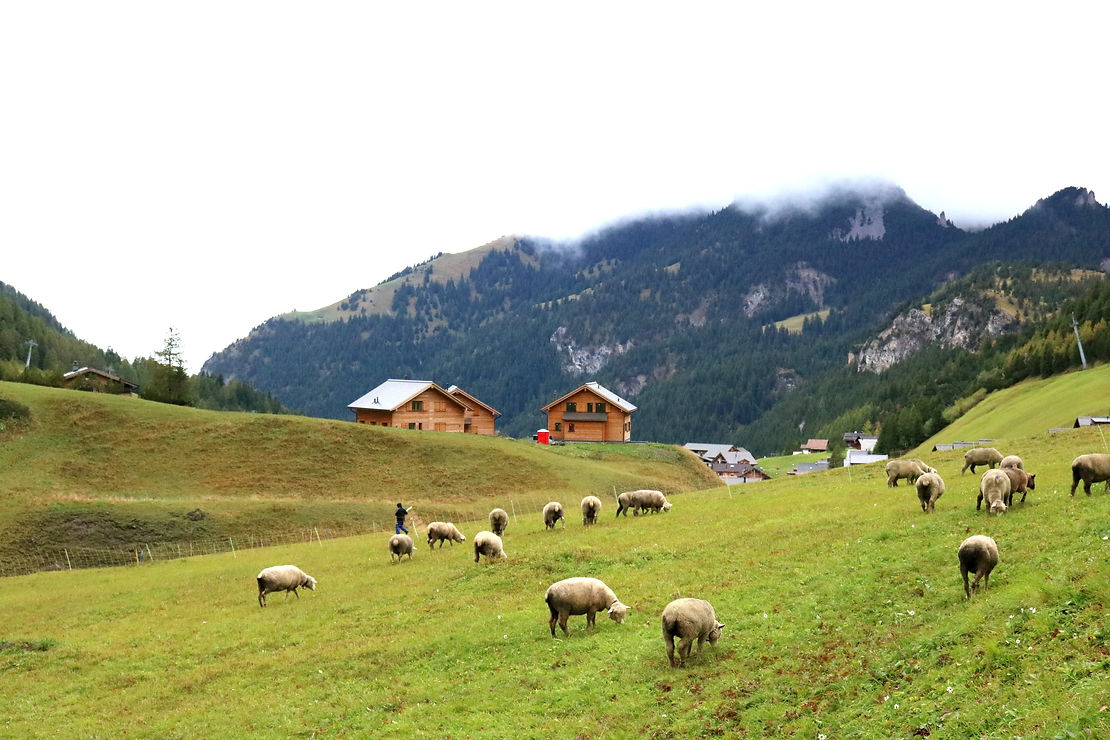
Bidding goodbye to the furry ones, I headed higher to Malbun, perhaps the highest one could reach via a road vehicle in Liechtenstein. The fog slowly enveloped the distant view, leaving only a white blank space to see. Still, I was greeted by an otherworldly scenery of olive green hills where resort houses dotted from the low to the top. There were sheep with bells grazing the given area of grass, and with the fog getting less thick, revealing the Alps that were once invisible to vision, it was absolutely a breathtaking place to be in.
Malbun was also the place where I finally got to see the jewel of the Alps – the edelweiss flower, in full bloom. It only grows between the altitudes of 1800 to 3000 meters, which makes it a rare spectacle to see.
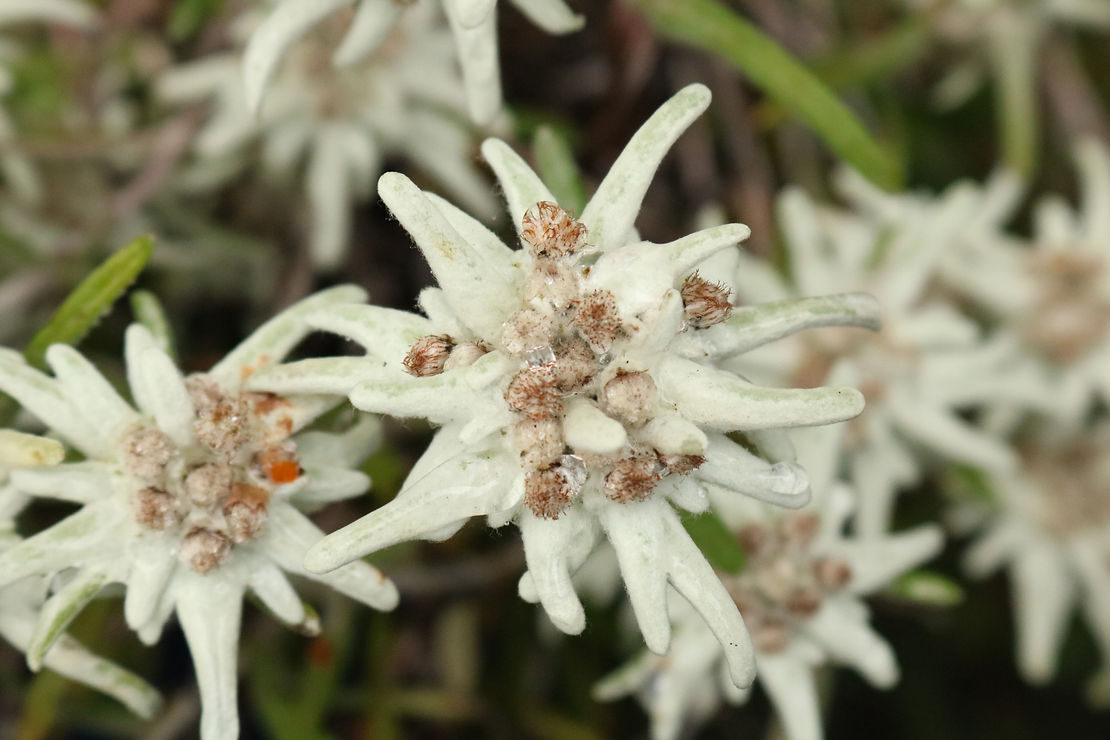
According to folk tradition, giving the flower to a loved one is a sign and promise of dedication. I hope to give this to someone special one day, one day…
As the sky began to turn grey and then dark blue in a matter of hours, I took a bus back to my hostel, and made three new friends in the same room! Well, that concluded my amazing time in this miniature country in a very blessed way.
Taking the 10am train from Buchs to Zurich, Switzerland, Liechtenstein started to fade behind me. Sorrowful eyes of mine looked at the Vaduz Castle perched on the hill for the very last time, wondering when I would get the chance to return and experience it all again.
Will Steiner remember me? Will the whole place become a touristic destination that I wish it will not become? Time will tell.
Getting off the train at the hauptbahnhof of Zurich, I bumped into Ryan, the ginger-haired Canadian I met back in the hostel. We took a picture together, asked about our next travel plans before bidding farewell. With an edelweiss clipped in a notebook, the good moments I had in Liechtenstein will be remembered in the most cherished way possible.
Written in December 2019


Leave a Reply